Zhou Suna, Cui Yaoyou, Yu Dequan, Liang Jun, Zhang Mingxin, Ye Wenguang
Department of Radiotherapy.
Department of Gastroenterology, Tangdu Hospital, Fourth Military Medical University, Xi'an, China.
Onco Targets Ther. 2017 May 11;10:2527-2538. doi: 10.2147/OTT.S134551. eCollection 2017.
Increasing evidence indicates that radioresistance remains a major problem in the treatment of patients with esophageal squamous cell carcinoma (ESCC). This study was designed to investigate the expression of microRNA-381 (miR-381) and its function in the radioresistance of ESCC.
In this study, miR-381 expression was first detected in ESCC cell lines and tissue samples by quantitative real-time polymerase chain reaction (qRT-PCR). Then, the effects of miR-381 expression on growth, apoptosis, and radiosensitivity of ESCC cells were analyzed by MTT, colony formation, and flow cytometry, respectively. Dual-luciferase reporter assays were performed to validate the regulation of a putative target of miR-381, in corroboration with qRT-PCR and Western blotting assays.
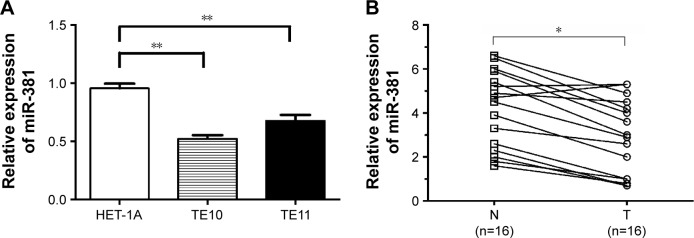
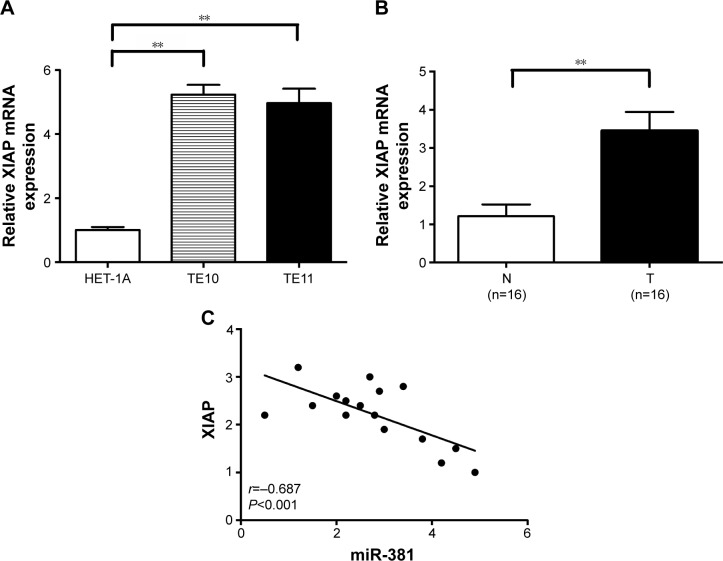
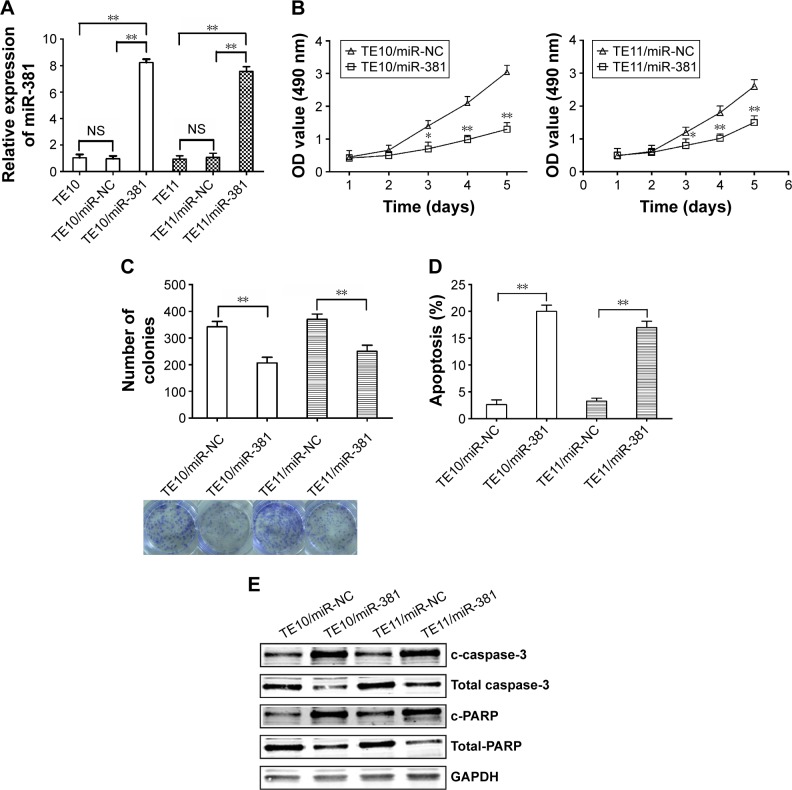
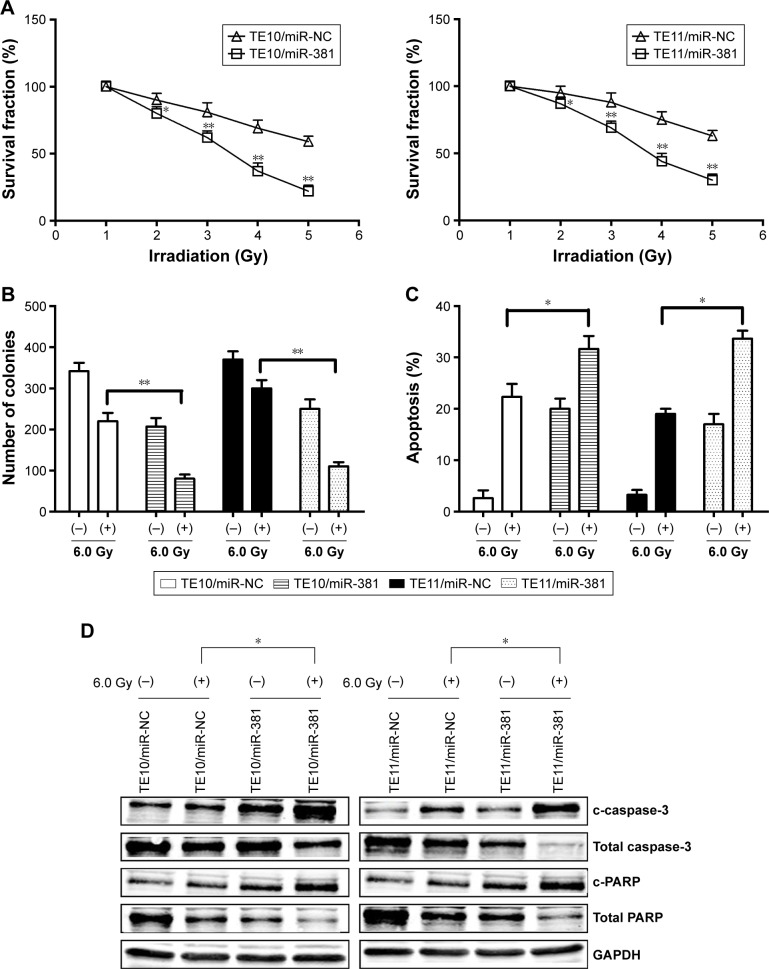
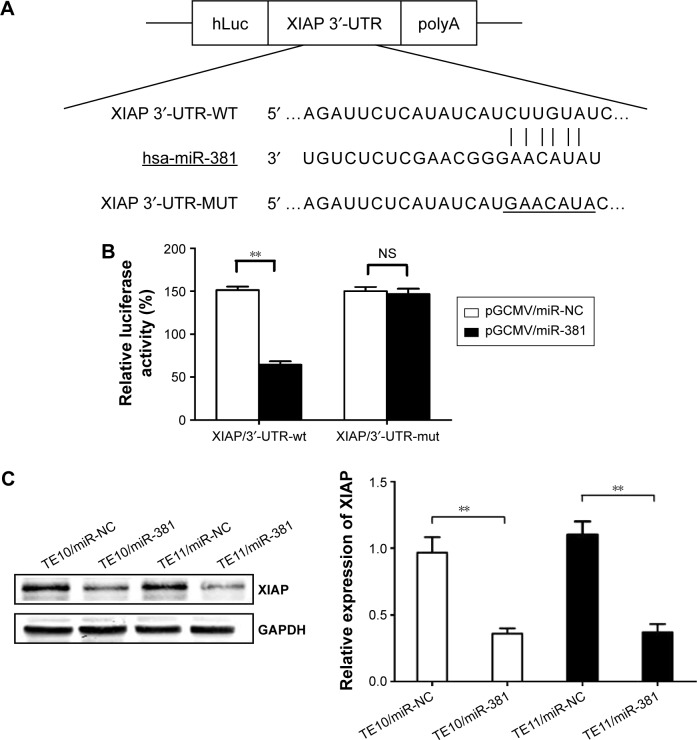
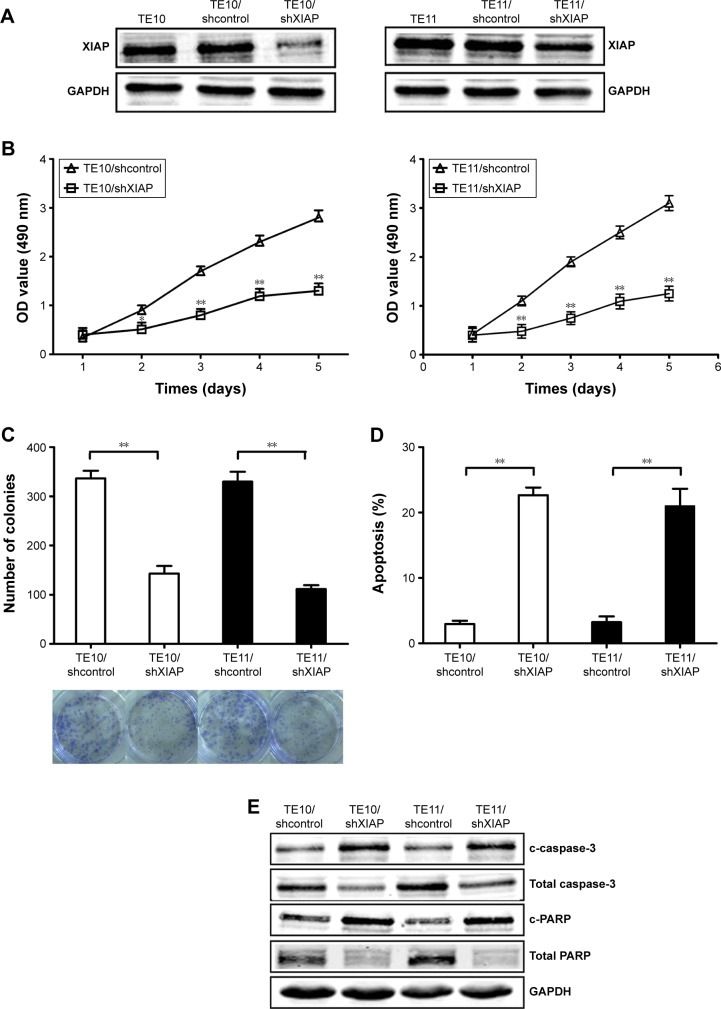
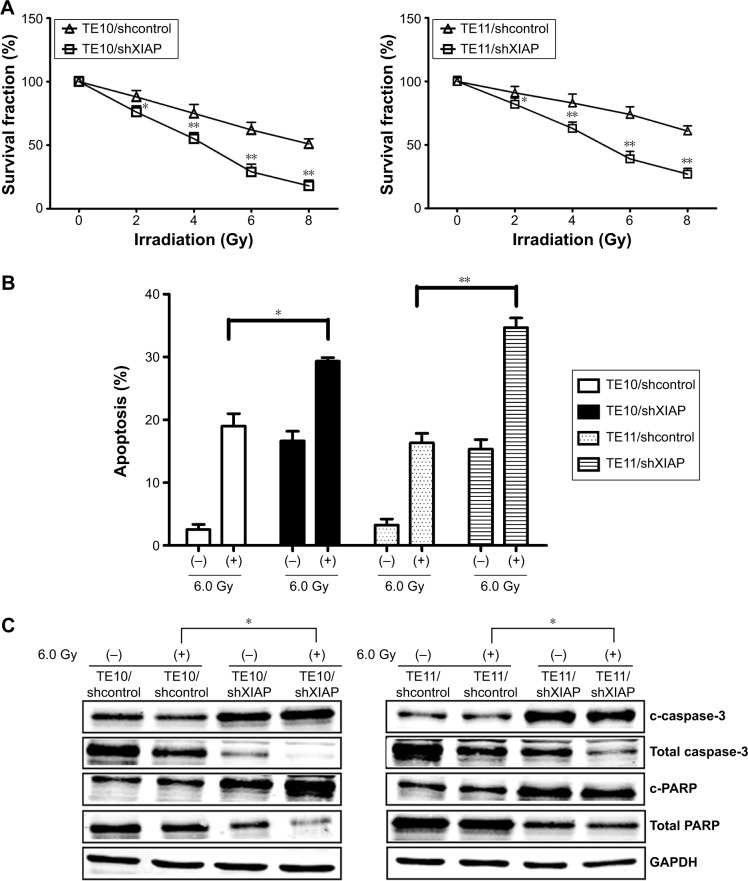
ESCC cell lines or tissues were found to express significantly lower miR-381 than normal esophageal epithelial cells or adjacent normal tissues, respectively. Ectopic expression of miR-381 in ESCC cell lines blocked proliferation, reduced colony formation, enhanced apoptosis, and increased radiosensitivity by enhancing irradiation-induced apoptosis. In addition, dual-luciferase reporter assays showed that miR-381 binds to the 3'-untranslated region of X-linked inhibitor of apoptosis protein (XIAP), suggesting that XIAP should be a direct target of miR-381. Re-expression of miR-381 suppressed XIAP protein expression in ESCC cells, and the effects of miR-381 upregulation on ESCC cells were found to be similar with silencing of XIAP. In addition, XIAP mRNA expression significantly increased in ESCC tissues and was inversely correlated with miR-381 expression.
The results of this study suggest that miR-381/XIAP pathway contributed to the growth inhibition, increase in apoptosis, and enhancement of radiosensitivity in ESCC cells Therefore, miR-381 may be a potential therapeutic target in human ESCC.
越来越多的证据表明,放射抗性仍然是食管鳞状细胞癌(ESCC)患者治疗中的一个主要问题。本研究旨在调查微小RNA-381(miR-381)的表达及其在ESCC放射抗性中的作用。
在本研究中,首先通过定量实时聚合酶链反应(qRT-PCR)检测ESCC细胞系和组织样本中miR-381的表达。然后,分别通过MTT、集落形成和流式细胞术分析miR-381表达对ESCC细胞生长、凋亡和放射敏感性的影响。进行双荧光素酶报告基因测定以验证miR-381假定靶标的调控,并与qRT-PCR和蛋白质印迹测定相互印证。
发现ESCC细胞系或组织中miR-381的表达分别显著低于正常食管上皮细胞或邻近正常组织。ESCC细胞系中miR-381的异位表达通过增强辐射诱导的凋亡来阻断增殖、减少集落形成、增强凋亡并增加放射敏感性。此外,双荧光素酶报告基因测定表明miR-381与X连锁凋亡抑制蛋白(XIAP)的3'非翻译区结合,提示XIAP应该是miR-381的直接靶标。miR-381的重新表达抑制了ESCC细胞中XIAP蛋白的表达,并且发现miR-381上调对ESCC细胞的影响与XIAP沉默相似。此外,XIAP mRNA表达在ESCC组织中显著增加,并且与miR-381表达呈负相关。
本研究结果表明,miR-381/XIAP通路有助于ESCC细胞的生长抑制、凋亡增加和放射敏感性增强。因此,miR-381可能是人类ESCC的一个潜在治疗靶点。