Del Papa Bruno, Priesemann Viola, Triesch Jochen
Frankfurt Institute for Advanced Studies, Johann Wolfgang Goethe University, Frankfurt am Main, Germany.
International Max Planck Research School for Neural Circuits, Max Planck Institute for Brain Research, Frankfurt am Main, Germany.
PLoS One. 2017 May 26;12(5):e0178683. doi: 10.1371/journal.pone.0178683. eCollection 2017.
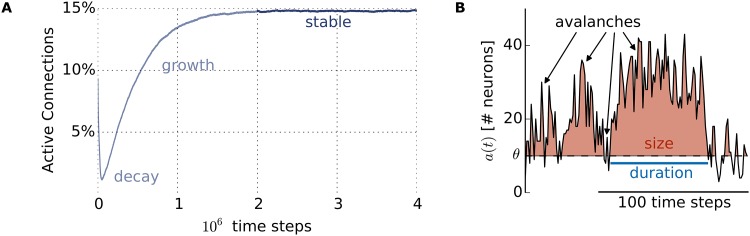
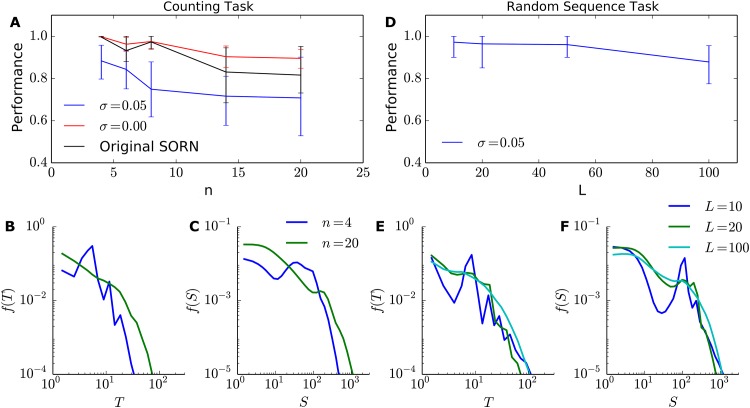
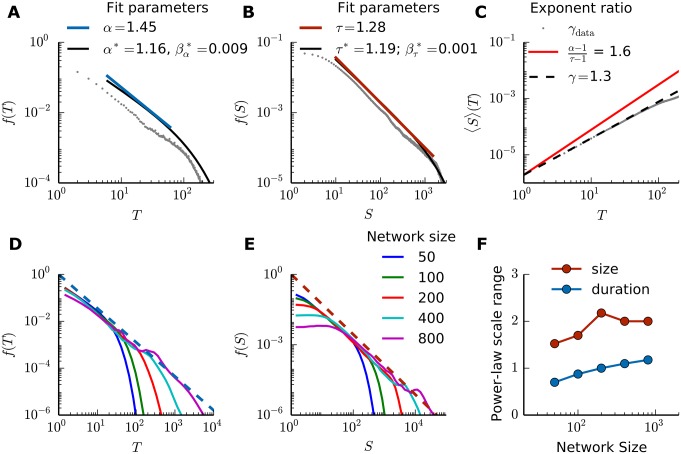
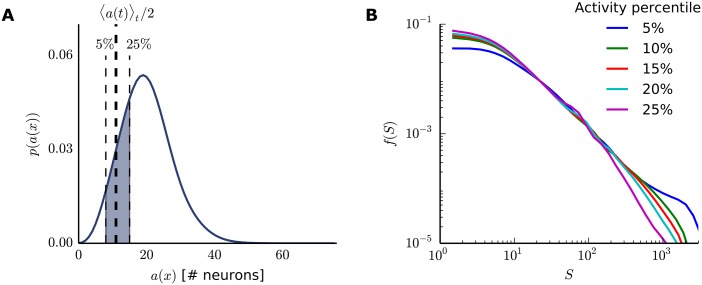
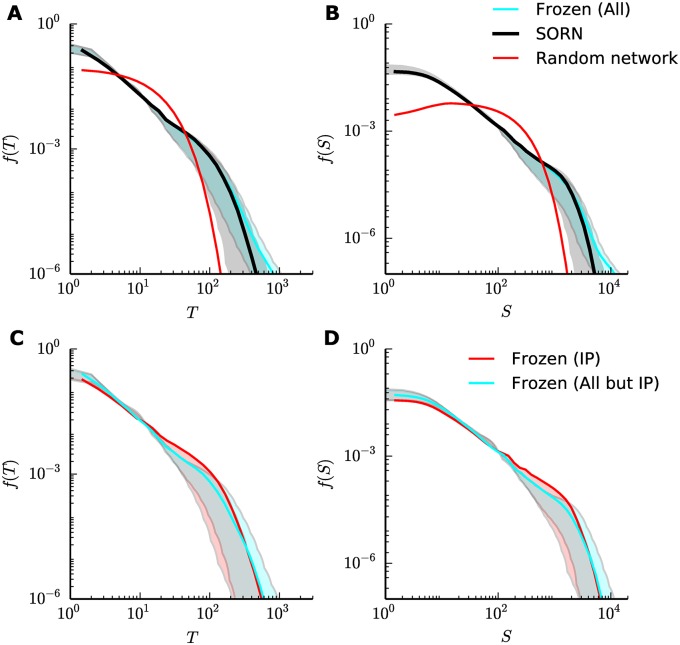
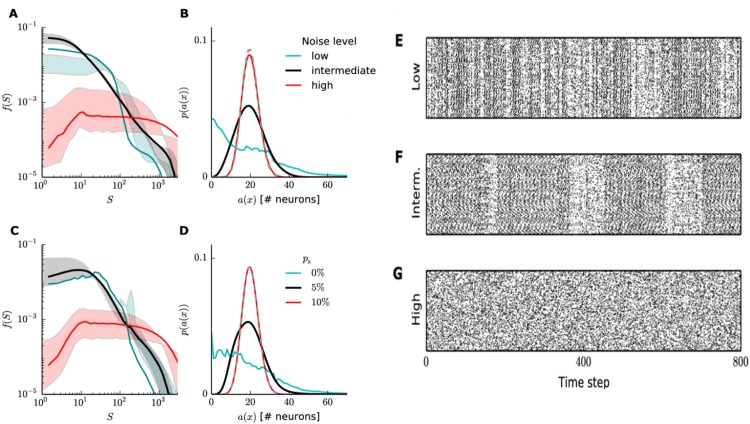
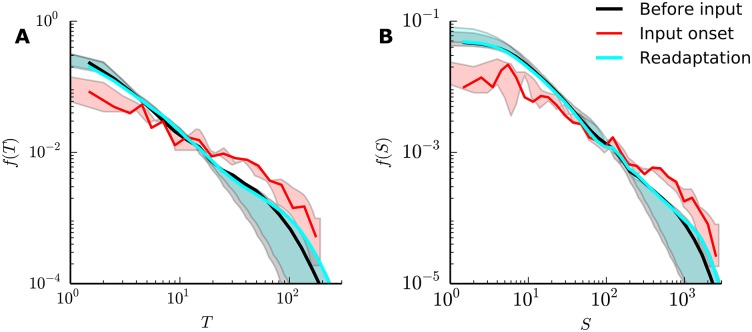
Many experiments have suggested that the brain operates close to a critical state, based on signatures of criticality such as power-law distributed neuronal avalanches. In neural network models, criticality is a dynamical state that maximizes information processing capacities, e.g. sensitivity to input, dynamical range and storage capacity, which makes it a favorable candidate state for brain function. Although models that self-organize towards a critical state have been proposed, the relation between criticality signatures and learning is still unclear. Here, we investigate signatures of criticality in a self-organizing recurrent neural network (SORN). Investigating criticality in the SORN is of particular interest because it has not been developed to show criticality. Instead, the SORN has been shown to exhibit spatio-temporal pattern learning through a combination of neural plasticity mechanisms and it reproduces a number of biological findings on neural variability and the statistics and fluctuations of synaptic efficacies. We show that, after a transient, the SORN spontaneously self-organizes into a dynamical state that shows criticality signatures comparable to those found in experiments. The plasticity mechanisms are necessary to attain that dynamical state, but not to maintain it. Furthermore, onset of external input transiently changes the slope of the avalanche distributions - matching recent experimental findings. Interestingly, the membrane noise level necessary for the occurrence of the criticality signatures reduces the model's performance in simple learning tasks. Overall, our work shows that the biologically inspired plasticity and homeostasis mechanisms responsible for the SORN's spatio-temporal learning abilities can give rise to criticality signatures in its activity when driven by random input, but these break down under the structured input of short repeating sequences.
许多实验表明,基于幂律分布的神经元雪崩等临界特征,大脑在接近临界状态下运行。在神经网络模型中,临界状态是一种动态状态,可使信息处理能力最大化,例如对输入的敏感度、动态范围和存储容量,这使其成为大脑功能的一个理想候选状态。尽管已经提出了向临界状态自组织的模型,但临界特征与学习之间的关系仍不明确。在此,我们研究了自组织递归神经网络(SORN)中的临界特征。研究SORN中的临界状态特别有意义,因为它并非为显示临界状态而设计。相反,SORN已被证明通过神经可塑性机制的组合展现出时空模式学习能力,并且它再现了许多关于神经变异性以及突触效能的统计和波动的生物学发现。我们表明,经过一个暂态过程后,SORN会自发地自组织成一种动态状态,该状态显示出与实验中发现的临界特征相当的特征。可塑性机制对于达到该动态状态是必要的,但并非维持该状态所必需。此外,外部输入的开始会短暂改变雪崩分布的斜率——这与最近的实验结果相符。有趣的是,出现临界特征所需的膜噪声水平会降低模型在简单学习任务中的表现。总体而言,我们的工作表明,负责SORN时空学习能力的受生物学启发的可塑性和稳态机制,在由随机输入驱动时,可在其活动中产生临界特征,但在短重复序列的结构化输入下这些特征会失效。