Smith Chad C, Srygley Robert B, Healy Frank, Swaminath Karthikeyan, Mueller Ulrich G
Department of Integrative Biology, University of Texas at Austin, AustinTX, USA.
Northern Plains Agricultural Research Laboratory, Agricultural Research Service, United States Department of Agriculture, SidneyMT, USA.
Front Microbiol. 2017 May 12;8:801. doi: 10.3389/fmicb.2017.00801. eCollection 2017.
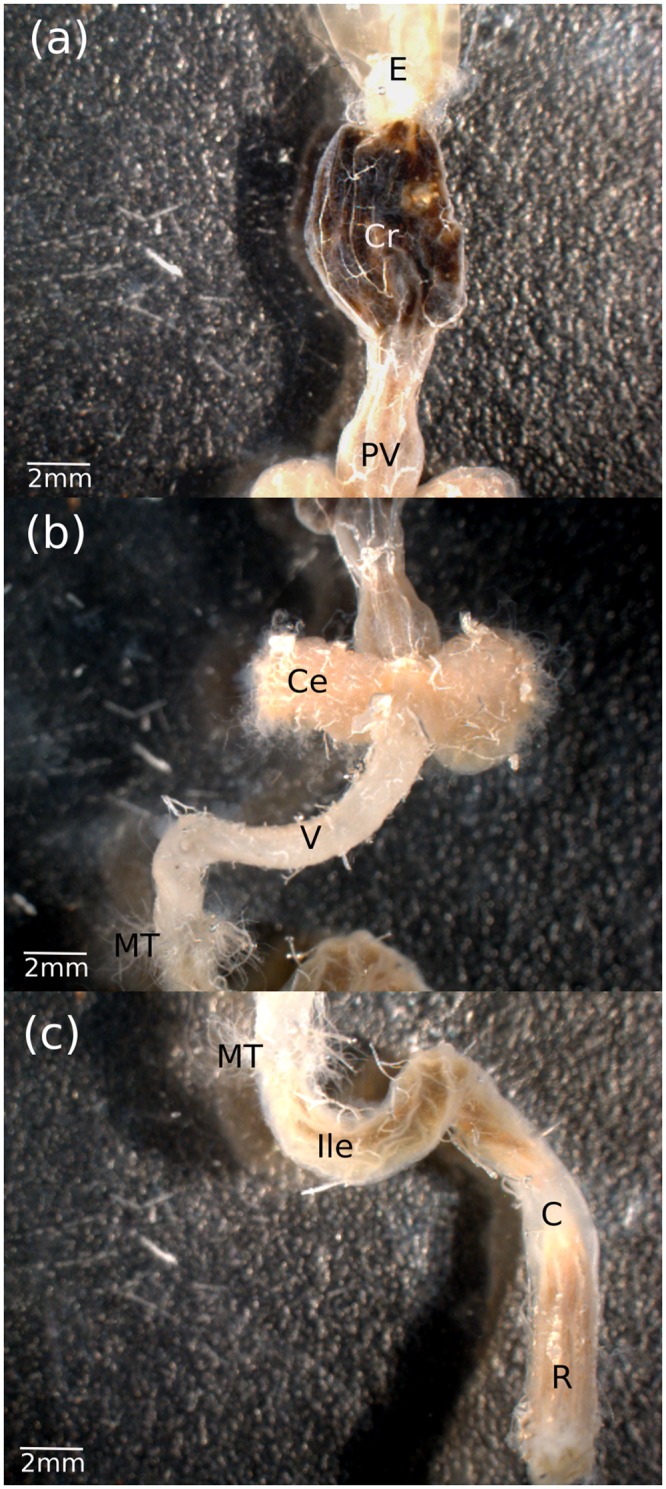
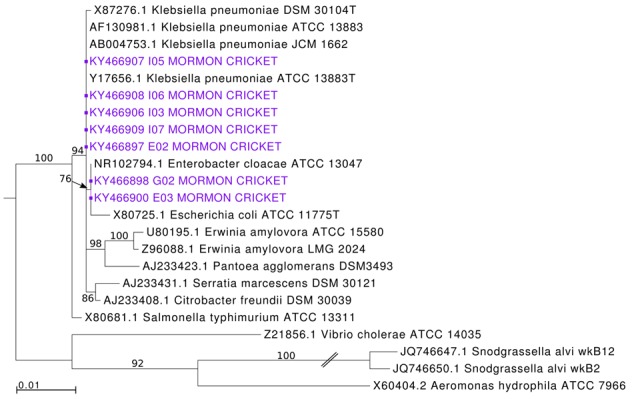
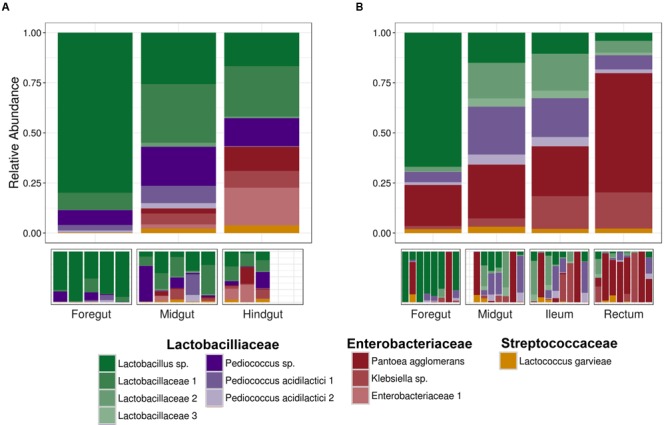
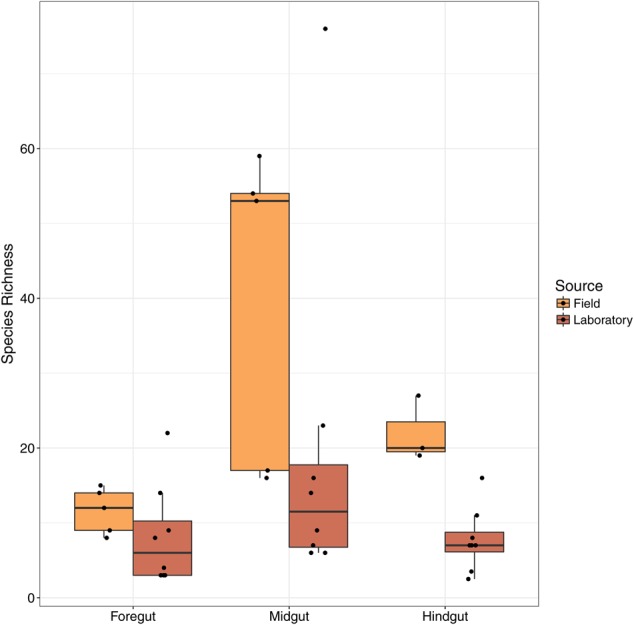
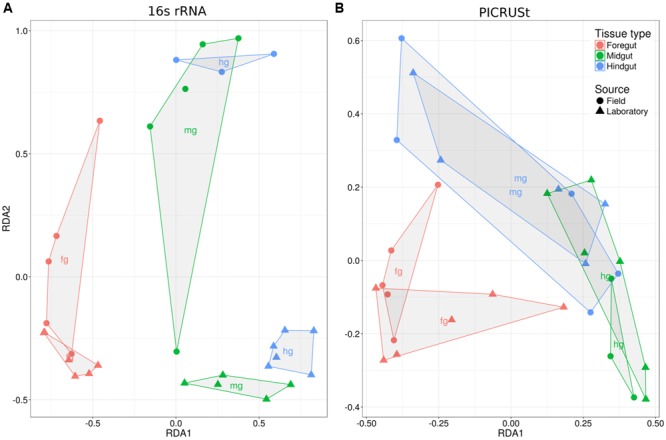
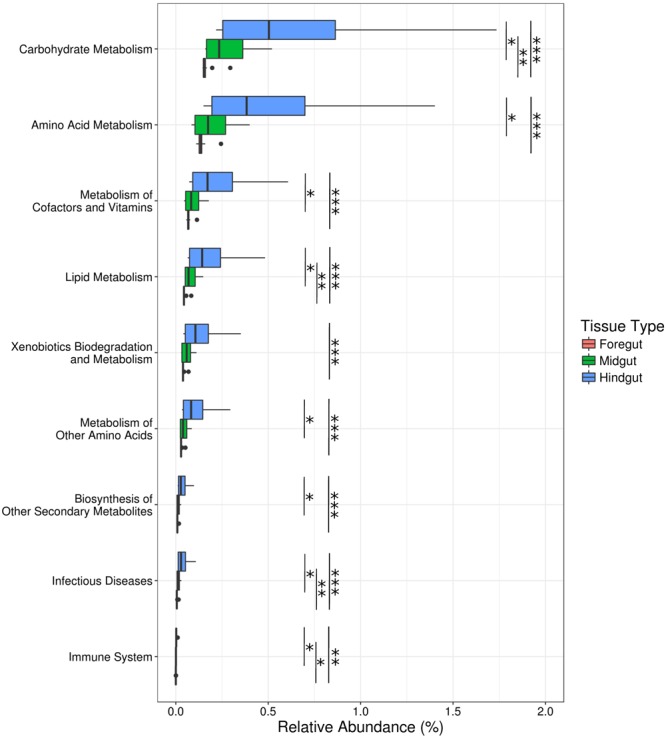
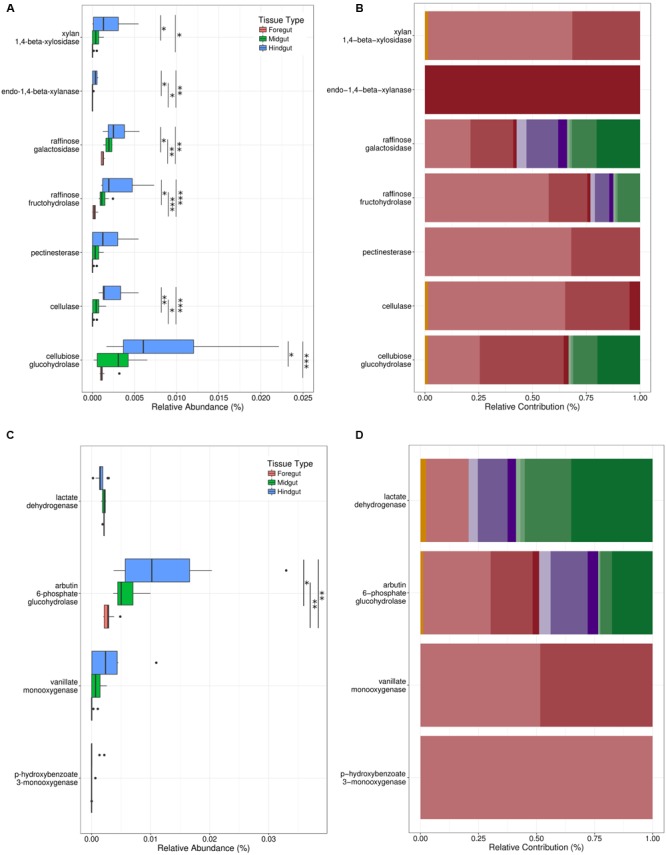
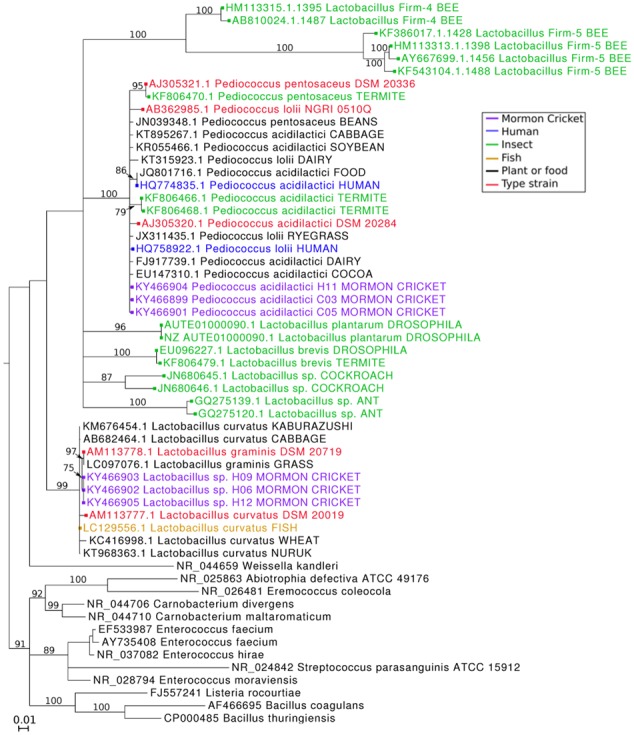
The gut microbiome of insects plays an important role in their ecology and evolution, participating in nutrient acquisition, immunity, and behavior. Microbial community structure within the gut is heavily influenced by differences among gut regions in morphology and physiology, which determine the niches available for microbes to colonize. We present a high-resolution analysis of the structure of the gut microbiome in the Mormon cricket , an insect known for its periodic outbreaks in the western United States and nutrition-dependent mating system. The Mormon cricket microbiome was dominated by 11 taxa from the Lactobacillaceae, Enterobacteriaceae, and Streptococcaceae. While most of these were represented in all gut regions, there were marked differences in their relative abundance, with lactic-acid bacteria (Lactobacillaceae) more common in the foregut and midgut and enteric (Enterobacteriaceae) bacteria more common in the hindgut. Differences in community structure were driven by variation in the relative prevalence of three groups: a in the foregut, lactic-acid bacteria in the midgut, and , an enteric bacterium, in the hindgut. These taxa have been shown to have beneficial effects on their hosts in insects and other animals by improving nutrition, increasing resistance to pathogens, and modulating social behavior. Using PICRUSt to predict gene content from our 16S rRNA sequences, we found enzymes that participate in carbohydrate metabolism and pathogen defense in other orthopterans. These were predominately represented in the hindgut and midgut, the most important sites for nutrition and pathogen defense. Phylogenetic analysis of 16S rRNA sequences from cultured isolates indicated low levels of divergence from sequences derived from plants and other insects, suggesting that these bacteria are likely to be exchanged between Mormon crickets and the environment. Our study shows strong spatial variation in microbiome community structure, which influences predicted gene content and thus the potential of the microbiome to influence host function.
昆虫的肠道微生物群在其生态和进化中发挥着重要作用,参与营养获取、免疫和行为。肠道内的微生物群落结构受到肠道不同区域形态和生理差异的严重影响,这些差异决定了微生物可定殖的生态位。我们对摩门螽斯的肠道微生物群结构进行了高分辨率分析,摩门螽斯是一种在美国西部以周期性爆发和依赖营养的交配系统而闻名的昆虫。摩门螽斯的微生物群以来自乳杆菌科、肠杆菌科和链球菌科的11个分类单元为主。虽然这些分类单元在所有肠道区域都有代表,但它们的相对丰度存在显著差异,乳酸菌(乳杆菌科)在前肠和中肠更为常见,而肠道细菌(肠杆菌科)在后肠更为常见。群落结构的差异是由三组相对流行率的变化驱动的:前肠中的一组、中肠中的乳酸菌和后肠中的一种肠道细菌。这些分类单元已被证明通过改善营养、增强对病原体的抵抗力和调节社会行为,对昆虫和其他动物的宿主具有有益影响。使用PICRUSt从我们的16S rRNA序列预测基因含量,我们发现了参与其他直翅目昆虫碳水化合物代谢和病原体防御的酶。这些酶主要存在于后肠和中肠,这是营养和病原体防御的最重要部位。对培养分离物的16S rRNA序列进行系统发育分析表明,与来自植物和其他昆虫序列的差异水平较低,这表明这些细菌可能在摩门螽斯和环境之间交换。我们的研究表明微生物群落结构存在强烈的空间变异,这影响了预测的基因含量,从而影响了微生物群影响宿主功能的潜力。