Naruse Takashi, Matsumoto Hiroshige, Fujisaki-Sakai Mahiro, Nagata Satoko
Department of Community Health nursing, Graduate School of Medicine, The University of Tokyo, 7-3-1, Hongo, Bunkyo-ku, Tokyo, 113-0033, Japan.
BMC Health Serv Res. 2017 May 30;17(1):377. doi: 10.1186/s12913-017-2322-0.
Home care service demands are increasing in Japan; this necessitates improved service allocation. This study examined the relationship between home visit nursing (HVN) service use and the proportion of elderly people living within 10 min' travel of HVN agencies.
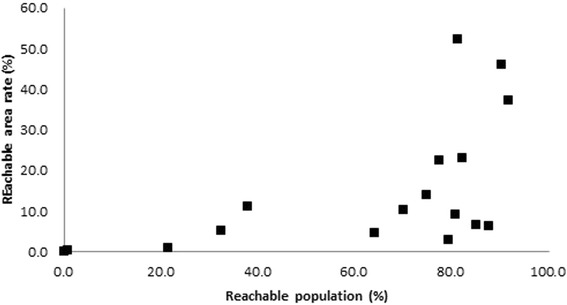
The population of elderly people living within reach of HVN agencies for each of 17 municipalities in one low-density prefecture was calculated using public data and geographic information systems. Multilevel logistic analysis for 2641 elderly people was conducted using medical and long-term care insurance claims data from October 2010 to examine the association between the proportion of elderly people reachable by HVNs and service usage in 13 municipalities. Municipality variables included HVN agency allocation appropriateness. Individual variables included HVN usage and demographic variables.
The reachable proportion of the elderly population ranged from 0.0 to 90.2% in the examined municipalities. The reachable proportion of the elderly population was significantly positively correlated with HVN use (odds ratio: 1.938; confidence interval: 1.265-2.967).
Residents living in municipalities with a lower reachable proportion of the elderly population are less likely to use HVN services. Public health interventions should increase the reachable proportion of the elderly population in order to improve HVN service use.
日本的居家护理服务需求不断增加;这就需要改进服务分配。本研究调查了上门护理(HVN)服务的使用情况与居住在距离HVN机构10分钟行程范围内的老年人比例之间的关系。
利用公共数据和地理信息系统,计算了一个低密度县17个市中每个市HVN机构可及范围内的老年人口数量。使用2010年10月的医疗和长期护理保险理赔数据,对2641名老年人进行了多水平逻辑分析,以研究HVN可及的老年人比例与13个市的服务使用情况之间的关联。市变量包括HVN机构分配的适宜性。个体变量包括HVN使用情况和人口统计学变量。
在所调查的市中,老年人口的可及比例在0.0%至90.2%之间。老年人口的可及比例与HVN使用情况呈显著正相关(比值比:1.938;置信区间:1.265 - 2.967)。
居住在老年人口可及比例较低的市的居民使用HVN服务的可能性较小。公共卫生干预措施应提高老年人口的可及比例,以改善HVN服务的使用情况。