Sullivan Steve J, Farrant Mark, Cull-Candy Stuart G
Department of Neuroscience, Physiology and Pharmacology, University College London, London WC1E 6BT, United Kingdom.
Department of Neuroscience, Physiology and Pharmacology, University College London, London WC1E 6BT, United Kingdom
J Neurosci. 2017 Jun 21;37(25):6007-6020. doi: 10.1523/JNEUROSCI.0772-16.2017. Epub 2017 May 30.
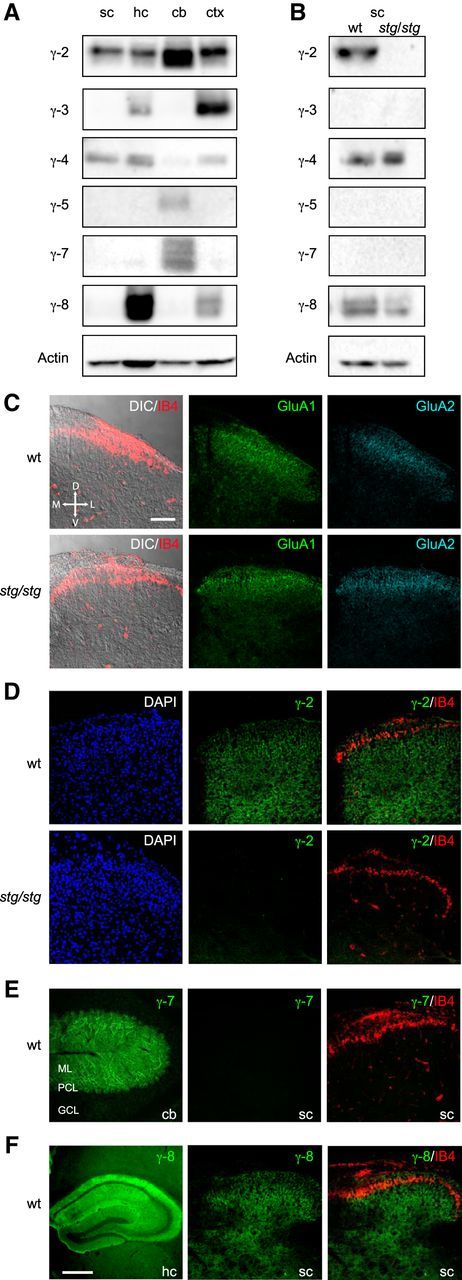
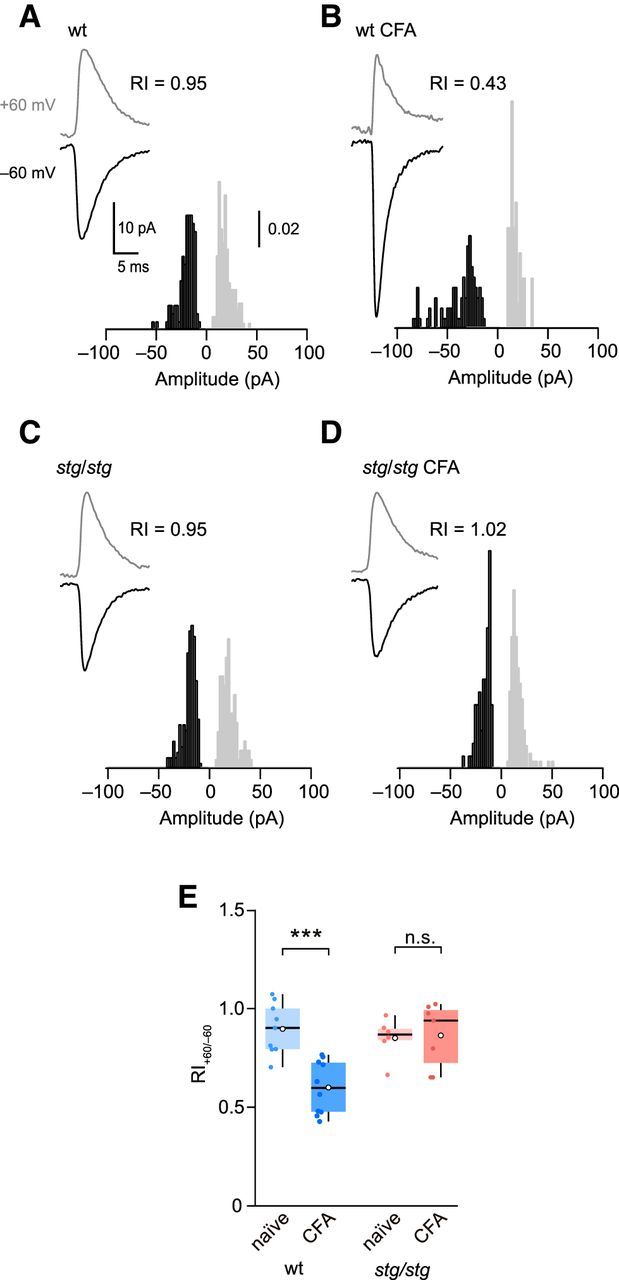
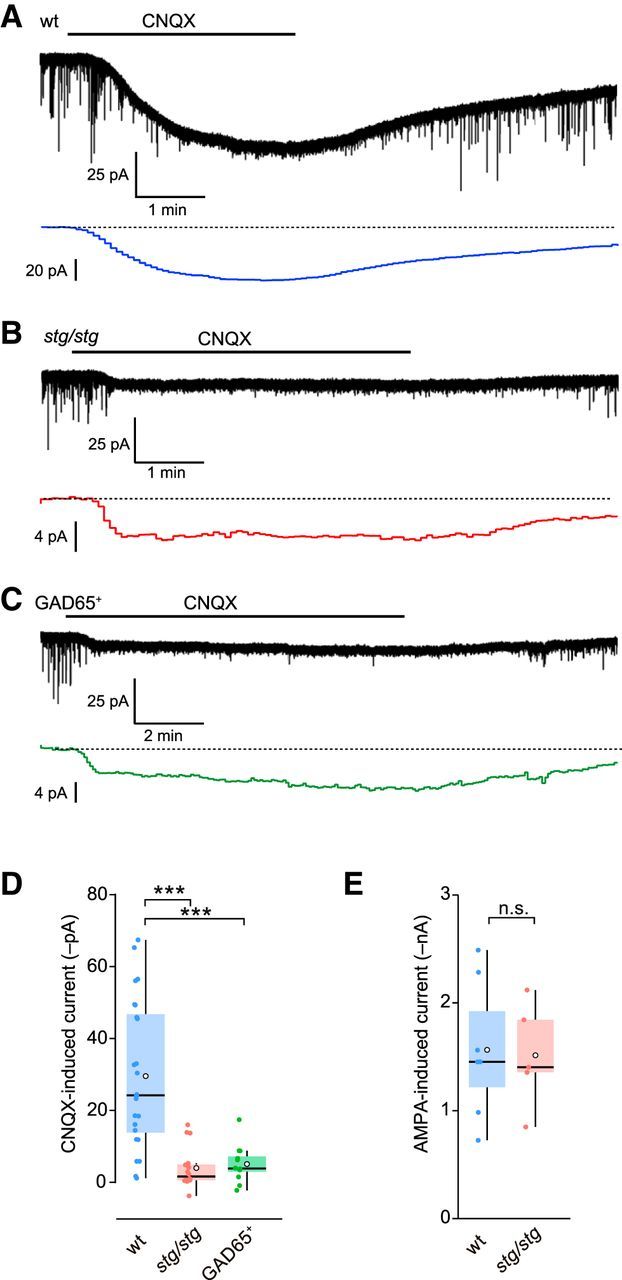
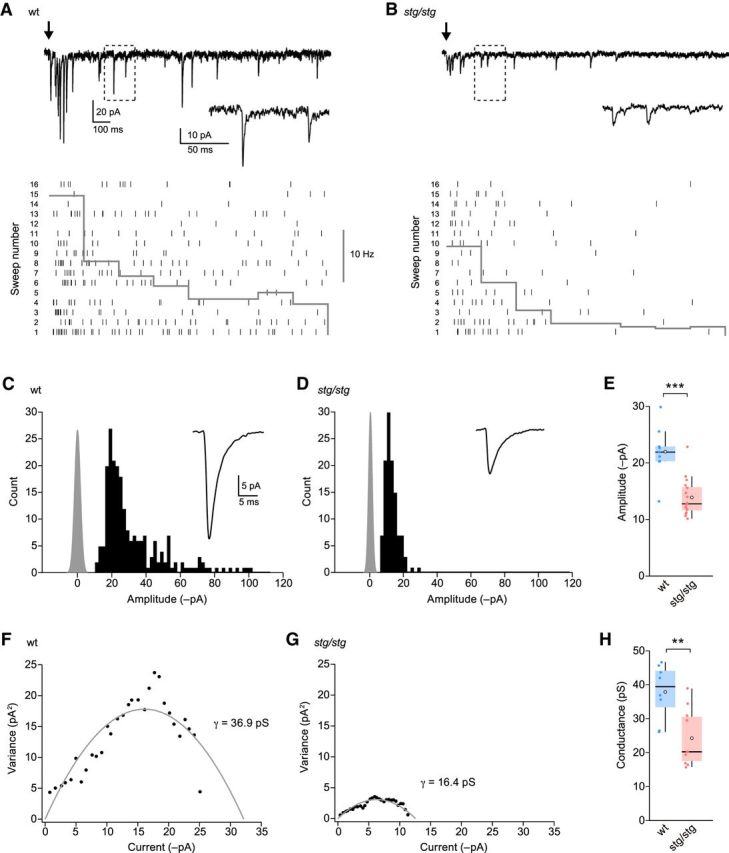
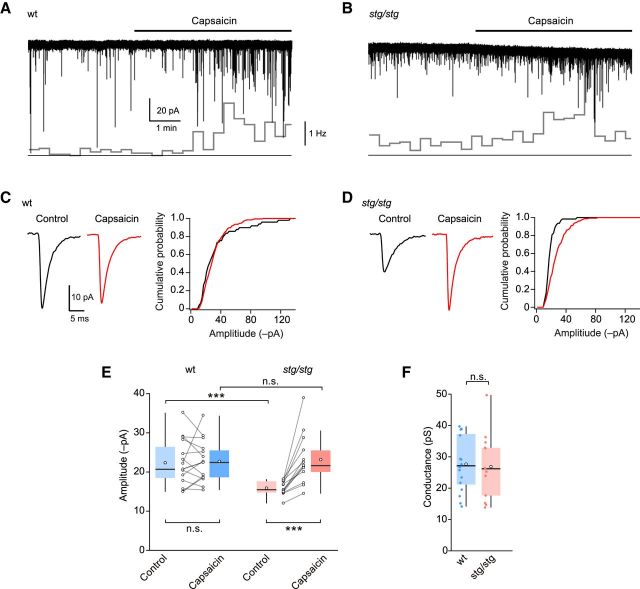
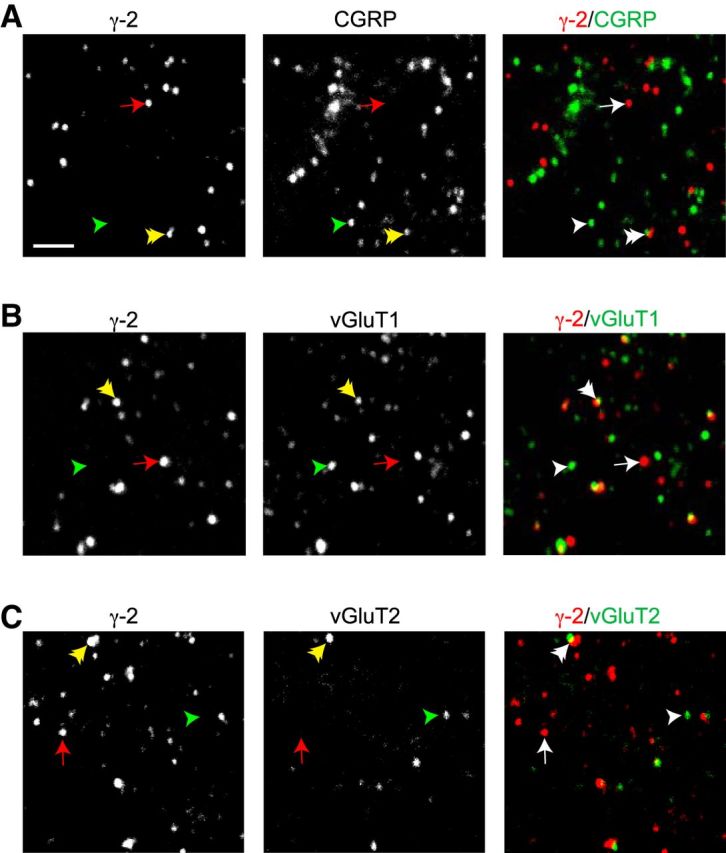
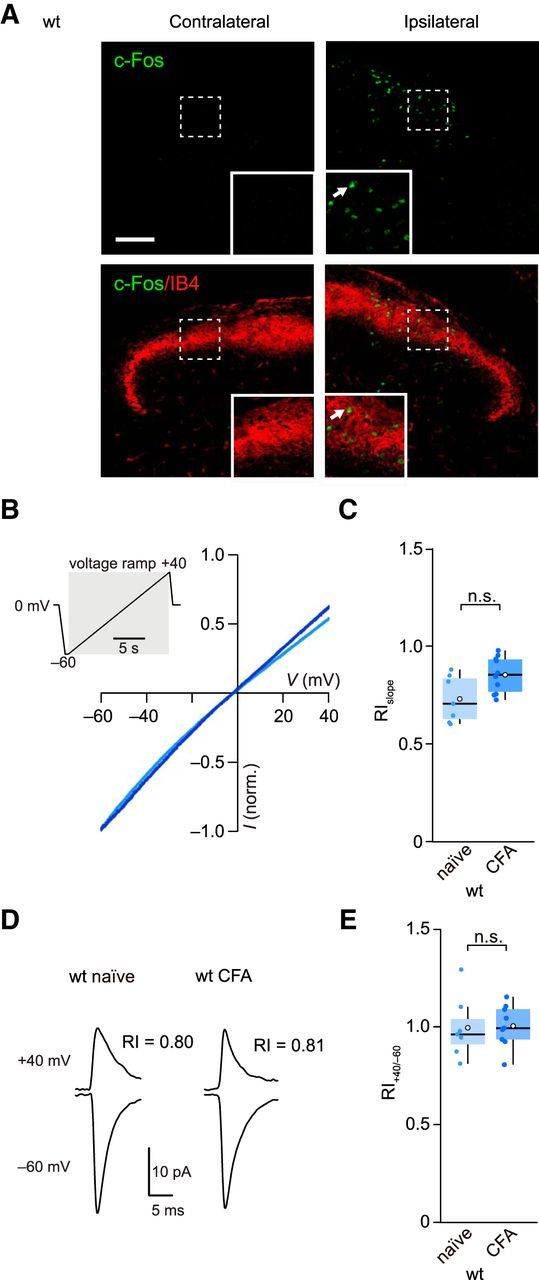
In the brain, transmembrane AMPAR regulatory proteins (TARPs) critically influence the distribution, gating, and pharmacology of AMPARs, but the contribution of these auxiliary subunits to AMPAR-mediated signaling in the spinal cord remains unclear. We found that the Type I TARP γ-2 (stargazin) is present in lamina II of the superficial dorsal horn, an area involved in nociception. Consistent with the notion that γ-2 is associated with surface AMPARs, CNQX, a partial agonist at AMPARs associated with Type I TARPs, evoked whole-cell currents in lamina II neurons, but such currents were severely attenuated in γ-2-lacking () mice. Examination of EPSCs revealed the targeting of γ-2 to be synapse-specific; the amplitude of spontaneously occurring miniature EPSCs (mEPSCs) was reduced in neurons from mice, but the amplitude of capsaicin-induced mEPSCs from C-fiber synapses was unaltered. This suggests that γ-2 is associated with AMPARs at synapses in lamina II but excluded from those at C-fiber inputs, a view supported by our immunohistochemical colabeling data. Following induction of peripheral inflammation, a model of hyperalgesia, there was a switch in the current-voltage relationships of capsaicin-induced mEPSCs, from linear to inwardly rectifying, indicating an increased prevalence of calcium-permeable (CP) AMPARs. This effect was abolished in mice. Our results establish that, although γ-2 is not typically associated with calcium-impermeable AMPARs at C-fiber synapses, it is required for the translocation of CP-AMPARs to these synapses following peripheral inflammation. In the brain, transmembrane AMPAR regulatory proteins (TARPs) critically determine the functional properties of AMPARs, but the contribution of these auxiliary subunits to AMPAR-mediated signaling in the spinal cord remains unclear. An increase in the excitability of neurons within the superficial dorsal horn (SDH) of the spinal cord is thought to underlie heighted pain sensitivity. One mechanism considered to contribute to such long-lived changes is the remodeling of the ionotropic AMPA-type glutamate receptors that underlie fast excitatory synaptic transmission in the SDH. Here we show that the TARP γ-2 (stargazin) is present in SDH neurons and is necessary in a form of inflammatory pain-induced plasticity, which involves an increase in the prevalence of synaptic calcium-permeable AMPARs.
在大脑中,跨膜AMPA受体调节蛋白(TARPs)对AMPA受体的分布、门控和药理学特性具有关键影响,但这些辅助亚基对脊髓中AMPA受体介导的信号传导的作用仍不清楚。我们发现I型TARP γ-2(stargazin)存在于浅表背角的II层,该区域与伤害感受有关。与γ-2与表面AMPA受体相关的观点一致,CNQX是与I型TARPs相关的AMPA受体的部分激动剂,可在II层神经元中诱发全细胞电流,但在缺乏γ-2的()小鼠中,这种电流严重减弱。对兴奋性突触后电流(EPSCs)的检测表明,γ-2的靶向具有突触特异性;在来自小鼠的神经元中,自发产生的微小兴奋性突触后电流(mEPSCs)的幅度降低,但来自C纤维突触的辣椒素诱导的mEPSCs的幅度未改变。这表明γ-2与II层突触处的AMPA受体相关,但在C纤维输入处的突触中不存在,我们的免疫组织化学共标记数据支持了这一观点。在诱导外周炎症(一种痛觉过敏模型)后,辣椒素诱导的mEPSCs的电流-电压关系发生了转变,从线性变为内向整流,表明钙通透性(CP)AMPA受体的比例增加。在小鼠中这种效应被消除。我们的结果表明,虽然γ-2通常不与C纤维突触处的钙不透性AMPA受体相关,但在外周炎症后,它是CP-AMPA受体向这些突触转运所必需的。在大脑中,跨膜AMPA受体调节蛋白(TARPs)决定性地决定了AMPA受体的功能特性,但这些辅助亚基对脊髓中AMPA受体介导的信号传导的作用仍不清楚。脊髓浅表背角(SDH)内神经元兴奋性的增加被认为是疼痛敏感性增强的基础。一种被认为导致这种长期变化的机制是离子型AMPA型谷氨酸受体的重塑,它是SDH中快速兴奋性突触传递的基础。在这里,我们表明TARP γ-2(stargazin)存在于SDH神经元中,并且在一种炎症性疼痛诱导的可塑性形式中是必需的,这种可塑性涉及突触钙通透性AMPA受体比例的增加。