AI lab, Computer Science Department, Vrije Universiteit Brussel, Pleinlaan 2, 1050, Brussels, Belgium.
MLG, Département d'Informatique, Université Libre de Bruxelles, Boulevard du Triomphe CP212, 1050, Brussels, Belgium.
Sci Rep. 2017 May 30;7(1):2478. doi: 10.1038/s41598-017-02625-z.
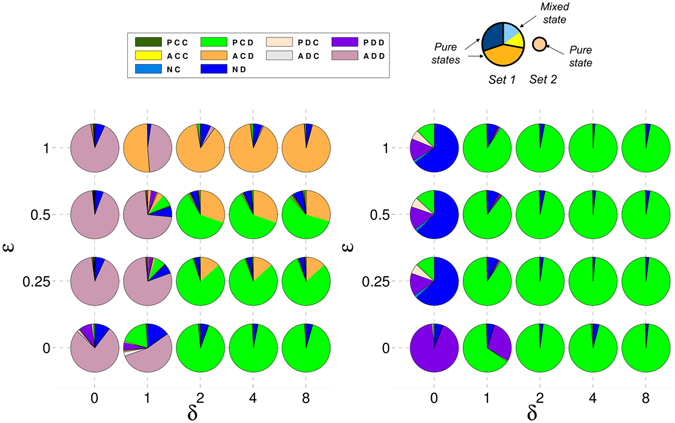
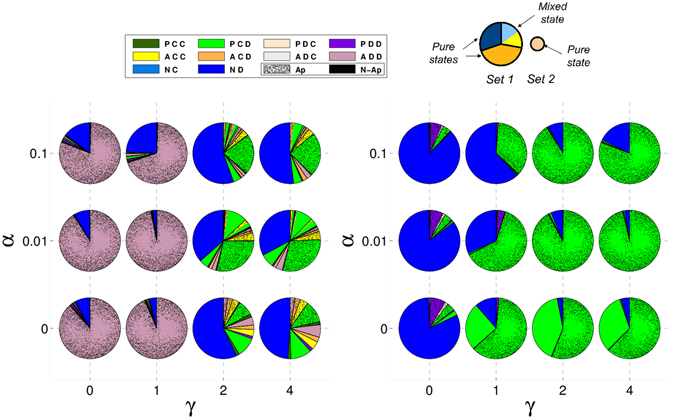
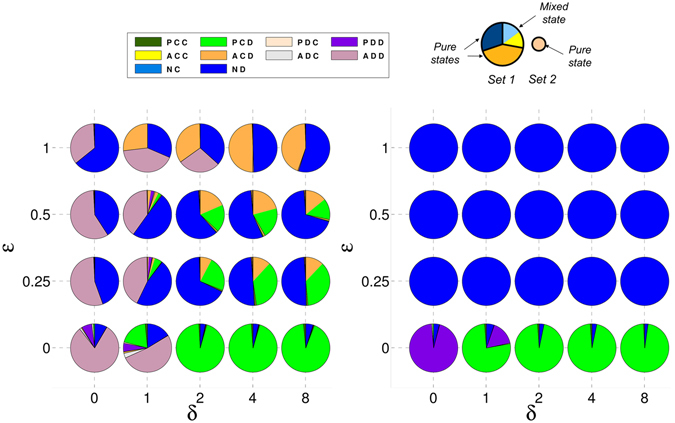
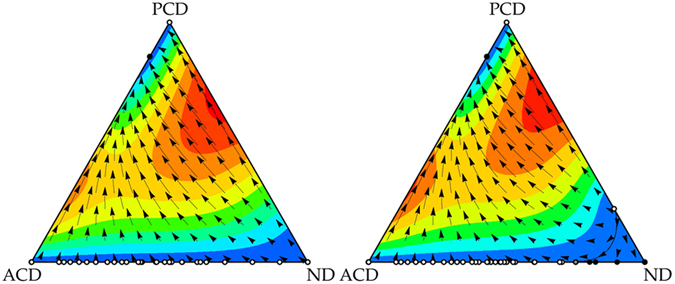
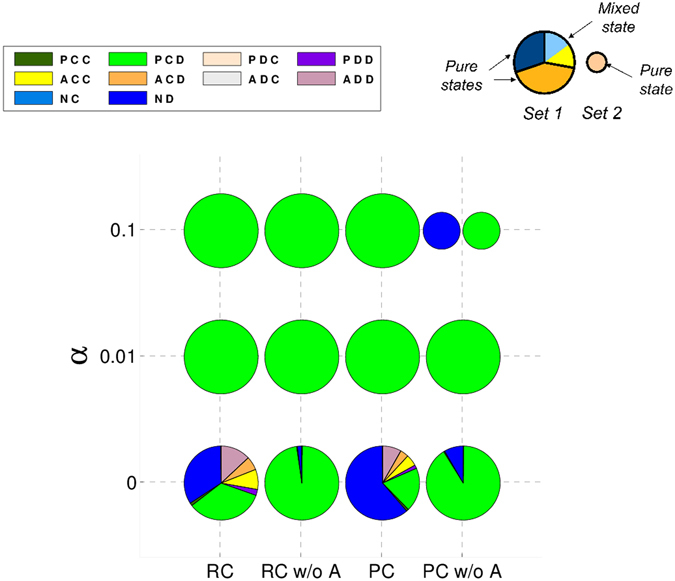
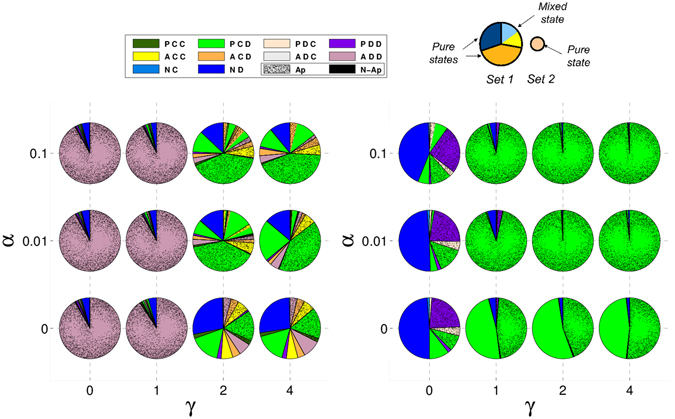
Agreements and commitments have provided a novel mechanism to promote cooperation in social dilemmas in both one-shot and repeated games. Individuals requesting others to commit to cooperate (proposers) incur a cost, while their co-players are not necessarily required to pay any, allowing them to free-ride on the proposal investment cost (acceptors). Although there is a clear complementarity in these behaviours, no dynamic evidence is currently available that proves that they coexist in different forms of commitment creation. Using a stochastic evolutionary model allowing for mixed population states, we identify non-trivial roles of acceptors as well as the importance of intention recognition in commitments. In the one-shot prisoner's dilemma, alliances between proposers and acceptors are necessary to isolate defectors when proposers do not know the acceptance intentions of the others. However, when the intentions are clear beforehand, the proposers can emerge by themselves. In repeated games with noise, the incapacity of proposers and acceptors to set up alliances makes the emergence of the first harder whenever the latter are present. As a result, acceptors will exploit proposers and take over the population when an apology-forgiveness mechanism with too low apology cost is introduced, and hence reduce the overall cooperation level.
协议和承诺为促进单次和重复博弈中的社会困境合作提供了一种新的机制。要求他人承诺合作的个体(提议者)会产生成本,而他们的共同参与者不一定需要支付任何费用,从而可以免费搭乘提议投资成本(接受者)。尽管这些行为具有明显的互补性,但目前没有动态证据证明它们以不同的承诺形成形式共存。使用允许混合群体状态的随机演化模型,我们确定了接受者的非平凡作用以及意图识别在承诺中的重要性。在单次囚徒困境中,当提议者不知道其他人的接受意图时,提议者和接受者之间的联盟是将叛徒隔离的必要条件。然而,当意图事先明确时,提议者可以自行出现。在存在噪声的重复博弈中,当提议者和接受者无法建立联盟时,后者出现时,第一个提议者的出现就变得更加困难。因此,当引入道歉-原谅机制且道歉成本太低时,接受者将利用提议者并接管群体,从而降低整体合作水平。