Zhang Kun, Song Wei, Li Dalin, Jin Xing
Department of Vascular Surgery, Qingdao Municipal Hospital, Qingdao, Shandong 266011, P.R. China.
Department of Vascular Surgery, Shandong Provincial Hospital Affiliated to Shandong University, Jinan, Shandong 250021, P.R. China.
Exp Ther Med. 2017 May;13(5):1719-1724. doi: 10.3892/etm.2017.4165. Epub 2017 Feb 24.
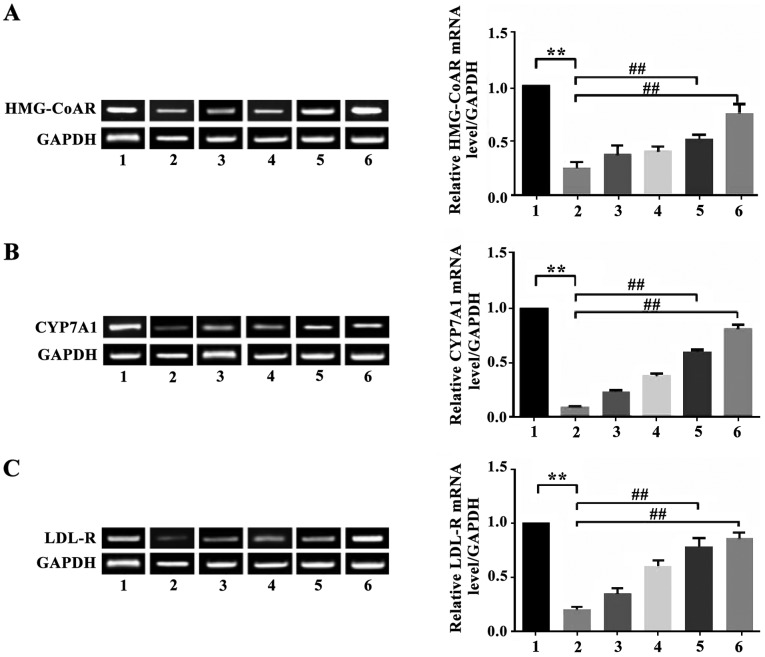
Hyperlipidemia is a major independent risk factor for atherosclerosis. Seeking natural compounds in medicinal plants capable of reducing blood fat and studying their mechanisms of action has been the focus of research in recent years. The aim of the present study was to analyze the mechanisms of apigenin in regulating cholesterol metabolism and protecting blood vessels, and to provide a theoretical basis for the clinical application of apigenin. The mouse model of hyperlipidemia was established to verify the efficacy of apigenin in improving hyperlipidemia and to observe the mechanism of action of apigenin in reducing cholesterol content. cell experiments were conducted to evaluate the role of apigenin in mediating reverse cholesterol transport. Additionally, HO-injured human umbilical venous endothelial cells (EA.hy926 cells) were used for further study on the roles of apigenin in resisting oxidization and protecting vascular endothelial cells. Apigenin significantly regulated blood fat, reduced animal weight, and reduced total cholesterol (P=0.024), triglyceride (P=0.031) and low-density lipoprotein cholesterol (P=0.014) in the serum of the high-fat diet mice. Apigenin improved the blood lipid metabolism of the hyper-lipidemia model mice. Body weight and serum cholesterol content increased abnormally (P=0.003) as a consequence of high-fat diet. Apigenin increased the activity of superoxide dismutase in EA.hy926 cells (P=0.043) and increased the amount of nitric oxide secreted by the cells (P=0.038). Apigenin also inhibited the proliferation of vascular smooth muscle cells in a dose-dependent manner (P=0.036). In conclusion, apigenin can regulate cholesterol metabolism and plays a role in reducing the level of blood fat by promoting cholesterol absorption and conversion, and accelerating reverse cholesterol transport. Apigenin also has a role in resisting oxidization and protecting blood vessels.
高脂血症是动脉粥样硬化的主要独立危险因素。寻找药用植物中能够降低血脂的天然化合物并研究其作用机制是近年来的研究热点。本研究旨在分析芹菜素调节胆固醇代谢和保护血管的机制,为芹菜素的临床应用提供理论依据。建立高脂血症小鼠模型以验证芹菜素改善高脂血症的疗效,并观察芹菜素降低胆固醇含量的作用机制。进行细胞实验以评估芹菜素在介导胆固醇逆向转运中的作用。此外,使用过氧化氢损伤的人脐静脉内皮细胞(EA.hy926细胞)进一步研究芹菜素在抗氧化和保护血管内皮细胞方面的作用。芹菜素显著调节血脂,降低动物体重,并降低高脂饮食小鼠血清中的总胆固醇(P = 0.024)、甘油三酯(P = 0.031)和低密度脂蛋白胆固醇(P = 0.014)。芹菜素改善了高脂血症模型小鼠的血脂代谢。高脂饮食导致体重和血清胆固醇含量异常增加(P = 0.003)。芹菜素增加了EA.hy926细胞中超氧化物歧化酶的活性(P = 0.043),并增加了细胞分泌的一氧化氮量(P = 0.038)。芹菜素还以剂量依赖的方式抑制血管平滑肌细胞的增殖(P = 0.036)。总之,芹菜素可以调节胆固醇代谢,通过促进胆固醇吸收和转化以及加速胆固醇逆向转运来降低血脂水平。芹菜素还具有抗氧化和保护血管的作用。