Al-Rimawi Fuad, Abu-Lafi Saleh, Abbadi Jehad, Alamarneh Ayman A A, Sawahreh Raneen A, Odeh Imad
Chemistry Department, Faculty of Science and Technology, Al-Quds University, P.O. Box 20002, Jerusalem, Palestine.
Faculty of Pharmacy, Al-Quds University, P.O. Box 20002, Jerusalem, Palestine.
Afr J Tradit Complement Altern Med. 2017 Jan 13;14(2):130-141. doi: 10.21010/ajtcam.v14i2.14. eCollection 2017.
Ephedra is among Palestinian medicinal plants that are traditionally used in folkloric medicine for treating many diseases. Ephedra is known to have antibacterial and antioxidant effects. The goal of this study is to evaluate the antioxidant activity of different extracts from the plant growing wild in Palestine, and to analyze their phenolic and flavonoid constituents by HPLC/PDA and HPLC/MS.
Samples of the plant grown wild in Palestine were extracted with three different solvents namely, 100% water, 80% ethanol, and 100% ethanol. The extracts were analyzed for their total phenolic content (TPC), total flavonoid content (TFC), antioxidant activity (AA), as well as phenolic and flavonoids content by HPLC/PDA/MS.
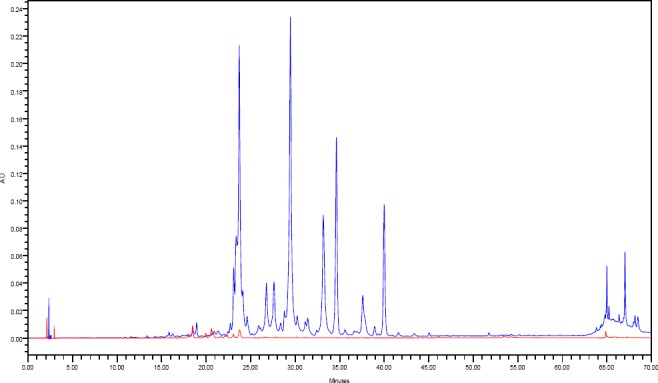
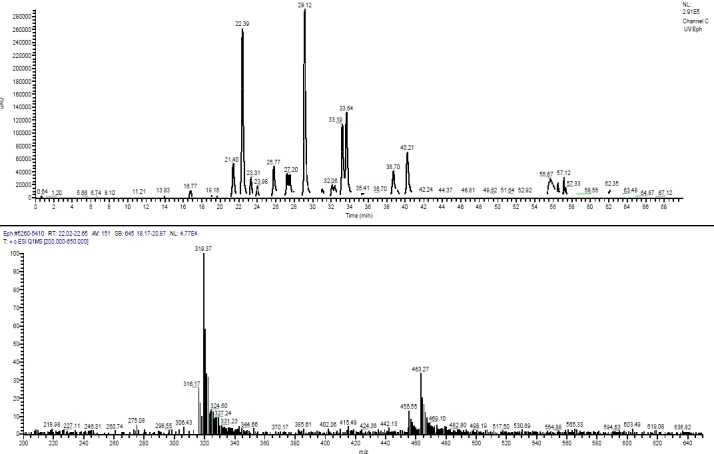
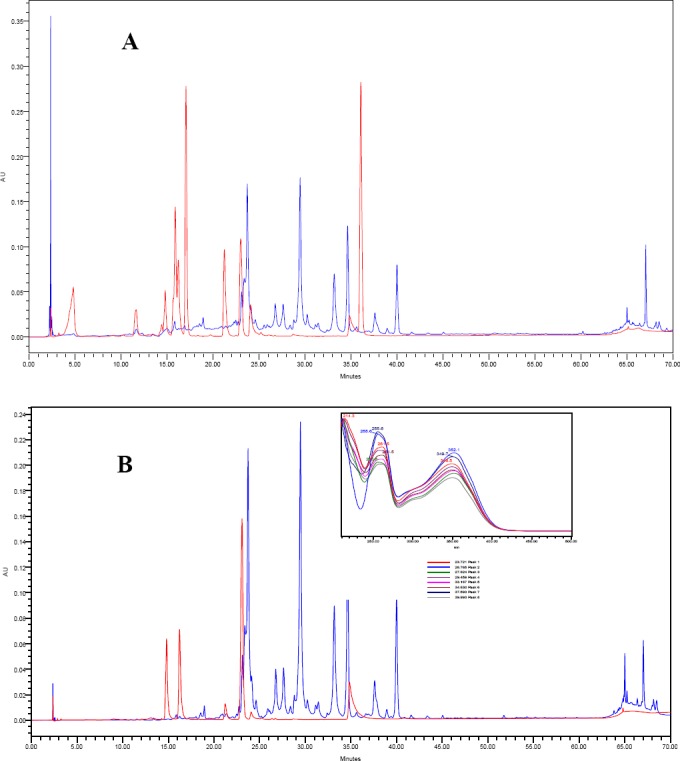
The results revealed that the polarity of the extraction solvent affects the TPC, TFC, and AA of extracts. It was found that both TPC and AA are highest for plant extracted with 80% ethanol, followed by 100% ethanol, and finally with 100% water. TFC however was highest in the following order: 100% ethanol > 80% ethanol > water. Pearson correlation indicated that there is a significant correlation between AA and TPC, but there is no correlation between AA and TFC. Simultaneous HPLC-PDA and UHPLC-MS analysis of the ethanolic plant extracts revealed the presence of Luteolin-7-O-glucuronide flavone, Myricetin 3-rhamnoside and some other major polyphenolic compounds that share myricetin skeleton.
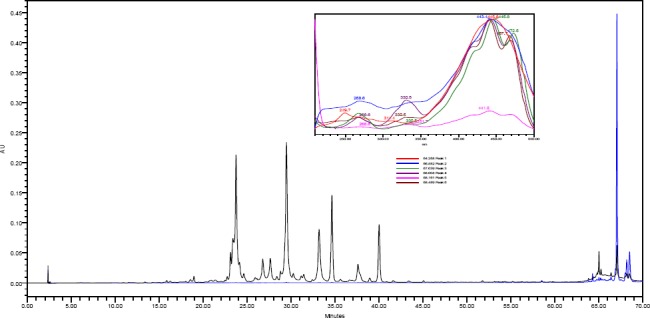
extract is rich in potent falvonoid glycosidic compounds as revealed by their similar overlaid UV-Vis spectra and UHPLC-MS results. On the basis of these findings, it is concluded that constitutes a natural source of potent antioxidants that may prevent many diseases and could be potentially used in food, cosmetics, and pharmaceutical products.
麻黄是巴勒斯坦传统民间医学中用于治疗多种疾病的药用植物之一。已知麻黄具有抗菌和抗氧化作用。本研究的目的是评估巴勒斯坦野生麻黄不同提取物的抗氧化活性,并通过高效液相色谱/光电二极管阵列检测器(HPLC/PDA)和高效液相色谱/质谱(HPLC/MS)分析其酚类和黄酮类成分。
采集巴勒斯坦野生麻黄样本,用三种不同溶剂提取,即100%水、80%乙醇和100%乙醇。对提取物进行总酚含量(TPC)、总黄酮含量(TFC)、抗氧化活性(AA)分析,以及通过HPLC/PDA/MS分析酚类和黄酮类含量。
结果表明,提取溶剂的极性影响提取物的TPC、TFC和AA。发现用80%乙醇提取的麻黄中TPC和AA最高,其次是100%乙醇,最后是100%水。然而,TFC的高低顺序为:100%乙醇>80%乙醇>水。皮尔逊相关性分析表明,AA与TPC之间存在显著相关性,但AA与TFC之间无相关性。对乙醇提取物进行HPLC-PDA和超高效液相色谱-质谱联用(UHPLC-MS)分析,发现存在木犀草素-7-O-葡萄糖醛酸黄酮、杨梅素3-鼠李糖苷以及其他一些具有杨梅素骨架的主要多酚化合物。
提取物富含强效黄酮糖苷化合物,其紫外-可见光谱和UHPLC-MS结果相似表明了这一点。基于这些发现,得出结论:麻黄是强效抗氧化剂的天然来源,可能预防多种疾病,并有可能用于食品、化妆品和药品中。