Fluch Ulrike, Paneta Valentina, Primetzhofer Daniel, Ott Sascha
Department of Chemistry -Ångström Laboratory, Uppsala University, Box 523, 751 20 Uppsala, Sweden.
Chem Commun (Camb). 2017 Jun 13;53(48):6516-6519. doi: 10.1039/c7cc02631e.
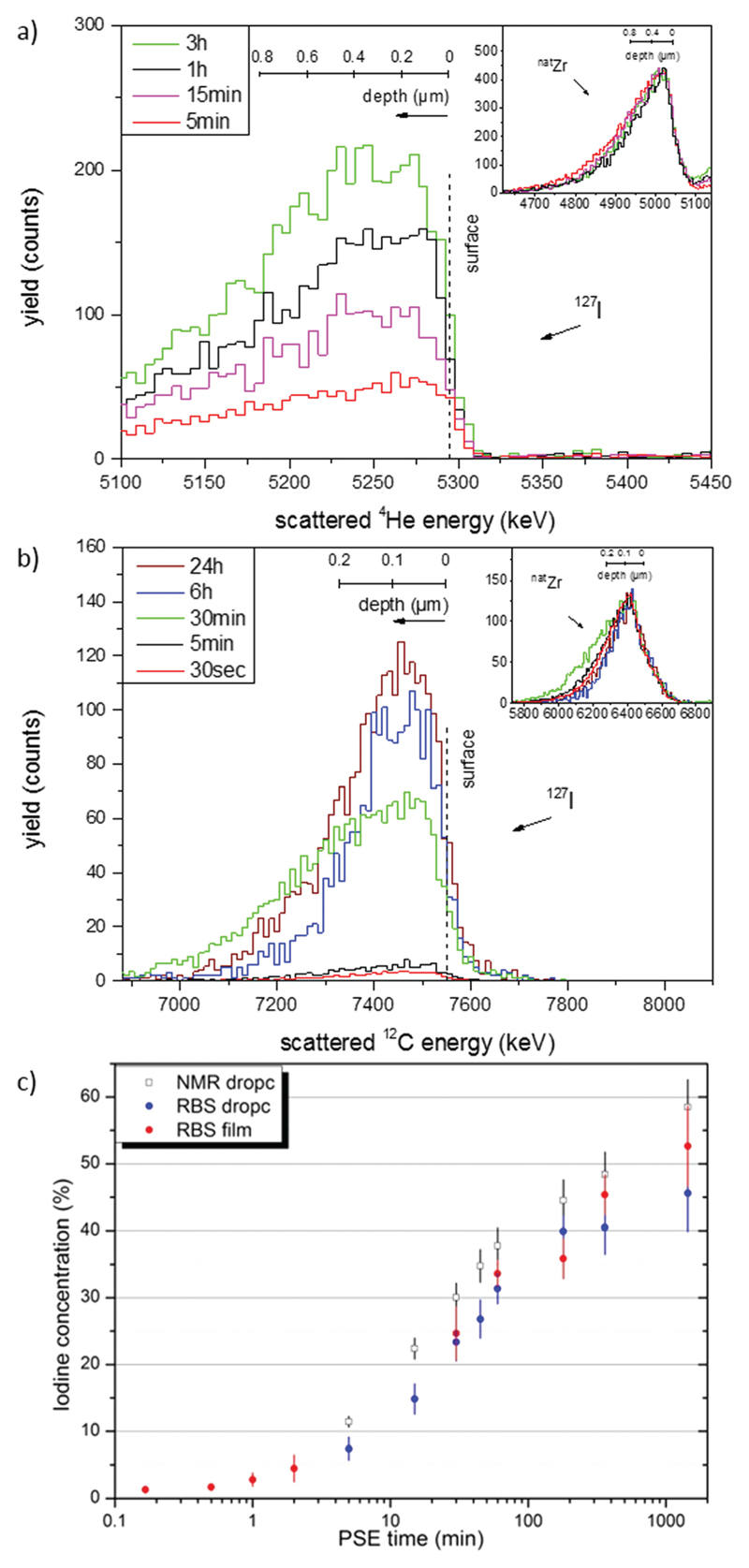
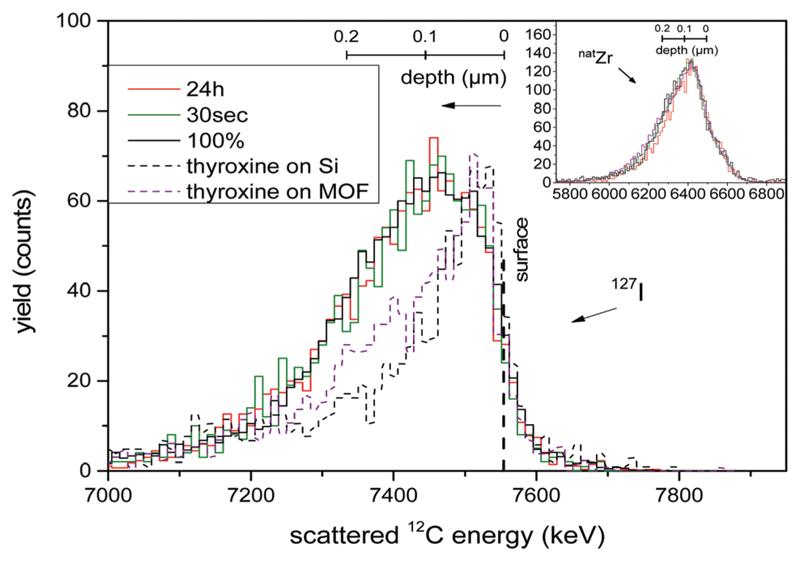
Rutherford backscattering spectrometry (RBS) has been used for the first time to study post-synthetic linker exchange (PSE) in metal-organic frameworks. RBS is a non-invasive method to quantify the amount of introduced linker, as well as providing a means for depth profiling in order to identify the preferred localization of the introduced linker. The exchange of benzenedicarboxylate (bdc) by similarly sized 2-iodobenzenedicarboxylate (I-bdc) proceeds considerably slower than migration of I-dbc through the UiO-66 crystal. Consequently, the I-bdc is found evenly distributed throughout the UiO-66 samples, even at very short PSE exposure times.
卢瑟福背散射光谱法(RBS)首次被用于研究金属有机框架中的合成后连接体交换(PSE)。RBS是一种非侵入性方法,可用于量化引入连接体的量,同时还能提供深度剖析手段,以确定引入连接体的优先定位。与尺寸相近的2-碘苯二甲酸酯(I-bdc)对苯二甲酸酯(bdc)的交换过程比I-dbc在UiO-66晶体中的迁移要慢得多。因此,即使在非常短的PSE暴露时间下,也能发现I-bdc均匀分布在整个UiO-66样品中。