Jeong Seok, Seong Junmo, Moon Sung Wook, Lim Jaewoong, Baek Seung Bin, Min Seung Kyu, Lah Myoung Soo
Department of Chemistry, Ulsan National Institute of Science and Technology, Ulsan, 44919, Korea.
Nat Commun. 2022 Feb 24;13(1):1027. doi: 10.1038/s41467-022-28679-w.
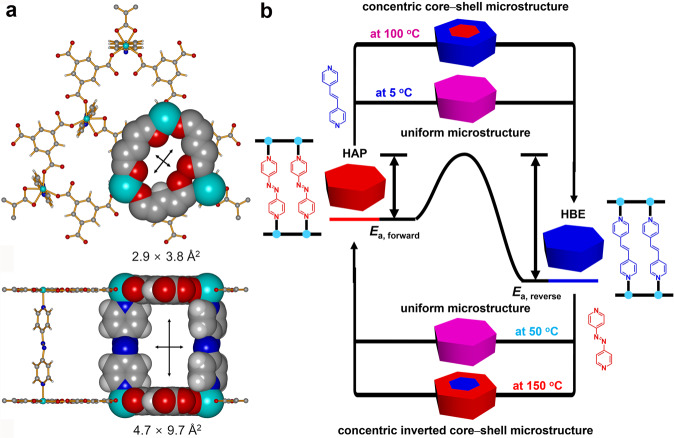
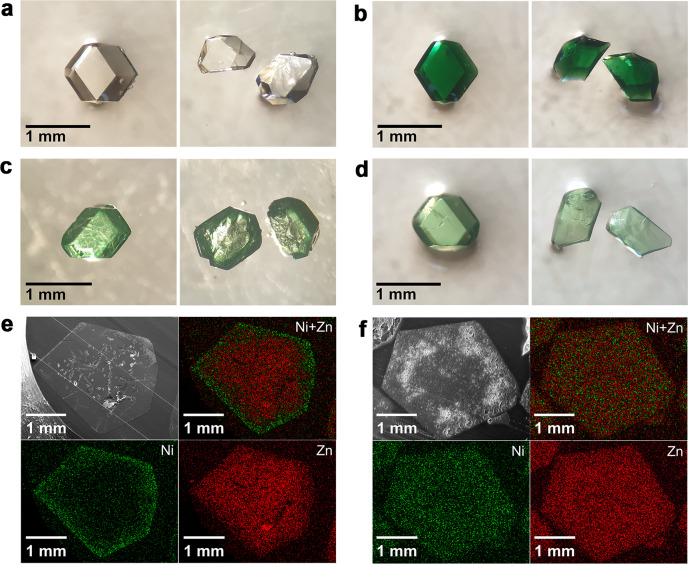
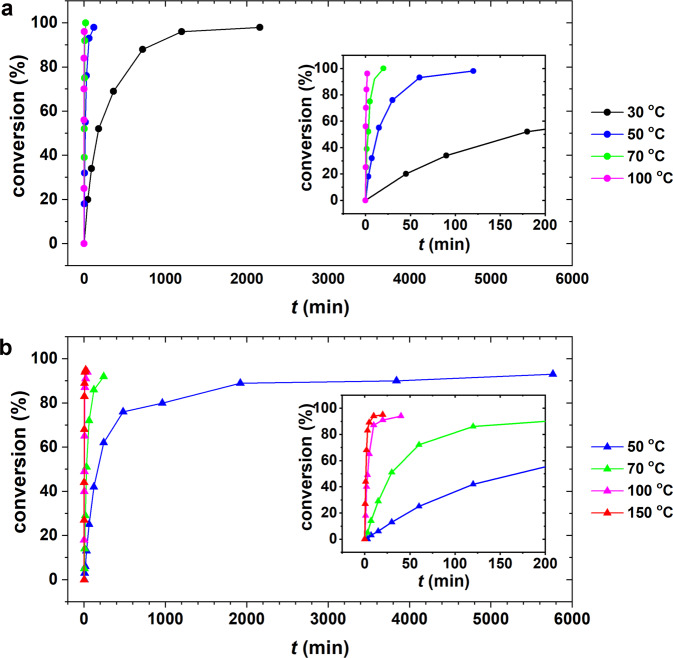
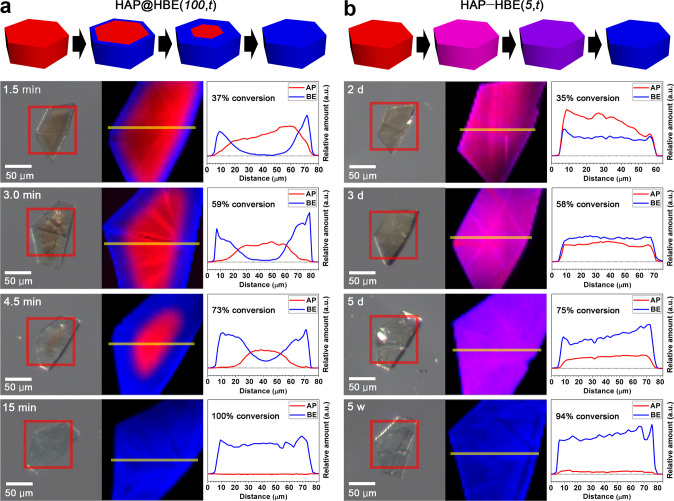
The placement of mixed building blocks at precise locations in metal-organic frameworks is critical to creating pore environments suitable for advanced applications. Here we show that the spatial distribution of mixed building blocks in metal-organic frameworks can be modulated by exploiting the different temperature sensitivities of the diffusion coefficients and exchange rate constants of the building blocks. By tuning the reaction temperature of the forward linker exchange from one metal-organic framework to another isoreticular metal-organic framework, core-shell microstructural and uniform microstructural metal-organic frameworks are obtained. The strategy can be extended to the fabrication of inverted core-shell microstructures and multi-shell microstructures and applied for the modulation of the spatial distribution of framework metal ions during the post-synthetic metal exchange process of a Zn-based metal-organic framework to an isostructural Ni-based metal-organic framework.
将混合构建块精确放置在金属有机框架的特定位置对于创造适用于先进应用的孔隙环境至关重要。在此,我们表明,通过利用构建块扩散系数和交换速率常数的不同温度敏感性,可以调节金属有机框架中混合构建块的空间分布。通过调整前向连接体交换反应的温度,从一种金属有机框架到另一种同网状金属有机框架,可以获得核壳微结构和均匀微结构的金属有机框架。该策略可以扩展到制备倒置核壳微结构和多壳微结构,并应用于在基于锌的金属有机框架到同结构的基于镍的金属有机框架的合成后金属交换过程中调节框架金属离子的空间分布。