Tan Shawn Lu Wen, Chadha Saakshi, Liu Yansheng, Gabasova Evelina, Perera David, Ahmed Karim, Constantinou Stephanie, Renaudin Xavier, Lee MiYoung, Aebersold Ruedi, Venkitaraman Ashok R
Medical Research Council Cancer Unit, University of Cambridge, Hills Road, Cambridge CB2 0XZ, UK.
Department of Biology, Institute of Molecular Systems Biology, Eidgenössische Technische Hochschule, 8093 Zürich, Switzerland.
Cell. 2017 Jun 1;169(6):1105-1118.e15. doi: 10.1016/j.cell.2017.05.010.
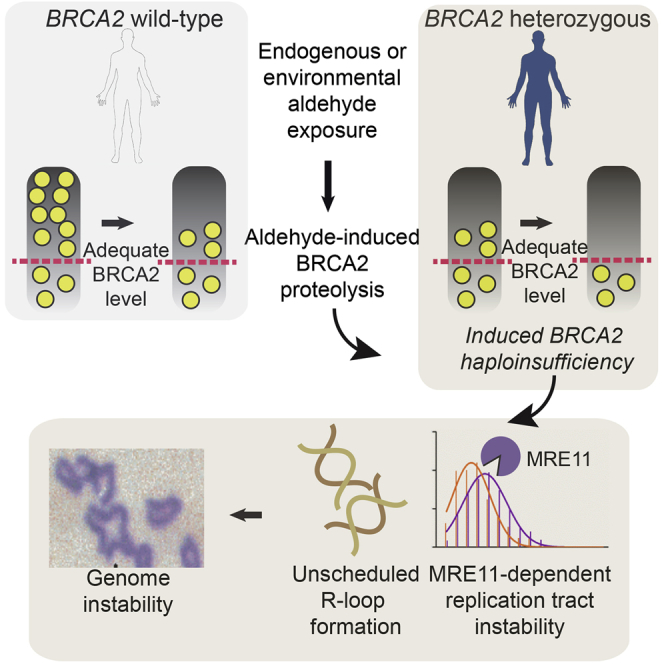
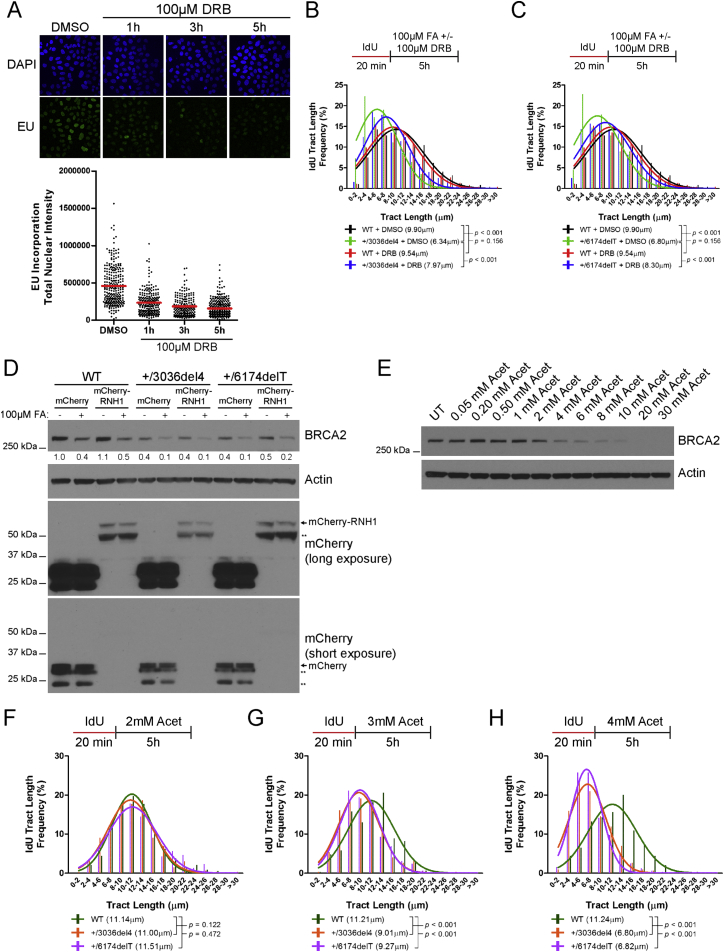
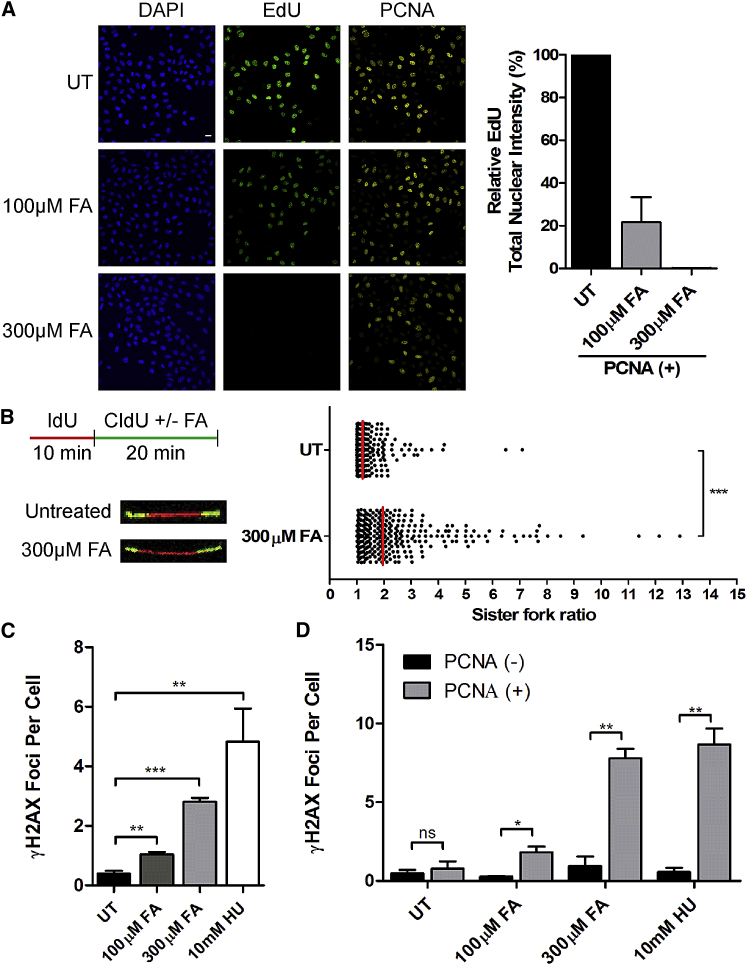
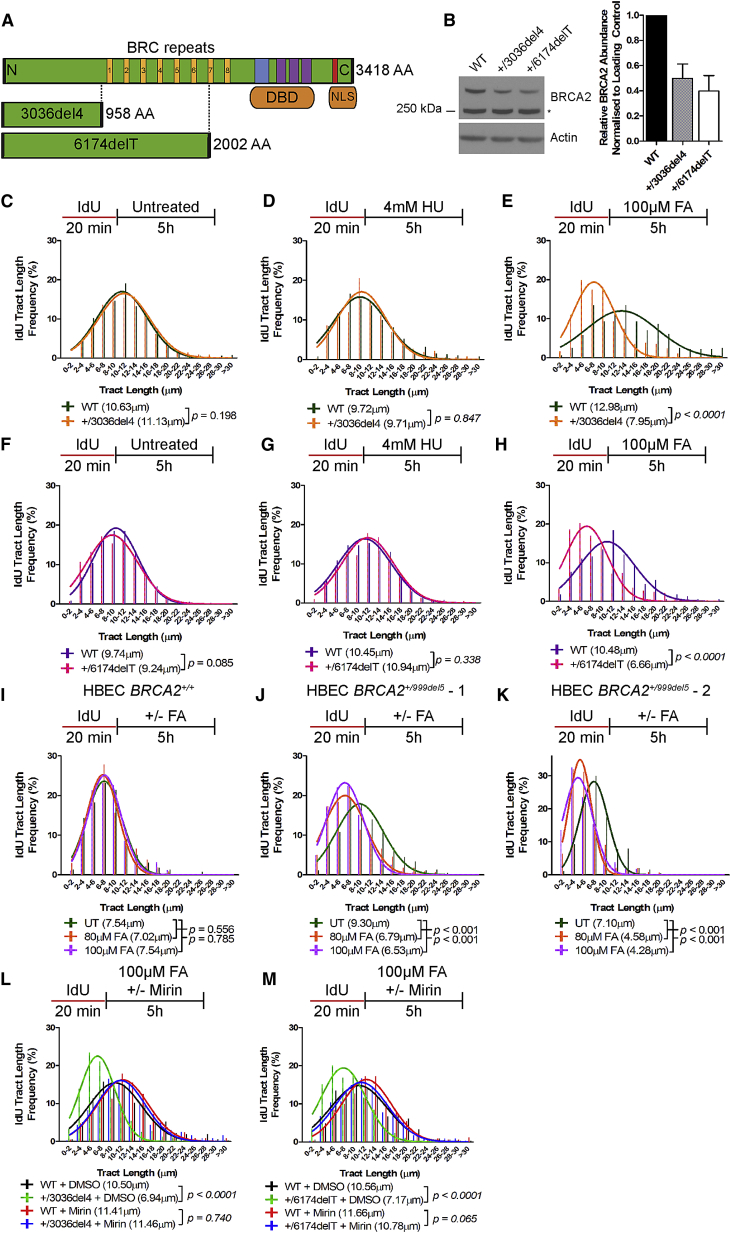
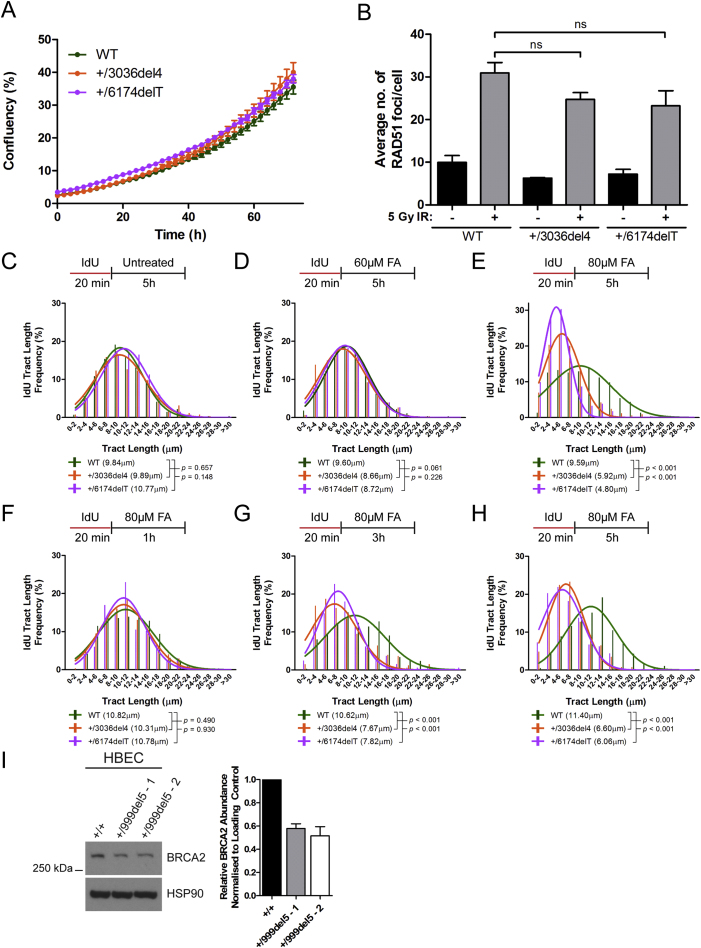
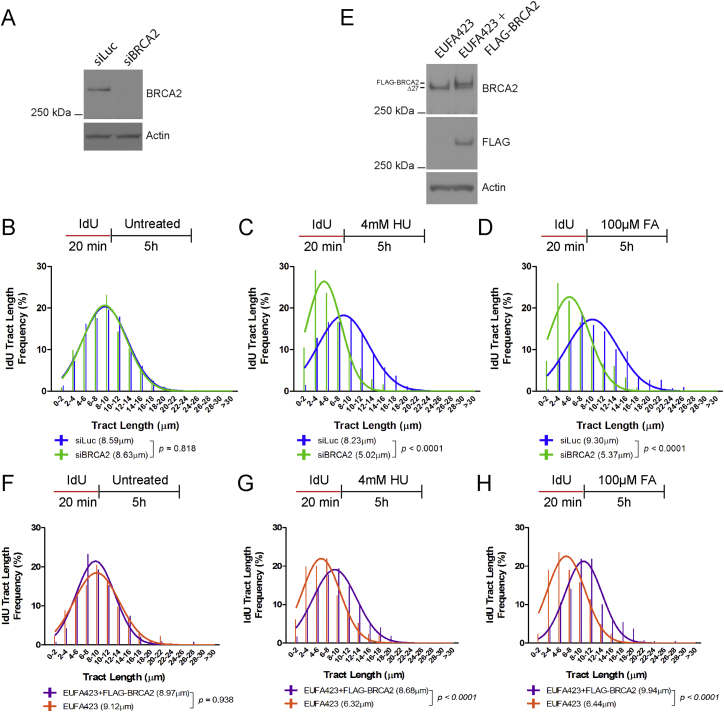
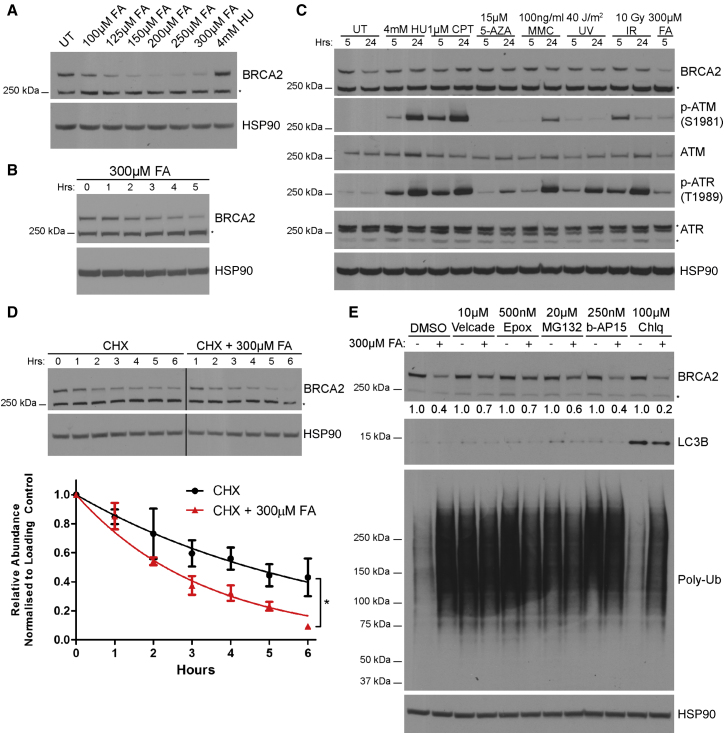
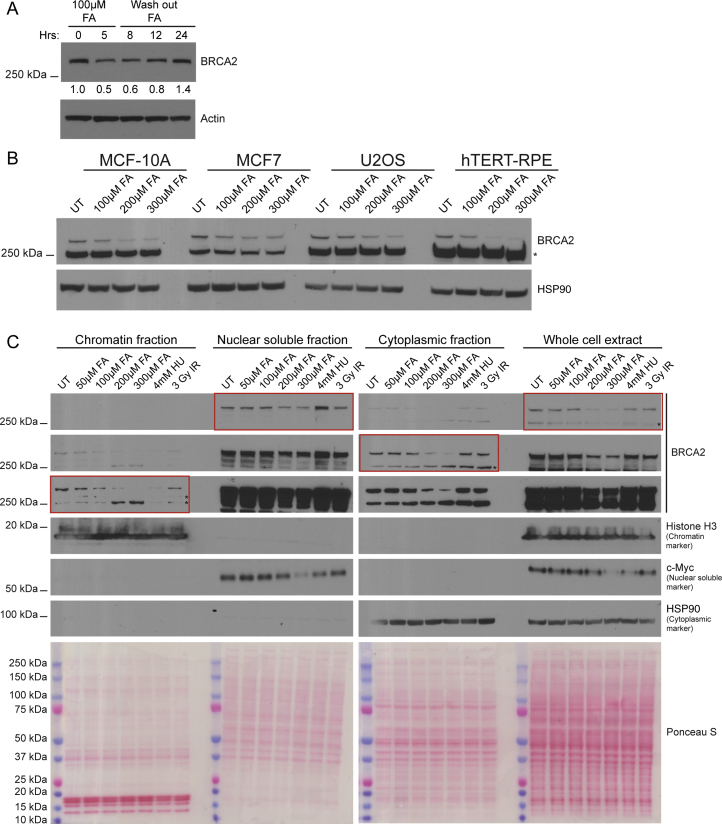
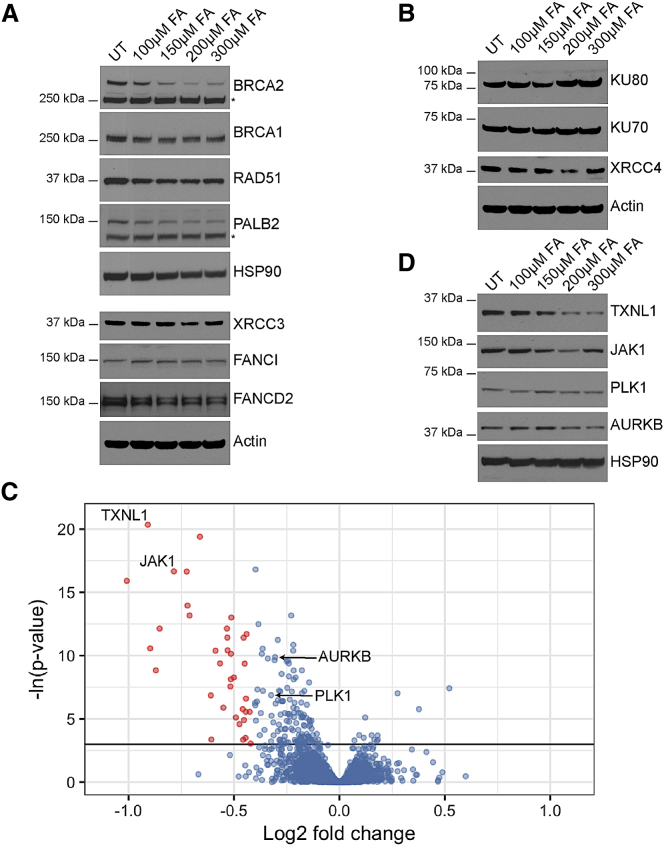
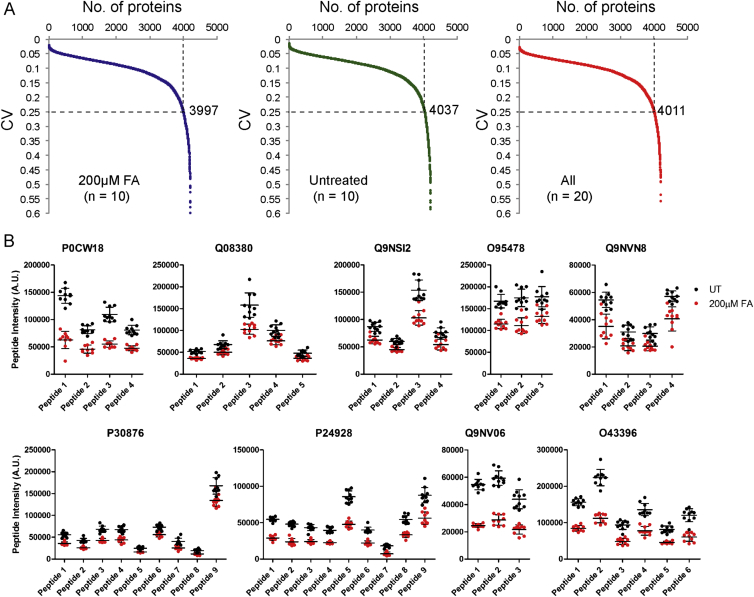
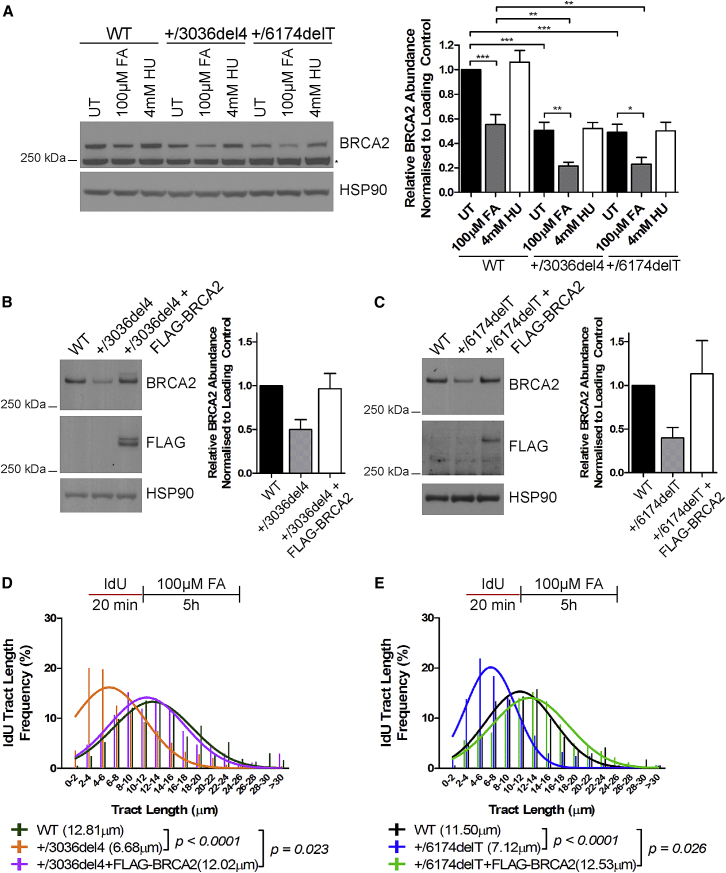
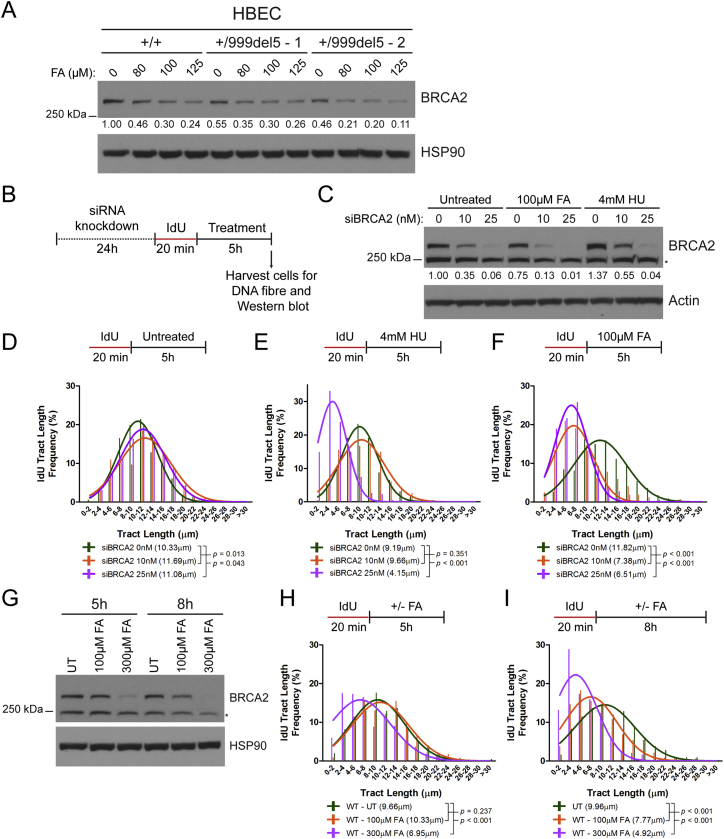
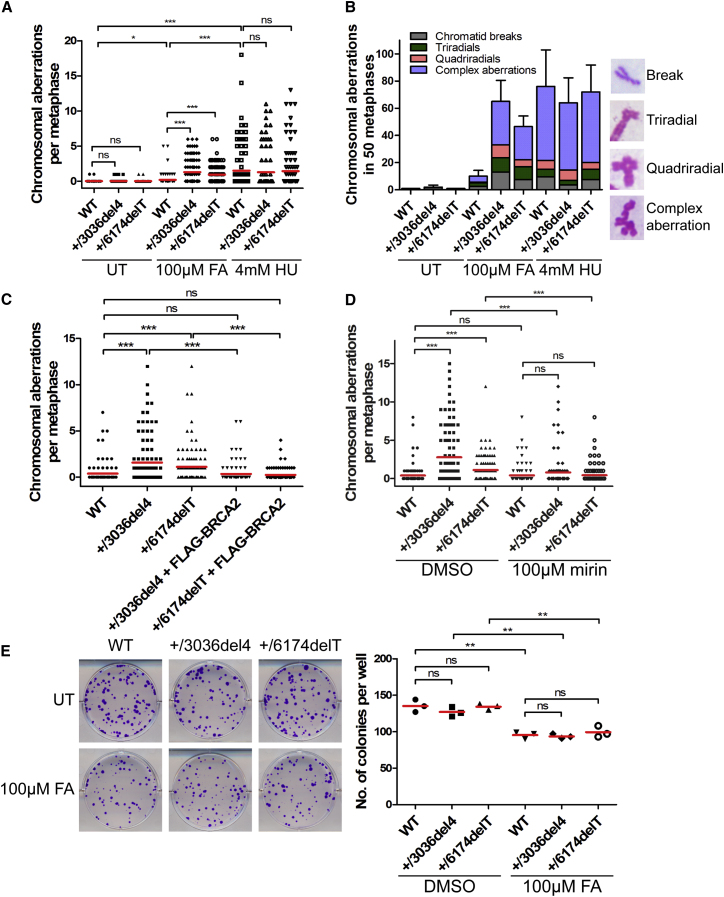
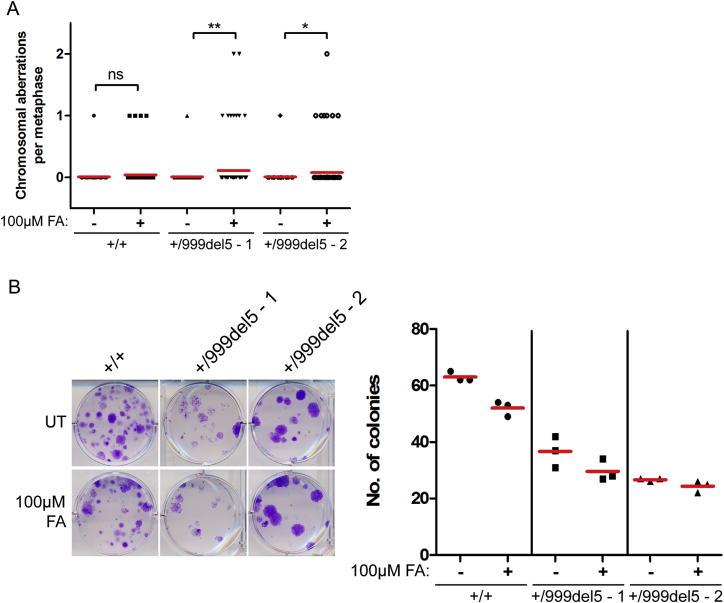
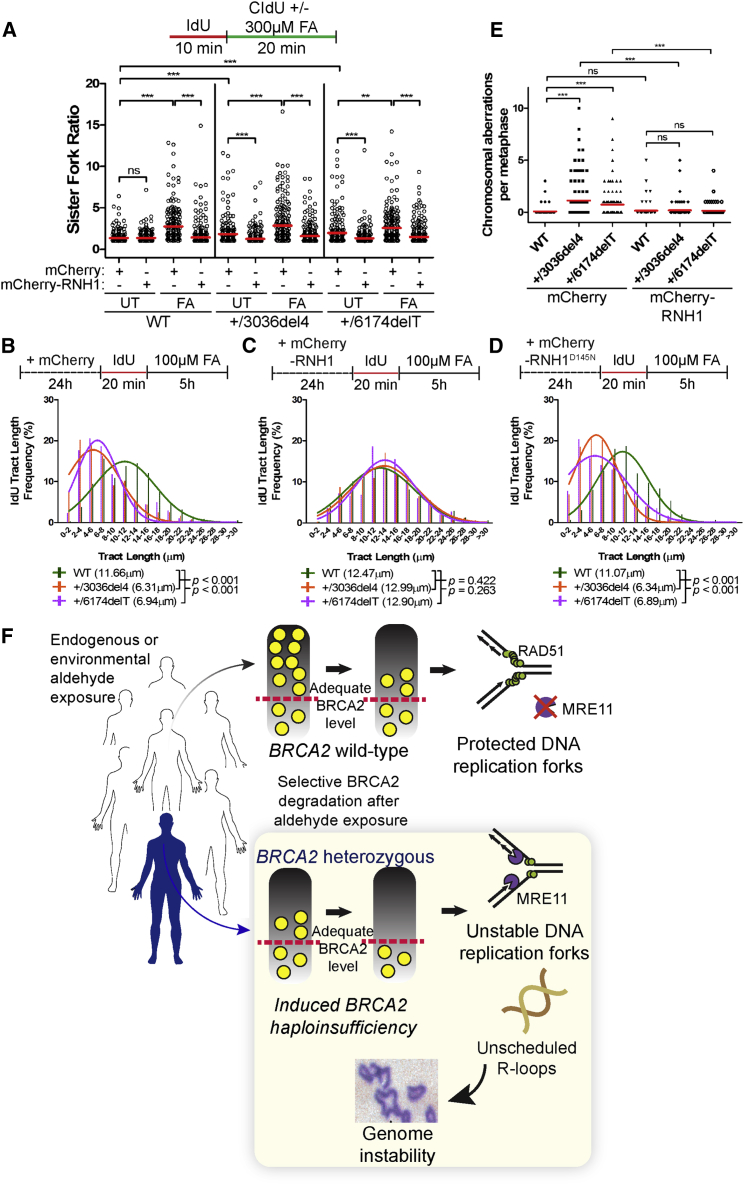
Mutations truncating a single copy of the tumor suppressor, BRCA2, cause cancer susceptibility. In cells bearing such heterozygous mutations, we find that a cellular metabolite and ubiquitous environmental toxin, formaldehyde, stalls and destabilizes DNA replication forks, engendering structural chromosomal aberrations. Formaldehyde selectively depletes BRCA2 via proteasomal degradation, a mechanism of toxicity that affects very few additional cellular proteins. Heterozygous BRCA2 truncations, by lowering pre-existing BRCA2 expression, sensitize to BRCA2 haploinsufficiency induced by transient exposure to natural concentrations of formaldehyde. Acetaldehyde, an alcohol catabolite detoxified by ALDH2, precipitates similar effects. Ribonuclease H1 ameliorates replication fork instability and chromosomal aberrations provoked by aldehyde-induced BRCA2 haploinsufficiency, suggesting that BRCA2 inactivation triggers spontaneous mutagenesis during DNA replication via aberrant RNA-DNA hybrids (R-loops). These findings suggest a model wherein carcinogenesis in BRCA2 mutation carriers can be incited by compounds found pervasively in the environment and generated endogenously in certain tissues with implications for public health.
截断肿瘤抑制因子BRCA2单拷贝的突变会导致癌症易感性。在携带此类杂合突变的细胞中,我们发现一种细胞代谢物及普遍存在的环境毒素甲醛,会使DNA复制叉停滞并使其不稳定,从而导致染色体结构畸变。甲醛通过蛋白酶体降解选择性地消耗BRCA2,这种毒性机制仅影响极少数其他细胞蛋白。杂合的BRCA2截短突变通过降低BRCA2的已有表达,使细胞对短暂暴露于天然浓度甲醛所诱导的BRCA2单倍剂量不足敏感。乙醛是一种经ALDH2解毒的酒精分解代谢产物,也会产生类似作用。核糖核酸酶H1可改善醛诱导的BRCA2单倍剂量不足所引发的复制叉不稳定性和染色体畸变,这表明BRCA2失活会通过异常的RNA-DNA杂交体(R环)在DNA复制过程中触发自发诱变。这些发现提示了一种模型,即BRCA2突变携带者的致癌作用可能由环境中普遍存在且在某些组织中内源性产生的化合物所引发,这对公共卫生具有重要意义。