Translational Gerontology Branch, National Institute on Aging, NIH, Baltimore, MD, 21224, USA.
Mouse Cancer Genetics Program, Center for Cancer Research, National Cancer Institute, NIH, Frederick, MD, 21702, USA.
Nat Commun. 2021 Nov 12;12(1):6561. doi: 10.1038/s41467-021-26811-w.
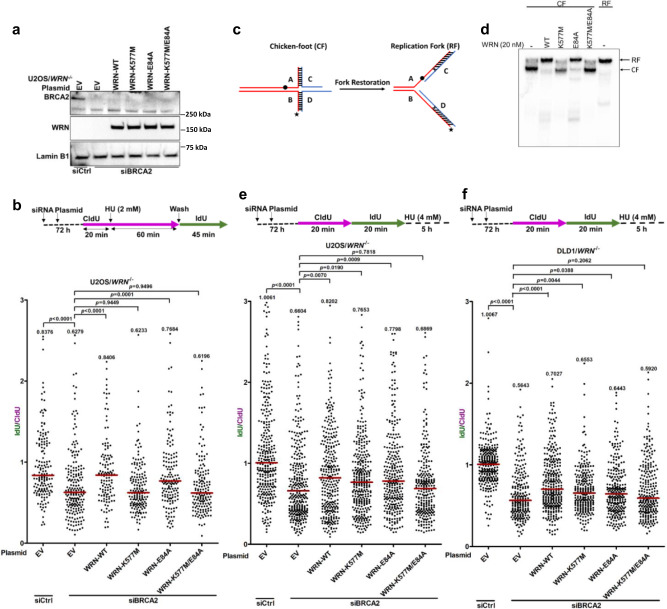
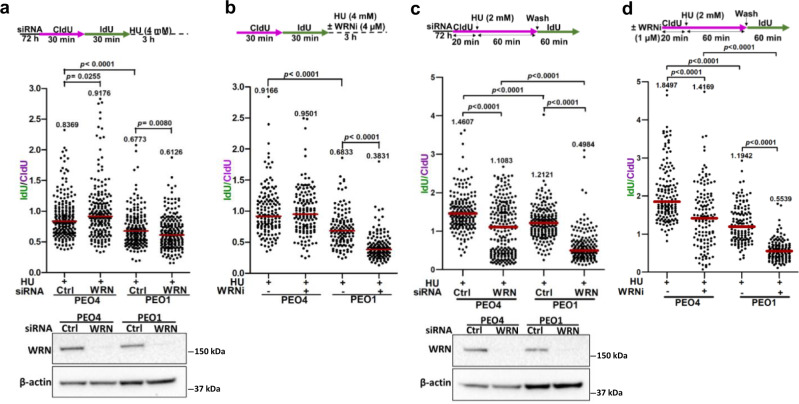
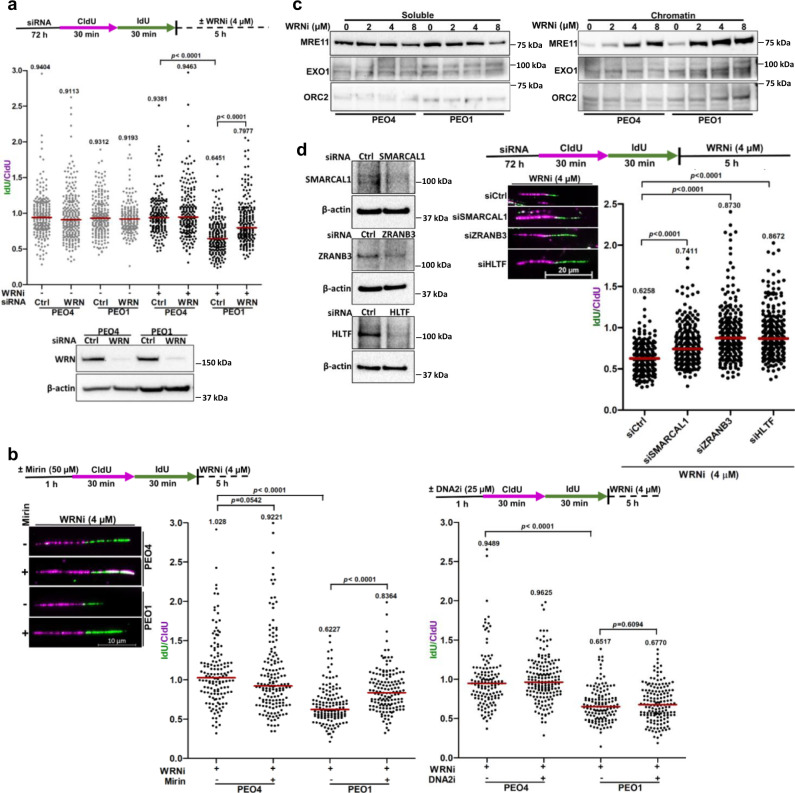
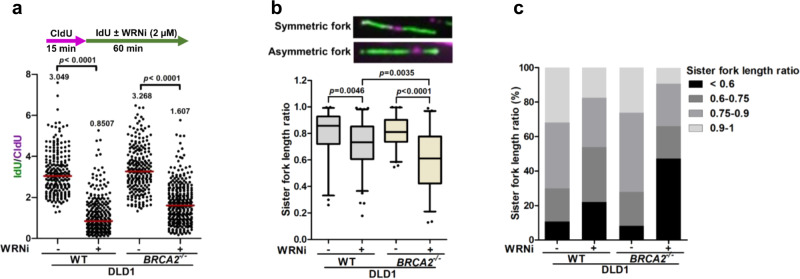
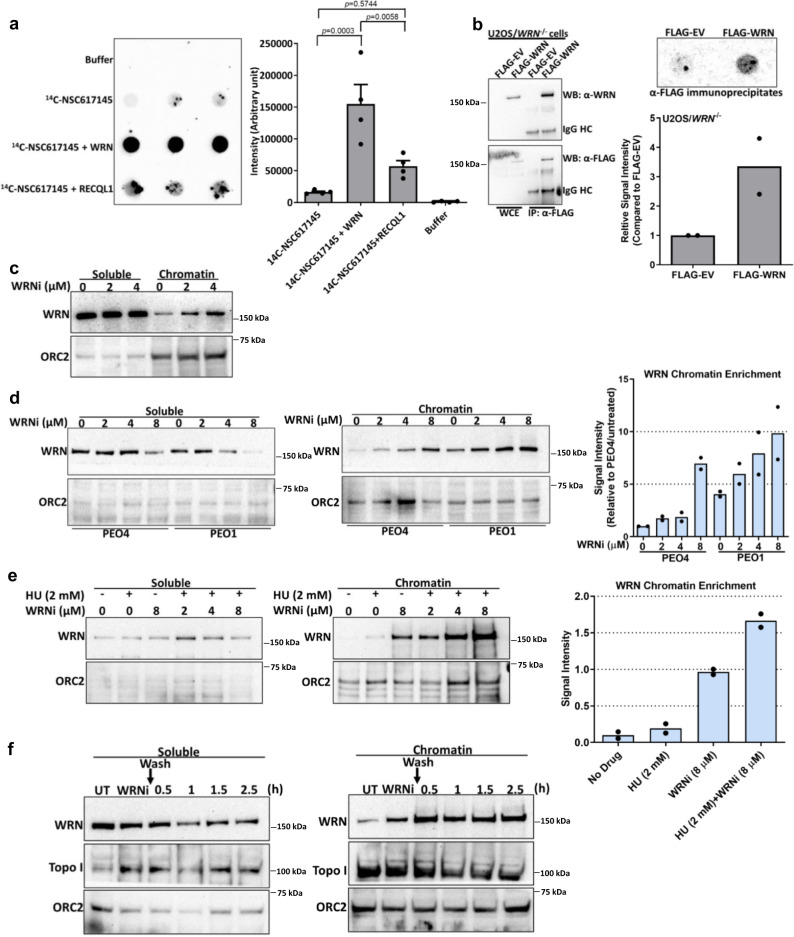
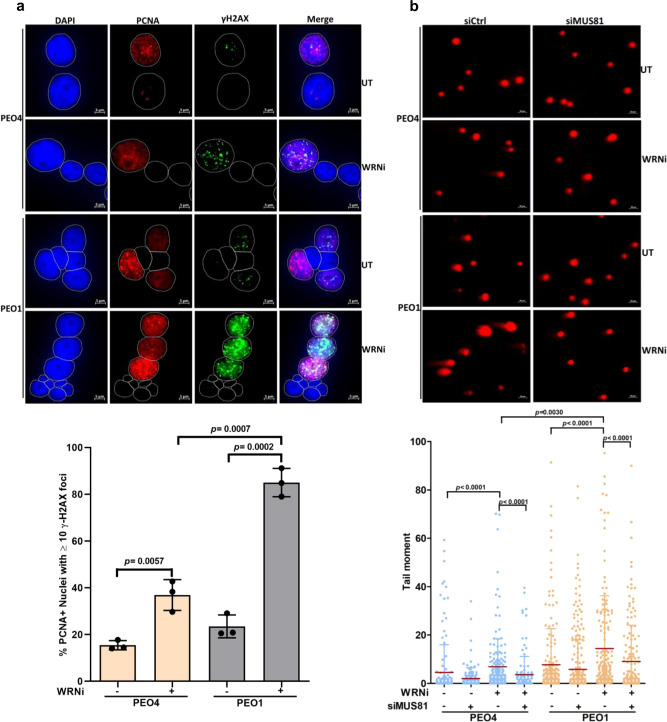
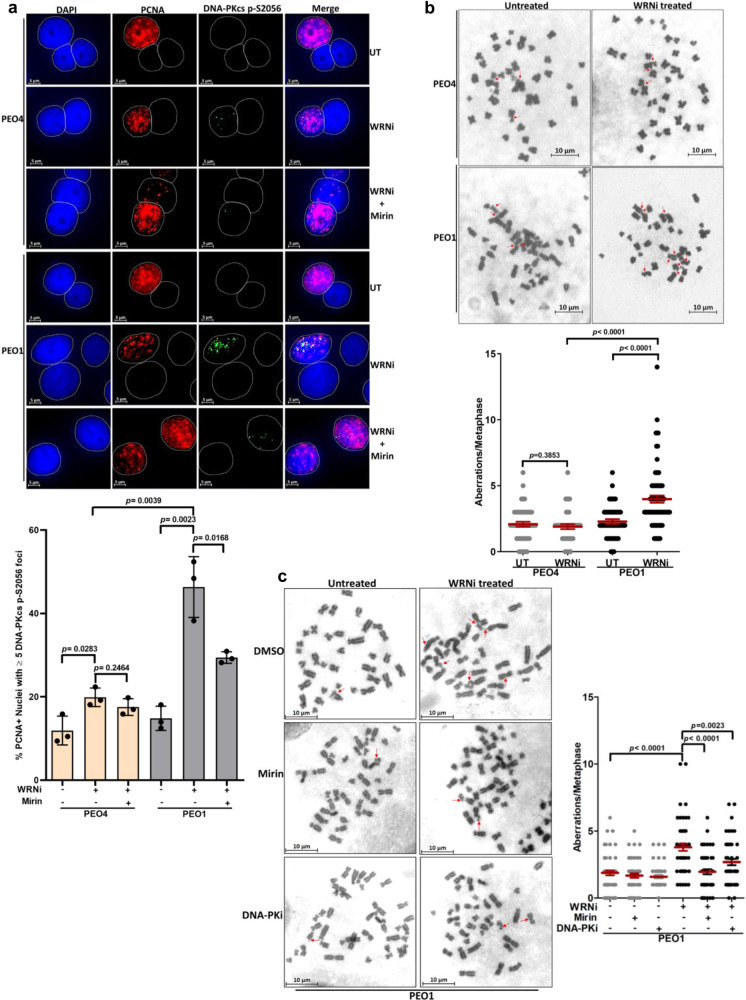
The tumor suppressor BRCA2 protects stalled forks from degradation to maintain genome stability. However, the molecular mechanism(s) whereby unprotected forks are stabilized remains to be fully characterized. Here, we demonstrate that WRN helicase ensures efficient restart and limits excessive degradation of stalled forks in BRCA2-deficient cancer cells. In vitro, WRN ATPase/helicase catalyzes fork restoration and curtails MRE11 nuclease activity on regressed forks. We show that WRN helicase inhibitor traps WRN on chromatin leading to rapid fork stalling and nucleolytic degradation of unprotected forks by MRE11, resulting in MUS81-dependent double-strand breaks, elevated non-homologous end-joining and chromosomal instability. WRN helicase inhibition reduces viability of BRCA2-deficient cells and potentiates cytotoxicity of a poly (ADP)ribose polymerase (PARP) inhibitor. Furthermore, BRCA2-deficient xenograft tumors in mice exhibited increased DNA damage and growth inhibition when treated with WRN helicase inhibitor. This work provides mechanistic insight into stalled fork stabilization by WRN helicase when BRCA2 is deficient.
抑癌基因 BRCA2 可保护停滞的复制叉不被降解,从而维持基因组稳定性。然而,BRCA2 缺陷细胞中未被保护的复制叉是如何被稳定下来的,其具体分子机制仍有待充分阐明。在这里,我们证明 WRN 解旋酶可确保复制叉的有效恢复,并限制 BRCA2 缺陷型癌细胞中停滞的复制叉的过度降解。在体外,WRN ATP 酶/解旋酶可催化复制叉的修复,并抑制 MRE11 核酸酶在退化复制叉上的活性。我们发现,WRN 解旋酶抑制剂将 WRN 捕获在染色质上,导致复制叉迅速停滞,并通过 MRE11 对未被保护的复制叉进行核酸酶降解,从而导致 MUS81 依赖性双链断裂、非同源末端连接增加和染色体不稳定。WRN 解旋酶抑制剂降低了 BRCA2 缺陷细胞的活力,并增强了聚(ADP-核糖)聚合酶(PARP)抑制剂的细胞毒性。此外,当用 WRN 解旋酶抑制剂处理时,BRCA2 缺陷型小鼠异种移植肿瘤显示出更多的 DNA 损伤和生长抑制。这项工作为 BRCA2 缺陷时 WRN 解旋酶稳定停滞复制叉提供了机制上的见解。