McEvoy Caitriona Gilleece, Descloux Emilienne, Barazzoni Mirjam Schuler, Diaw Corinne Stadelmann, Tolsa Jean-François, Roth-Kleiner Matthias
Clinic of Neonatology, Lausanne University Hospital and University of Lausanne, Lausanne, Switzerland.
Clin Med Insights Pediatr. 2017 May 17;11:1179556517709021. doi: 10.1177/1179556517709021. eCollection 2017.
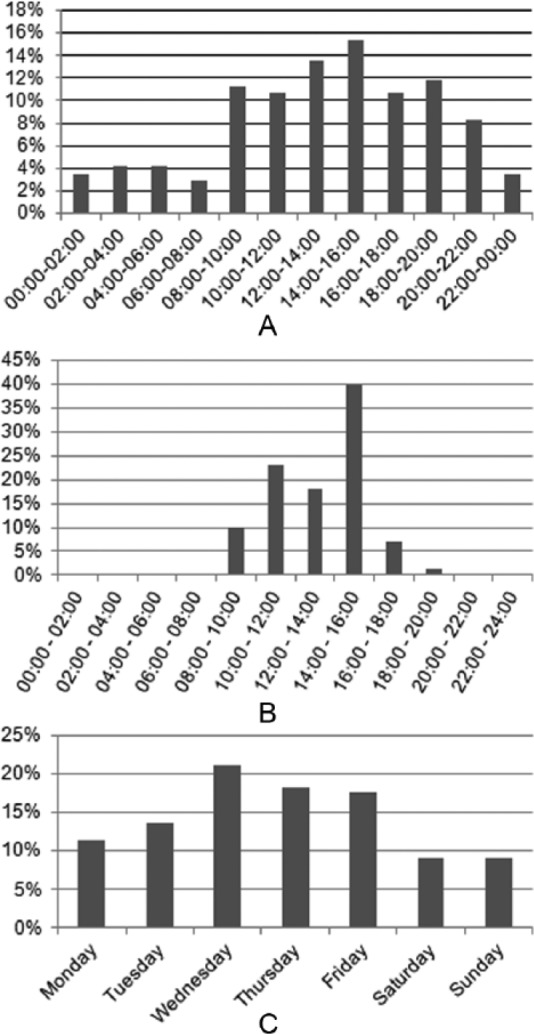
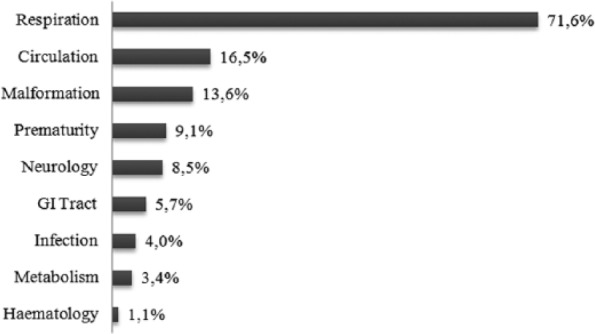
Neonatal transport is an essential part of regionalization for highly specialized neonatal intensive care. This retrospective analysis of prospectively collected data on neonatal transport activity in a large Swiss perinatal network more than 1 year, aimed to quantify this activity, to identify the needs for staff, and the demands regarding know-how and equipment. Of the 565 admissions to the tertiary neonatology clinic, 176 (31.2%) were outborn patients, transported as emergencies to the level III unit. In 71.6% of cases, respiratory insufficiency was one of the reasons for transfer. Circadian and weekly distribution showed increased transport activity on workdays between 8 am and 10 pm, but regular demands for emergency transports regardless of the time frame require a neonatal transport team available 24/7. This study highlights the importance of neonatal transport and unveils several functional and infrastructural insufficiencies, which led to suggestions for improvement.
新生儿转运是高度专业化新生儿重症监护区域化的重要组成部分。这项对瑞士一个大型围产期网络中超过1年的前瞻性收集的新生儿转运活动数据进行的回顾性分析,旨在量化这一活动,确定人员需求以及对专业知识和设备的要求。在三级新生儿科诊所收治的565例患者中,176例(31.2%)为外院出生患者,作为急诊被转运至三级病房。在71.6%的病例中,呼吸功能不全是转运的原因之一。昼夜和每周分布显示工作日上午8点至晚上10点转运活动增加,但无论时间框架如何,对急诊转运的常规需求要求新生儿转运团队全天候待命。本研究强调了新生儿转运的重要性,并揭示了一些功能和基础设施方面的不足,从而提出了改进建议。