Sagi Mandeep S, Deokar Amit A, Tar'an Bunyamin
Department of Plant Sciences, College of Agriculture and Bioresources, University of Saskatchewan, SaskatoonSK, Canada.
Front Plant Sci. 2017 May 19;8:838. doi: 10.3389/fpls.2017.00838. eCollection 2017.
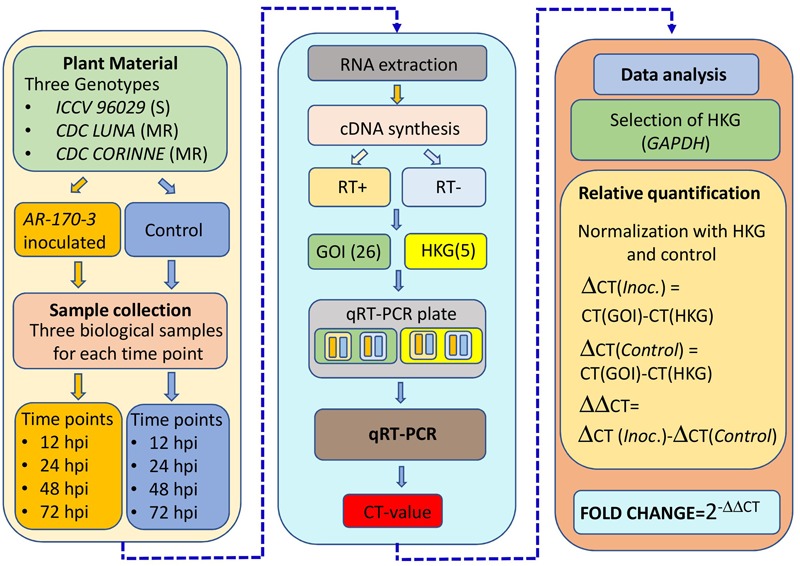
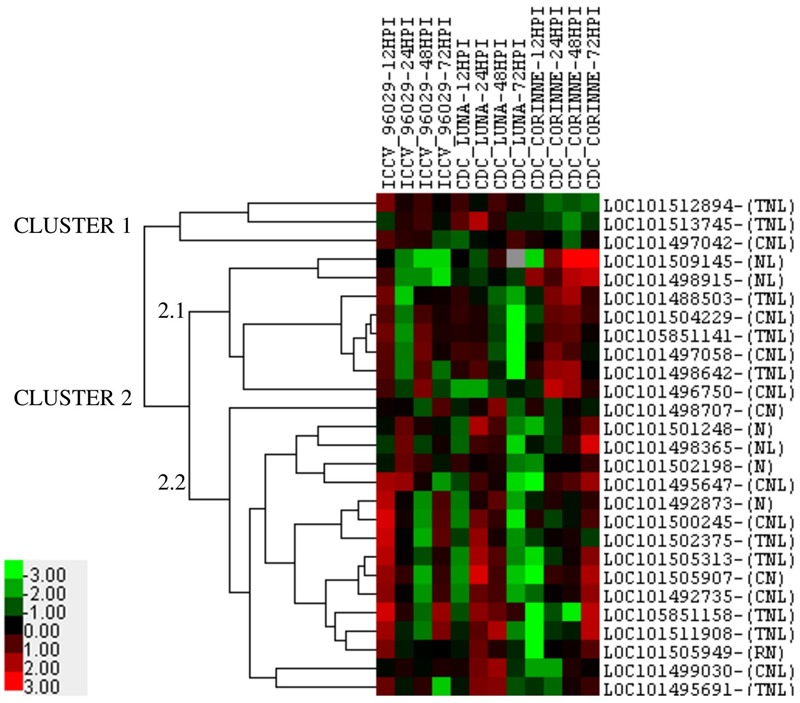
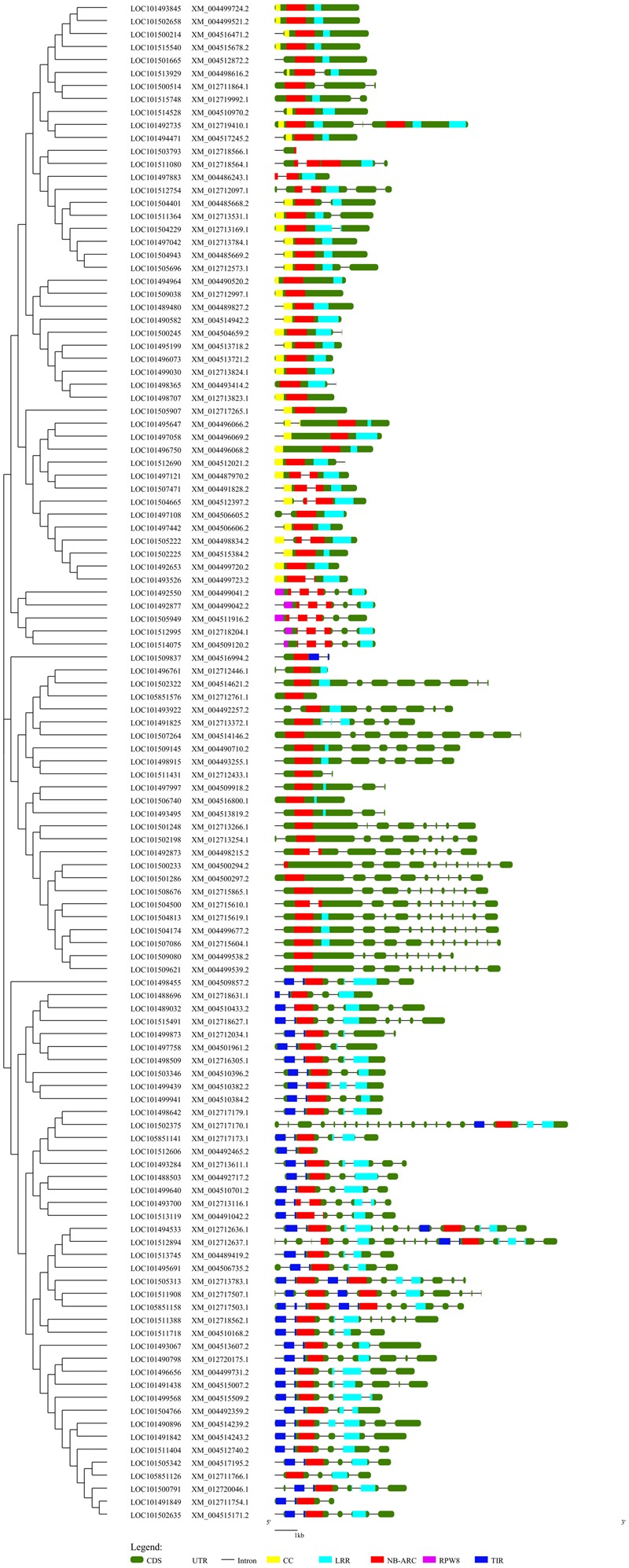
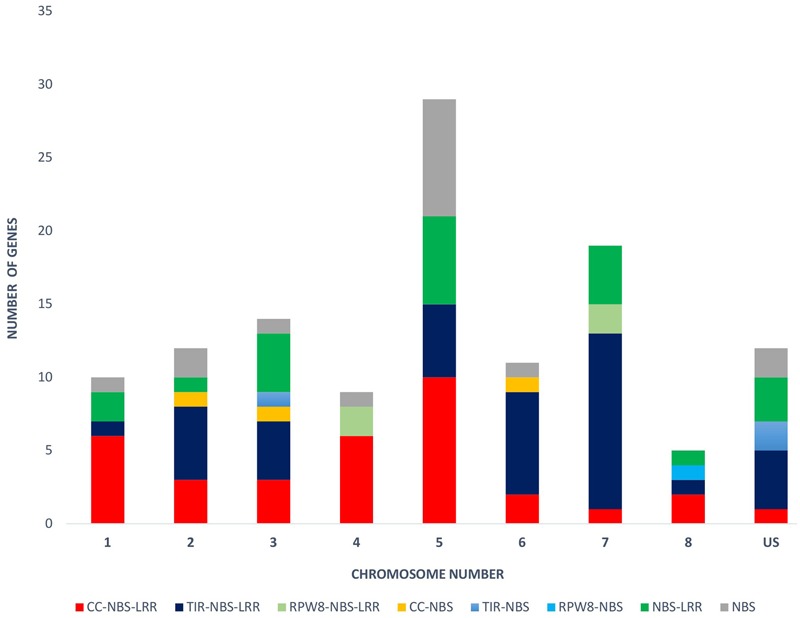
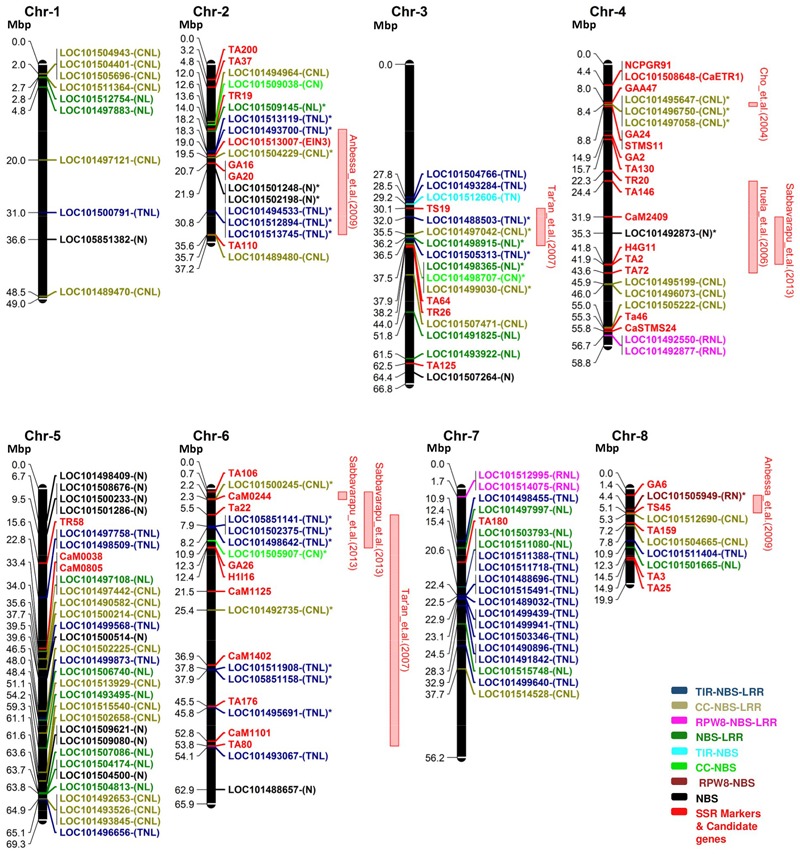
Ascochyta blight is one of the major diseases of chickpea worldwide. The genetic resistance to ascochyta blight in chickpea is complex and governed by multiple QTLs. However, the molecular mechanism of quantitative disease resistance to ascochyta blight and the genes underlying these QTLs are still unknown. Most often disease resistance is determined by resistance (R) genes. The most predominant R-genes contain nucleotide binding site and leucine rich repeat (NBS-LRR) domains. A total of 121 NBS-LRR genes were identified in the chickpea genome. Ninety-eight of these genes contained all essential conserved domains while 23 genes were truncated. The NBS-LRR genes were grouped into eight distinct classes based on their domain architecture. Phylogenetic analysis grouped these genes into two major clusters based on their structural variation, the first cluster with toll or interleukin-1 like receptor (TIR) domain and the second cluster either with or without a coiled-coil domain. The NBS-LRR genes are distributed unevenly across the eight chickpea chromosomes and nearly 50% of the genes are present in clusters. Thirty of the NBS-LRR genes were co-localized with nine of the previously reported ascochyta blight QTLs and were tested as potential candidate genes for ascochyta blight resistance. Expression pattern of these genes was studied in two resistant (CDC Corinne and CDC Luna) and one susceptible (ICCV 96029) genotypes at different time points after ascochyta blight infection using real-time quantitative PCR. Twenty-seven NBS-LRR genes showed differential expression in response to ascochyta blight infection in at least one genotype at one time point. Among these 27 genes, the majority of the NBS-LRR genes showed differential expression after inoculation in both resistant and susceptible genotypes which indicates the involvement of these genes in response to ascochyta blight infection. Five NBS-LRR genes showed genotype specific expression. Our study provides a new insight of NBS-LRR gene family in chickpea and the potential involvement of NBS-LRR genes in response to ascochyta blight infection.
壳二孢叶枯病是全球鹰嘴豆的主要病害之一。鹰嘴豆对壳二孢叶枯病的遗传抗性较为复杂,由多个数量性状位点(QTL)控制。然而,对壳二孢叶枯病的数量抗病性分子机制以及这些QTLs潜在的基因仍不清楚。通常,抗病性由抗性(R)基因决定。最主要的R基因包含核苷酸结合位点和富含亮氨酸重复序列(NBS-LRR)结构域。在鹰嘴豆基因组中总共鉴定出121个NBS-LRR基因。其中98个基因包含所有必需的保守结构域,23个基因是截短的。根据结构域结构,NBS-LRR基因被分为八个不同的类别。系统发育分析根据其结构变异将这些基因分为两个主要簇,第一簇具有Toll样或白细胞介素-1样受体(TIR)结构域,第二簇有或没有卷曲螺旋结构域。NBS-LRR基因在鹰嘴豆的八条染色体上分布不均,近50%的基因成簇存在。30个NBS-LRR基因与之前报道的九个壳二孢叶枯病QTL共定位,并作为壳二孢叶枯病抗性的潜在候选基因进行了测试。利用实时定量PCR研究了这些基因在壳二孢叶枯病感染后不同时间点在两种抗性(CDC Corinne和CDC Luna)和一种感病(ICCV 96029)基因型中的表达模式。27个NBS-LRR基因在至少一种基因型的一个时间点对壳二孢叶枯病感染表现出差异表达。在这27个基因中,大多数NBS-LRR基因在接种后在抗性和感病基因型中均表现出差异表达,这表明这些基因参与了对壳二孢叶枯病感染的响应。5个NBS-LRR基因表现出基因型特异性表达。我们的研究为鹰嘴豆中NBS-LRR基因家族以及NBS-LRR基因在响应壳二孢叶枯病感染中的潜在作用提供了新的见解。