Department of Biological Engineering, Massachusetts Institute of Technology, Cambridge, MA 02139, USA.
Nanoscale. 2017 Jun 22;9(24):8080-8095. doi: 10.1039/c6nr09736g.
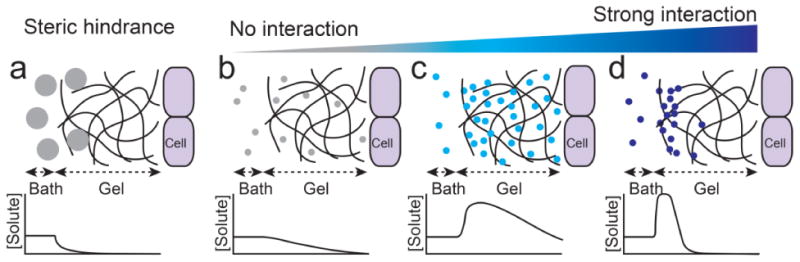
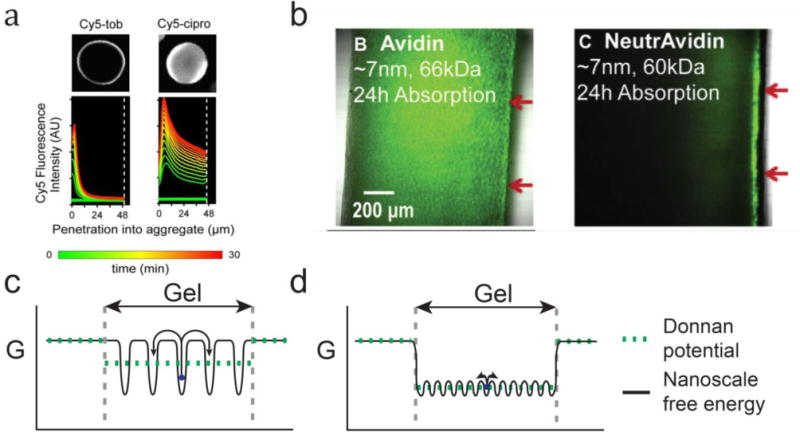
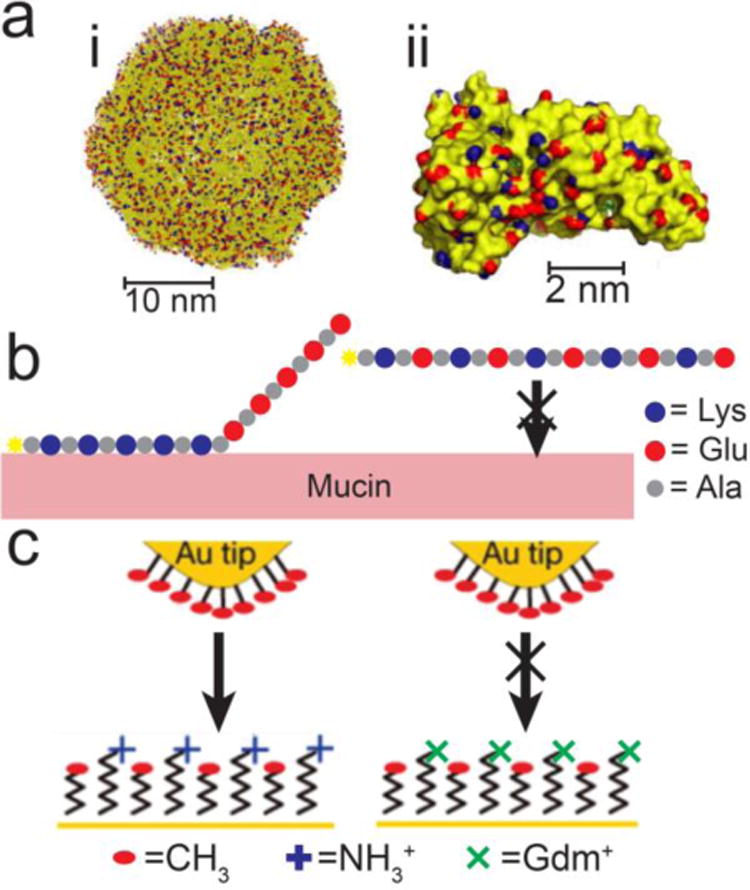
Biological hydrogels such as mucus, extracellular matrix, biofilms, and the nuclear pore have diverse functions and compositions, but all act as selectively permeable barriers to the diffusion of particles. Each barrier has a crosslinked polymeric mesh that blocks penetration of large particles such as pathogens, nanotherapeutics, or macromolecules. These polymeric meshes also employ interactive filtering, in which affinity between solutes and the gel matrix controls permeability. Interactive filtering affects the transport of particles of all sizes including peptides, antibiotics, and nanoparticles and in many cases this filtering can be described in terms of the effects of charge and hydrophobicity. The concepts described in this review can guide strategies to exploit or overcome gel barriers, particularly for applications in diagnostics, pharmacology, biomaterials, and drug delivery.
生物水凝胶,如黏液、细胞外基质、生物膜和核孔,具有多种功能和组成,但都作为对粒子扩散具有选择性渗透性的屏障。每个屏障都有一个交联的聚合物网格,阻止病原体、纳米治疗剂或大分子等大颗粒的渗透。这些聚合物网格还采用了交互式过滤,其中溶质与凝胶基质之间的亲和力控制渗透性。交互式过滤会影响各种大小的粒子的传输,包括肽、抗生素和纳米粒子,在许多情况下,这种过滤可以用电荷和疏水性的影响来描述。本综述中描述的概念可以指导利用或克服凝胶屏障的策略,特别是在诊断、药理学、生物材料和药物输送方面的应用。