Smith Shari E, Mellor Paul, Ward Alison K, Kendall Stephanie, McDonald Megan, Vizeacoumar Frederick S, Vizeacoumar Franco J, Napper Scott, Anderson Deborah H
Cancer Cluster, University of Saskatchewan, 107 Wiggins Road, Saskatoon, SK, S7N 5E5, Canada.
Vaccine Infectious Disease Organization - International Vaccine Centre (VIDO-InterVac), University of Saskatchewan, 120 Veterinary Road, Saskatoon, SK, S7N 5E3, Canada.
Breast Cancer Res. 2017 Jun 5;19(1):65. doi: 10.1186/s13058-017-0855-0.
Breast cancer cell lines are frequently used as model systems to study the cellular properties and biology of breast cancer. Our objective was to characterize a large, commonly employed panel of breast cancer cell lines obtained from the American Type Culture Collection (ATCC 30-4500 K) to enable researchers to make more informed decisions in selecting cell lines for specific studies. Information about these cell lines was obtained from a wide variety of sources. In addition, new information about cellular pathways that are activated within each cell line was generated.
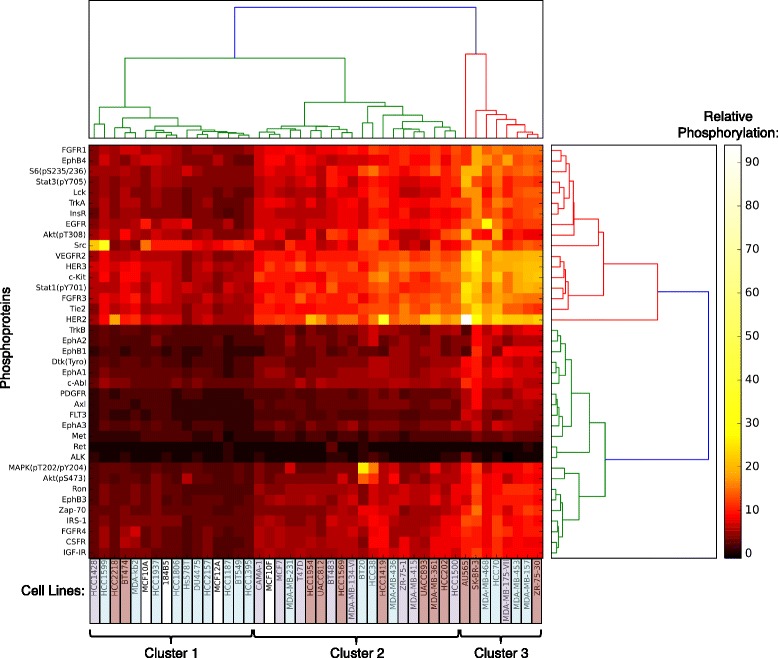
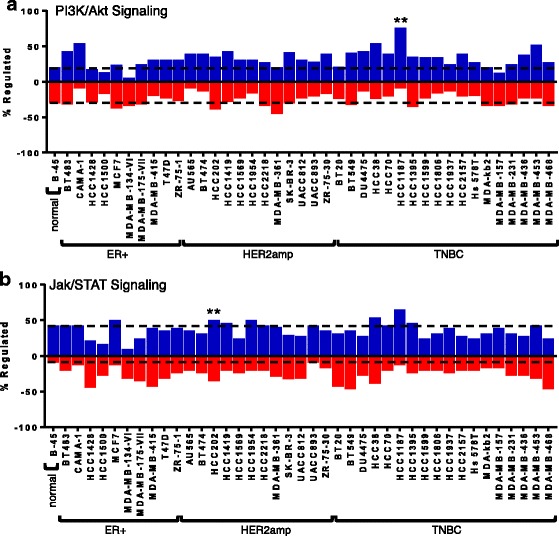
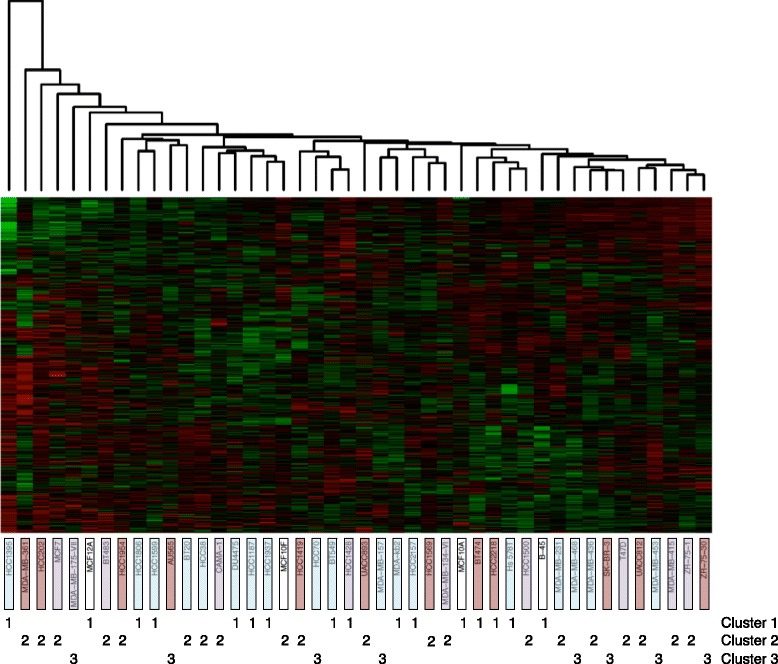
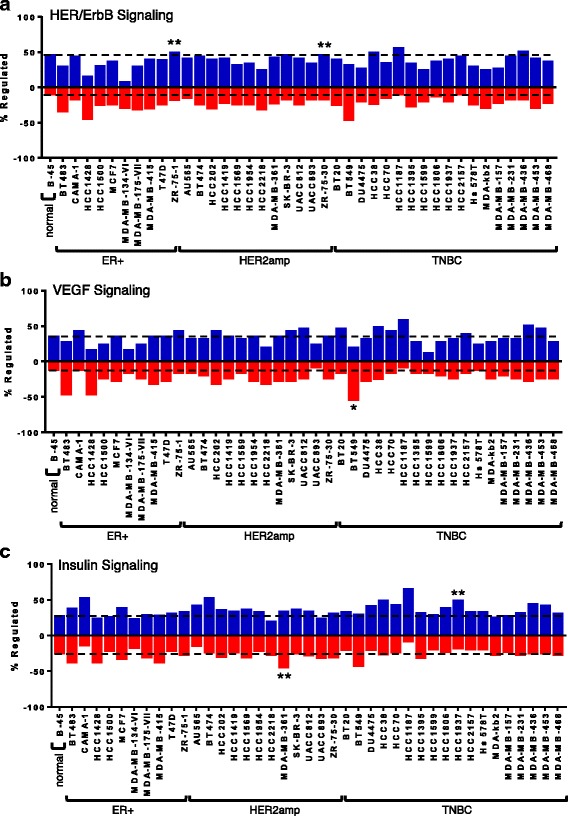
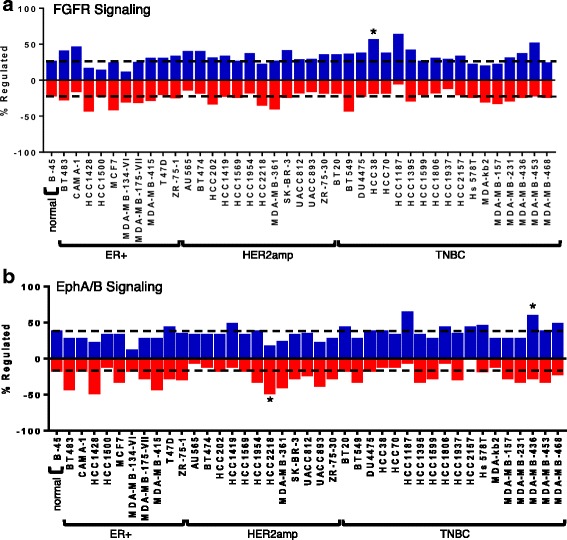
We determined key protein expression data using immunoblot analyses. In addition, two analyses on serum-starved cells were carried out to identify cellular proteins and pathways that are activated in these cells. These analyses were performed using a commercial PathScan array and a novel and more extensive phosphopeptide-based kinome analysis that queries 1290 phosphorylation events in major signaling pathways. Data about this panel of breast cancer cell lines was also accessed from several online sources, compiled and summarized for the following areas: molecular classification, mRNA expression, mutational status of key proteins and other possible cancer-associated mutations, and the tumorigenic and metastatic capacity in mouse xenograft models of breast cancer.
The cell lines that were characterized included 10 estrogen receptor (ER)-positive, 12 human epidermal growth factor receptor 2 (HER2)-amplified and 18 triple negative breast cancer cell lines, in addition to 4 non-tumorigenic breast cell lines. Within each subtype, there was significant genetic heterogeneity that could impact both the selection of model cell lines and the interpretation of the results obtained. To capture the net activation of key signaling pathways as a result of these mutational combinations, profiled pathway activation status was examined. This provided further clarity for which cell lines were particularly deregulated in common or unique ways.
These two new kinase or "Kin-OMIC" analyses add another dimension of important data about these frequently used breast cancer cell lines. This will assist researchers in selecting the most appropriate cell lines to use for breast cancer studies and provide context for the interpretation of the emerging results.
乳腺癌细胞系常被用作模型系统来研究乳腺癌的细胞特性和生物学。我们的目标是对从美国典型培养物保藏中心(ATCC 30 - 4500K)获得的一大组常用乳腺癌细胞系进行表征,以便研究人员在为特定研究选择细胞系时能做出更明智的决策。关于这些细胞系的信息来自广泛的来源。此外,还生成了关于每个细胞系中被激活的细胞通路的新信息。
我们使用免疫印迹分析确定关键蛋白表达数据。此外,对血清饥饿细胞进行了两项分析,以鉴定在这些细胞中被激活的细胞蛋白和通路。这些分析使用了商业PathScan阵列以及一种新颖且更广泛基于磷酸肽的激酶组分析,该分析可查询主要信号通路中的1290个磷酸化事件。关于这组乳腺癌细胞系的数据也从几个在线来源获取,并针对以下方面进行了整理和总结:分子分类、mRNA表达、关键蛋白的突变状态以及其他可能的癌症相关突变、以及在乳腺癌小鼠异种移植模型中的致瘤和转移能力。
所表征的细胞系包括10个雌激素受体(ER)阳性、12个人表皮生长因子受体2(HER2)扩增和18个三阴性乳腺癌细胞系,此外还有4个非致瘤性乳腺细胞系。在每个亚型内,存在显著的遗传异质性,这可能会影响模型细胞系的选择以及所获结果的解释。为了捕捉这些突变组合导致的关键信号通路的净激活,对分析的通路激活状态进行了检查。这为哪些细胞系以常见或独特方式特别失调提供了进一步的清晰认识。
这两项新的激酶或“激酶组学”分析为这些常用的乳腺癌细胞系增添了另一维度的重要数据。这将帮助研究人员选择最适合用于乳腺癌研究的细胞系,并为解释新出现的结果提供背景信息。