Brunet Julie, Pesson Bernard, Royant Maude, Lemoine Jean-Philippe, Pfaff Alexander W, Abou-Bacar Ahmed, Yera Hélène, Fréalle Emilie, Dupouy-Camet Jean, Merino-Espinosa Gema, Gómez-Mateos Magdalena, Martin-Sanchez Joaquina, Candolfi Ermanno
Laboratoire de Parasitologie et de Mycologie Médicale, Plateau Technique de Microbiologie, Hôpitaux Universitaires de Strasbourg, 1 place de l'Hôpital, BP 426, F-67091, Strasbourg cedex, France.
Institut de Parasitologie et Pathologie Tropicale, EA 7292, Fédération de Médecine Translationnelle, Université de Strasbourg, 3 rue Koeberlé, F-67000, Strasbourg, France.
BMC Infect Dis. 2017 Jun 6;17(1):397. doi: 10.1186/s12879-017-2493-7.
Anisakis and Pseudoterranova are the main genera involved in human infections caused by nematodes of the Anisakidae family. Species identification is complicated due to the lack of differential morphological characteristics at the larval stage, thus requiring molecular differentiation. Pseudoterranova larvae ingested through raw fish are spontaneously eliminated in most cases, but mechanical removal by means of endoscopy might be required. To date, only very few cases of Pseudoterranova infection have been reported in France.
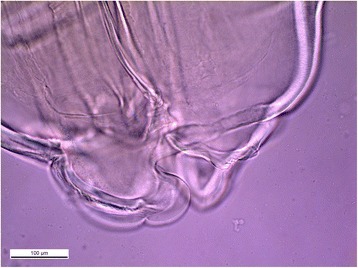
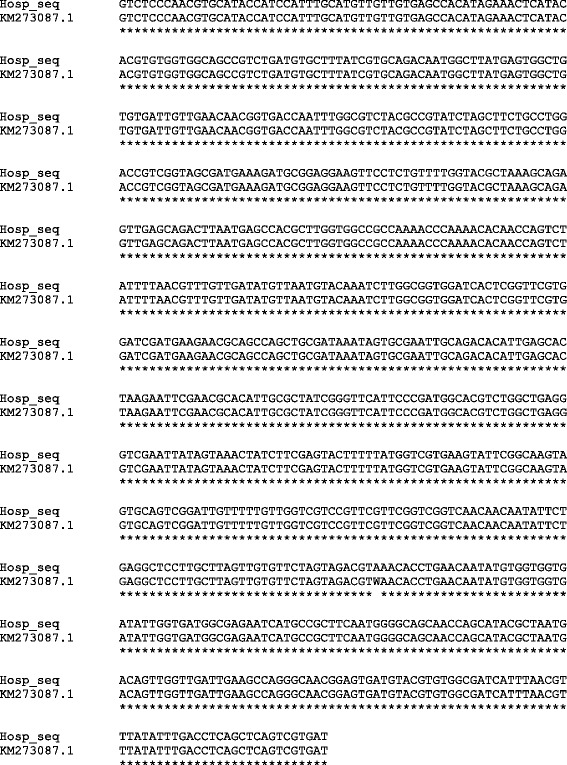
A 19-year-old woman from Northeastern France detected, while brushing her teeth, a larva exiting through her mouth. The patient who presented with headache, diarrhea, and abdominal cramps reported having eaten baked cod. The worm was a fourth-stage larva with a size of 22 × 0.9 mm, and molecular biology identified it as Pseudoterranova decipiens sensu stricto (s. s.). In a second P. decipiens infection case, occurring a few months later, a worm exited through the patient's nose after she had eaten raw sea bream.
These two cases demonstrate that Pseudoterranova infection is not uncommon among French patients. Therefore, molecular techniques should be more widely applied for a better characterization of anisakidosis epidemiology in France.
异尖线虫属和拟新地蛔线虫属是异尖线虫科线虫导致人类感染的主要属。由于幼虫阶段缺乏可区分的形态特征,物种鉴定较为复杂,因此需要进行分子鉴别。大多数情况下,通过食用生鱼摄入的拟新地蛔线虫幼虫会自行排出,但可能需要通过内窥镜进行机械清除。迄今为止,法国仅报告了极少数拟新地蛔线虫感染病例。
一名来自法国东北部的19岁女性在刷牙时发现有一条幼虫从口中钻出。该患者出现头痛、腹泻和腹部绞痛症状,报告称食用过烤鳕鱼。这条虫是一条四期幼虫,大小为22×0.9毫米,分子生物学鉴定其为狭义拟新地蛔线虫(Pseudoterranova decipiens sensu stricto,s.s.)。在数月后的第二例狭义拟新地蛔线虫感染病例中,一名患者在食用生海鲷后有一条虫从鼻中钻出。
这两例病例表明,拟新地蛔线虫感染在法国患者中并不罕见。因此,分子技术应更广泛地应用,以更好地描述法国异尖线虫病的流行病学特征。