Xue Bing, Wang Wei, Qin Jiang-Jiang, Nijampatnam Bhavitavya, Murugesan Srinivasan, Kozlovskaya Veronika, Zhang Ruiwen, Velu Sadanandan E, Kharlampieva Eugenia
Department of Chemistry, University of Alabama at Birmingham, Birmingham, AL 35294, United States.
Department of Pharmaceutical Sciences, School of Pharmacy, Texas Tech University Health Sciences Center, Amarillo, TX 79106, United States; Cancer Biology Center, School of Pharmacy, Texas Tech University Health Sciences Center, Amarillo, TX 79106, United States.
Acta Biomater. 2017 Aug;58:386-398. doi: 10.1016/j.actbio.2017.06.004. Epub 2017 Jun 3.
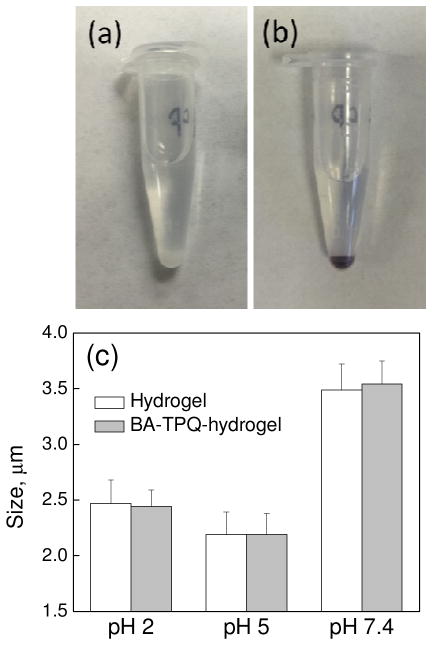
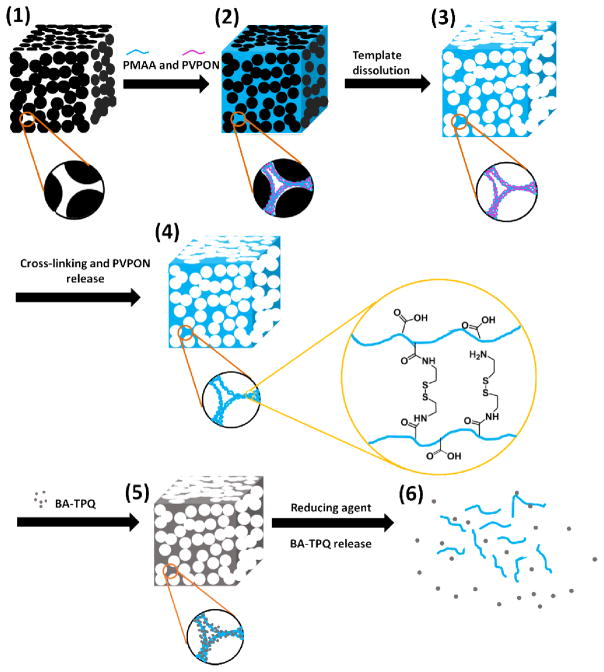
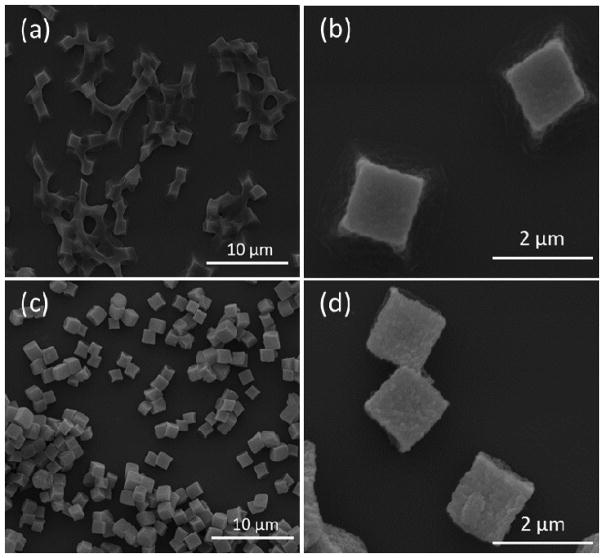
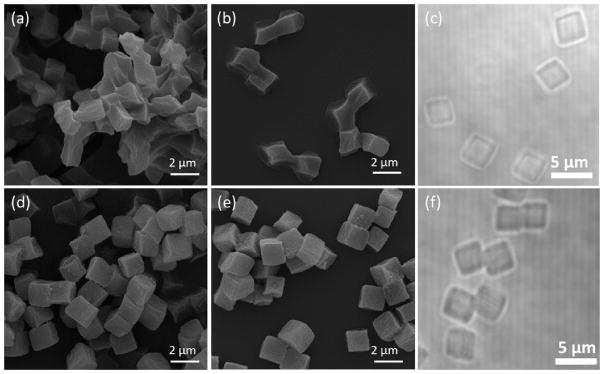
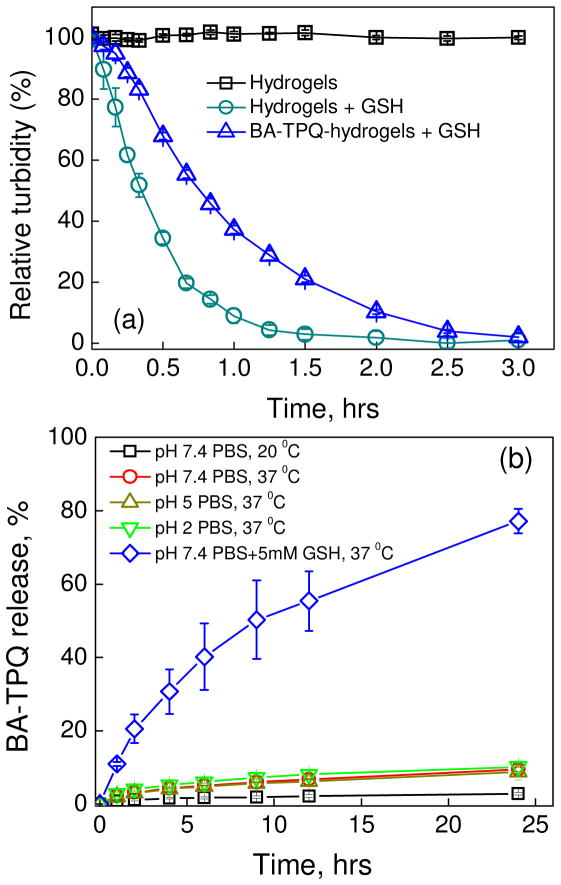
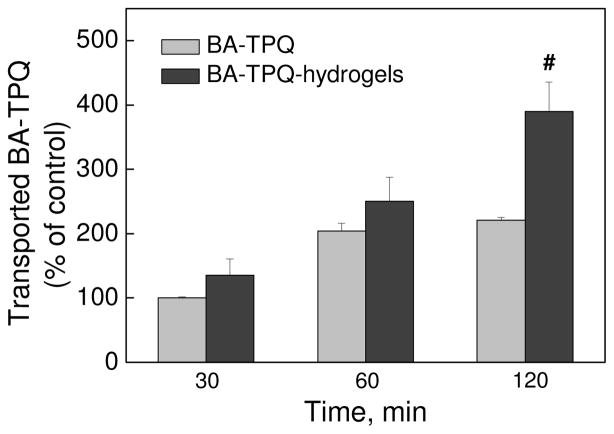
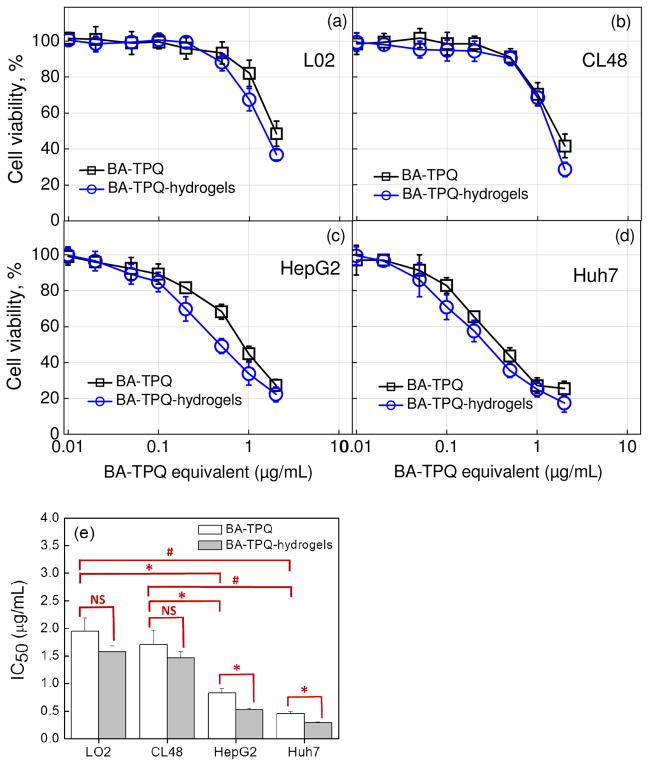
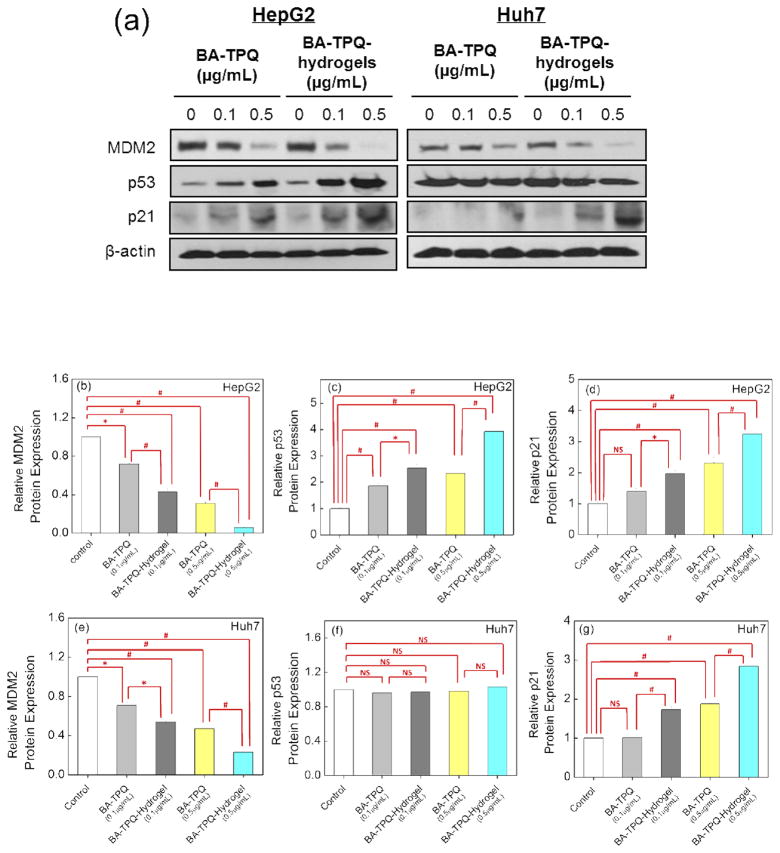
We report a novel delivery platform for a highly potent anticancer drug, 7-(benzylamino)-3,4-dihydro-pyrrolo[4,3,2-de]quinolin-8(1H)-one (BA-TPQ), using pH- and redox-sensitive poly(methacrylic acid) (PMAA) hydrogel cubes of micrometer size as the encapsulating matrix. The hydrogels are obtained upon cross-linking PMAA with cystamine in PMAA/poly(N-vinylpyrrolidone) multilayers assembled within mesoporous sacrificial templates. The BA-TPQ-loaded hydrogels maintain their cubical shape and pH-sensitivity after lyophilization, which is advantageous for long-term storage. Conversely, the particles degrade in vitro in the presence of glutathione (5mM) providing 80% drug release within 24h. Encapsulating BA-TPQ into hydrogels significantly increases its transport via Caco-2 cell monolayers used as a model for oral delivery where the apparent permeability of BA-TPQ-hydrogel cubes was∼2-fold higher than that of BA-TPQ. BA-TPQ-hydrogel cubes exhibit better anticancer activity against HepG2 (IC=0.52µg/mL) and Huh7 (IC=0.29µg/mL) hepatoma cells with a 40% decrease in the IC compared to the non-encapsulated drug. Remarkably, non-malignant liver cells have a lower sensitivity to BA-TPQ-hydrogel cubes with 2-fold increased IC values compared to those of cancer cells. In addition, encapsulating BA-TPQ in the hydrogels amplifies the potency of the drug via down-regulation of MDM2 oncogenic protein and upregulation of p53 (a tumor suppressor) and p21 (cell proliferation suppressor) expression in HepG2 liver cancer cells. Moreover, enhanced inhibition of MDM2 protein expression by BA-TPQ-hydrogel cubes is independent of p53 status in Huh7 cells. This drug delivery platform of non-spherical shape provides a facile method for encapsulation of hydrophobic drugs and can facilitate the enhanced efficacy of BA-TPQ for liver cancer therapy.
Many potent anticancer drugs are hydrophobic and lack tumor selectivity, which limits their application in cancer therapy. Although cubical hydrogels of poly(methacrylic acid) exhibit excellent biocompatibility and versatility, they have not been investigated for hydrophobic drug delivery due to poor mechanical stability and incompatibility between hydrophobic drugs and a hydrophilic hydrogel network. In this study, we provide a facile method to prepare a multilayer hydrogel-based platform with controlled nanostructure, cubical shape and redox-responsiveness for delivery of highly potent anticancer therapeutics, hydrophobic BA-TPQ. The BA-TPQ-hydrogel cubes have exceptional structural stability upon lyophilization which is advantageous for a long-term storage. The greatly enhanced trans-epithelial permeability and amplified anti-tumor activity of BA-TPQ are achieved by encapsulation in these hydrogel cubes. Furthermore, the anticancer BA-TPQ-hydrogel platform retains the selective activity of BA-TPQ to hepatocellular carcinoma cells. Overall, the produced BA-TPQ-hydrogel cubes demonstrate a high potential for clinical liver cancer therapy.
我们报道了一种用于高效抗癌药物7-(苄基氨基)-3,4-二氢-吡咯并[4,3,2- de]喹啉-8(1H)-酮(BA-TPQ)的新型递送平台,该平台使用微米尺寸的pH和氧化还原敏感型聚(甲基丙烯酸)(PMAA)水凝胶立方体作为封装基质。水凝胶是通过在介孔牺牲模板内组装的PMAA/聚(N-乙烯基吡咯烷酮)多层膜中将PMAA与胱胺交联而获得的。负载BA-TPQ的水凝胶在冻干后保持其立方体形状和pH敏感性,这有利于长期储存。相反,颗粒在存在谷胱甘肽(5mM)的情况下在体外降解,在24小时内实现80%的药物释放。将BA-TPQ封装到水凝胶中显著增加了其通过用作口服递送模型的Caco-2细胞单层的转运,其中BA-TPQ-水凝胶立方体的表观渗透率比BA-TPQ高约2倍。BA-TPQ-水凝胶立方体对HepG2(IC = 0.52μg/mL)和Huh7(IC = 0.29μg/mL)肝癌细胞表现出更好的抗癌活性,与未封装的药物相比,IC降低了40%。值得注意的是,非恶性肝细胞对BA-TPQ-水凝胶立方体的敏感性较低,IC值比癌细胞增加了2倍。此外,将BA-TPQ封装在水凝胶中通过下调HepG2肝癌细胞中MDM2致癌蛋白并上调p53(一种肿瘤抑制因子)和p21(细胞增殖抑制因子)的表达来增强药物的效力。此外,BA-TPQ-水凝胶立方体对MDM2蛋白表达的增强抑制与Huh7细胞中的p53状态无关。这种非球形的药物递送平台为封装疏水药物提供了一种简便方法,并可促进BA-TPQ对肝癌治疗的疗效增强。
许多强效抗癌药物具有疏水性且缺乏肿瘤选择性,这限制了它们在癌症治疗中的应用。尽管聚(甲基丙烯酸)的立方体水凝胶具有优异的生物相容性和多功能性,但由于机械稳定性差以及疏水药物与亲水性水凝胶网络之间的不相容性,尚未对其进行疏水药物递送的研究。在本研究中,我们提供了一种简便方法来制备基于多层水凝胶的平台,该平台具有可控的纳米结构、立方体形状和氧化还原响应性,用于递送强效抗癌治疗药物疏水BA-TPQ。BA-TPQ-水凝胶立方体在冻干后具有出色的结构稳定性,这有利于长期储存。通过封装在这些水凝胶立方体中,BA-TPQ的跨上皮通透性大大增强,抗肿瘤活性也得到放大。此外,抗癌BA-TPQ-水凝胶平台保留了BA-TPQ对肝癌细胞的选择性活性。总体而言,所制备的BA-TPQ-水凝胶立方体在临床肝癌治疗中显示出很高的潜力。