Morrow Carl A, Nguyen Michael O, Fower Andrew, Wong Io Nam, Osman Fekret, Bryer Claire, Whitby Matthew C
Department of Biochemistry, University of Oxford, Oxford, United Kingdom.
Elife. 2017 Jun 6;6:e25490. doi: 10.7554/eLife.25490.
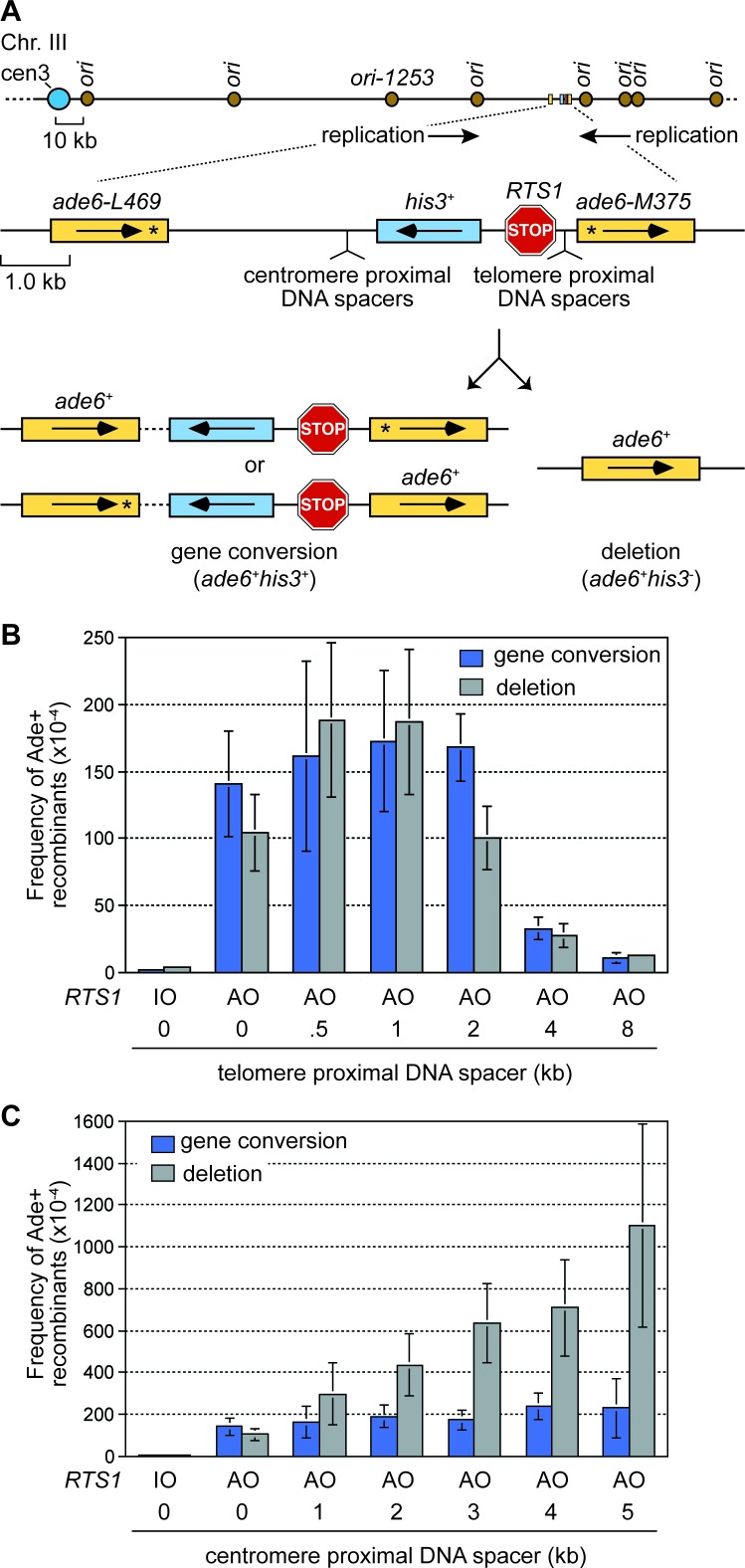
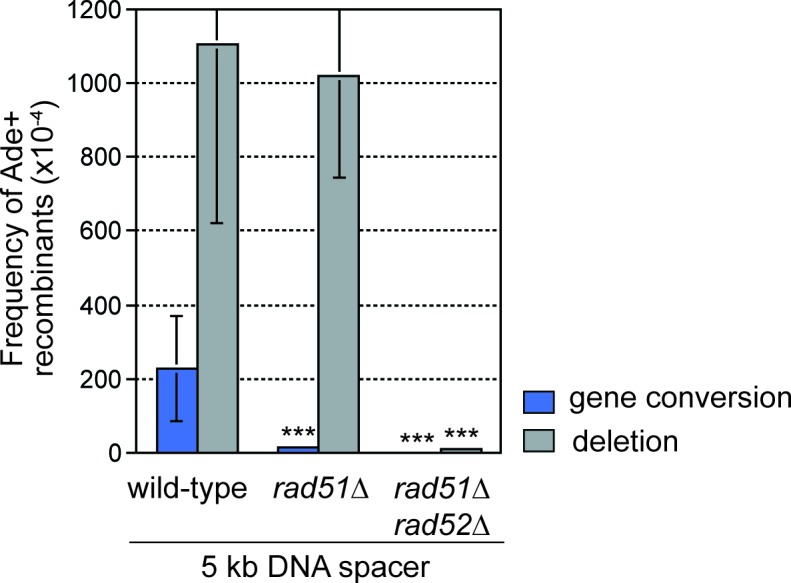
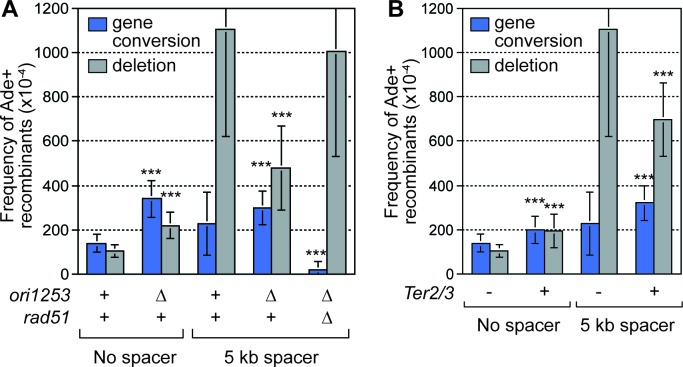
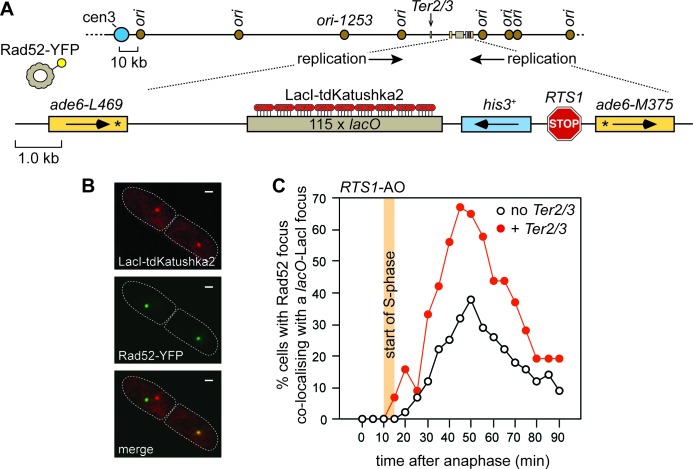
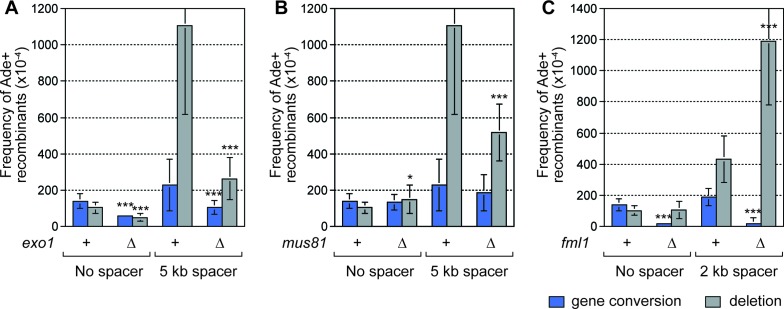
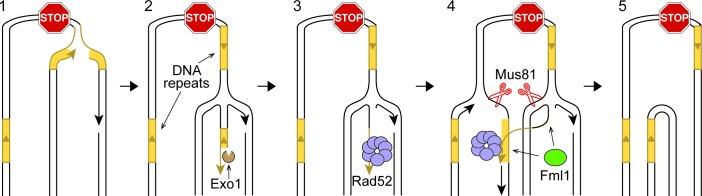
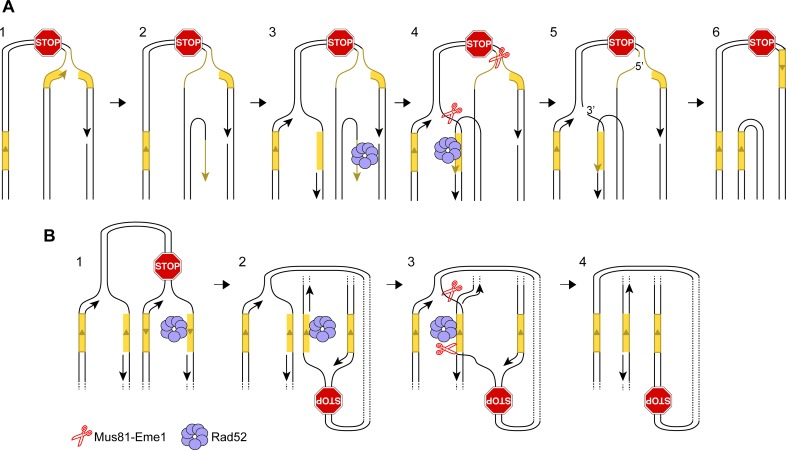
Problems that arise during DNA replication can drive genomic alterations that are instrumental in the development of cancers and many human genetic disorders. Replication fork barriers are a commonly encountered problem, which can cause fork collapse and act as hotspots for replication termination. Collapsed forks can be rescued by homologous recombination, which restarts replication. However, replication restart is relatively slow and, therefore, replication termination may frequently occur by an active fork converging on a collapsed fork. We find that this type of non-canonical fork convergence in fission yeast is prone to trigger deletions between repetitive DNA sequences via a mechanism we call Inter-Fork Strand Annealing (IFSA) that depends on the recombination proteins Rad52, Exo1 and Mus81, and is countered by the FANCM-related DNA helicase Fml1. Based on our findings, we propose that IFSA is a potential threat to genomic stability in eukaryotes.
DNA复制过程中出现的问题会导致基因组改变,这些改变在癌症和许多人类遗传疾病的发生发展中起着重要作用。复制叉障碍是一个常见问题,它会导致复制叉崩溃,并成为复制终止的热点。崩溃的复制叉可以通过同源重组来挽救,从而重新启动复制。然而,复制重新启动相对较慢,因此,复制终止可能经常通过一个活跃的复制叉与一个崩溃的复制叉会合而发生。我们发现,裂殖酵母中这种非经典的复制叉会合容易通过一种我们称为叉间链退火(IFSA)的机制触发重复DNA序列之间的缺失,该机制依赖于重组蛋白Rad52、Exo1和Mus81,并受到FANCM相关的DNA解旋酶Fml1的抑制。基于我们的发现,我们提出IFSA是真核生物基因组稳定性的一个潜在威胁。