Mergia Ayalew
Department of Infectious Diseases and Pathology, University of Florida, Gainesville, FL 32611, USA.
Viruses. 2017 May 26;9(6):129. doi: 10.3390/v9060129.
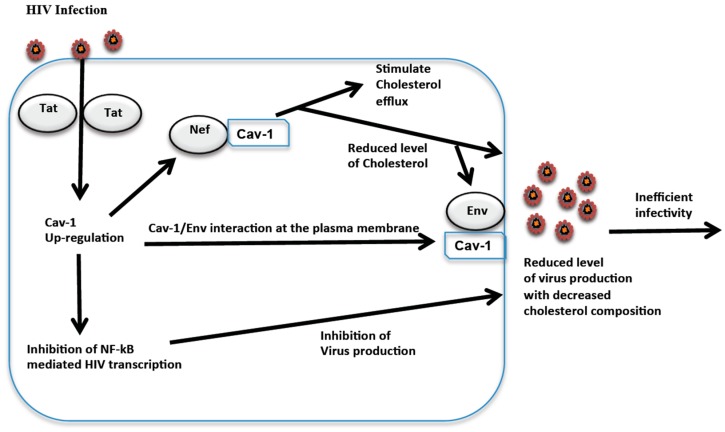
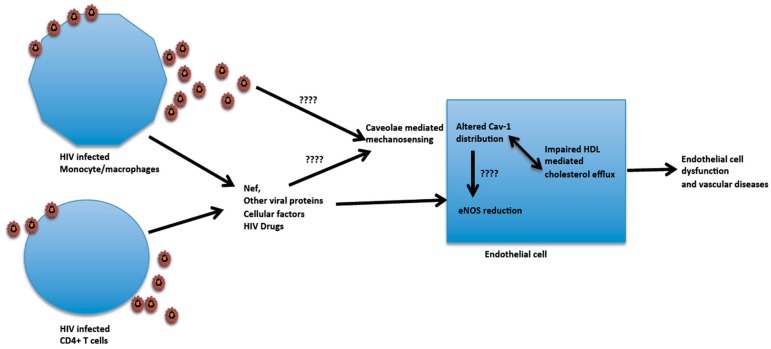
Caveolin 1 (Cav-1) is a major component of the caveolae structure and is expressed in a variety of cell types including macrophages, which are susceptible to human immunodeficiency virus (HIV) infection. Caveolae structures are present in abundance in mechanically stressed cells such as endothelial cells and adipocytes. HIV infection induces dysfunction of these cells and promotes pathogenesis. Cav-1 and the caveolae structure are believed to be involved in multiple cellular processes that include signal transduction, lipid regulation, endocytosis, transcytosis, and mechanoprotection. Such a broad biological role of Cav-1/caveolae is bound to have functional cross relationships with several molecular pathways including HIV replication and viral-induced pathogenesis. The current review covers the relationship of Cav-1 and HIV in respect to viral replication, persistence, and the potential role in pathogenesis.
小窝蛋白1(Cav-1)是小窝结构的主要成分,在包括巨噬细胞在内的多种细胞类型中表达,而巨噬细胞易受人类免疫缺陷病毒(HIV)感染。小窝结构大量存在于机械应激细胞中,如内皮细胞和脂肪细胞。HIV感染会导致这些细胞功能障碍并促进发病机制。Cav-1和小窝结构被认为参与多种细胞过程,包括信号转导、脂质调节、内吞作用、转胞吞作用和机械保护。Cav-1/小窝如此广泛的生物学作用必然与包括HIV复制和病毒诱导的发病机制在内的多种分子途径存在功能交叉关系。本综述涵盖了Cav-1与HIV在病毒复制、持续性以及发病机制中的潜在作用方面的关系。