Zheng Xiangfeng, Zhang Xiaoli, Zhao Lina, Apaliya Maurice T, Yang Qiya, Sun Wei, Zhang Xiaoyun, Zhang Hongyin
School of Food and Biological Engineering, Jiangsu University, Zhenjiang 212013, Jiangsu, China.
Zhen Jiang Grain and Oil Quality Testing Center, Zhenjiang 212013, Jiangsu, China.
Toxins (Basel). 2017 Jun 1;9(6):184. doi: 10.3390/toxins9060184.
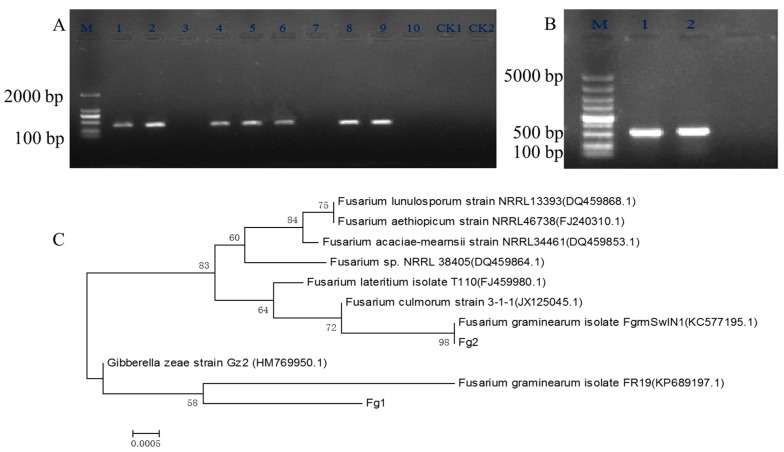
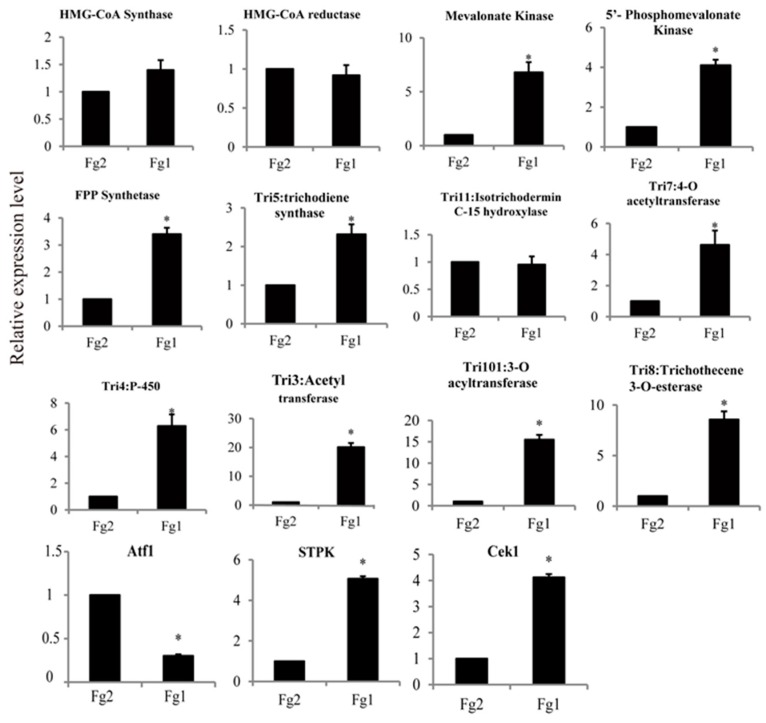
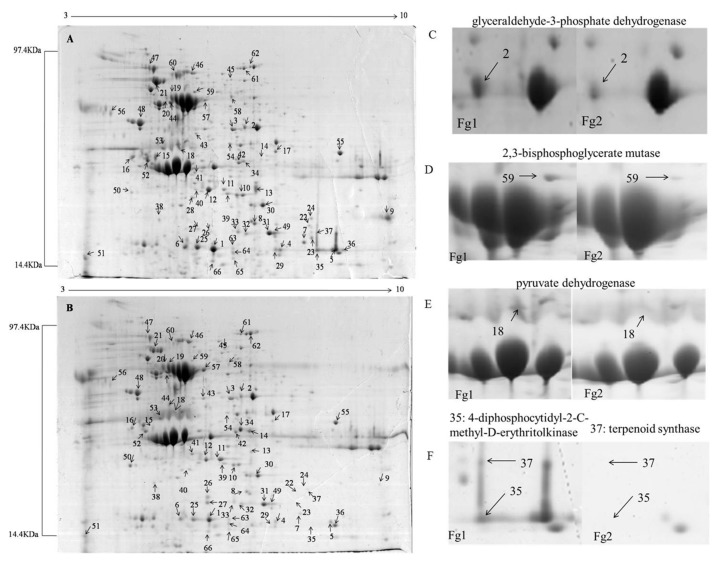
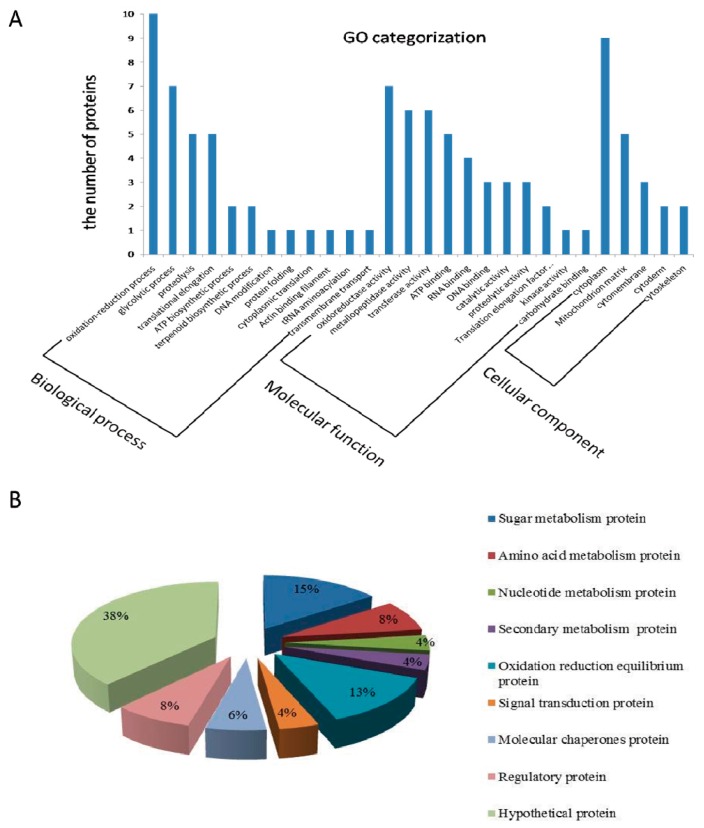
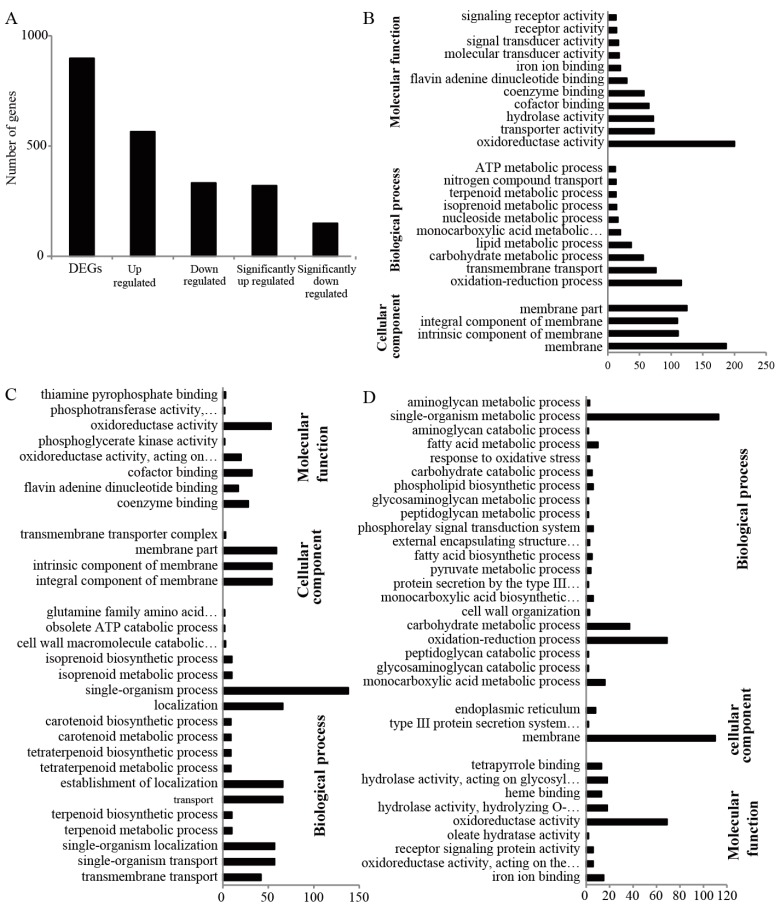
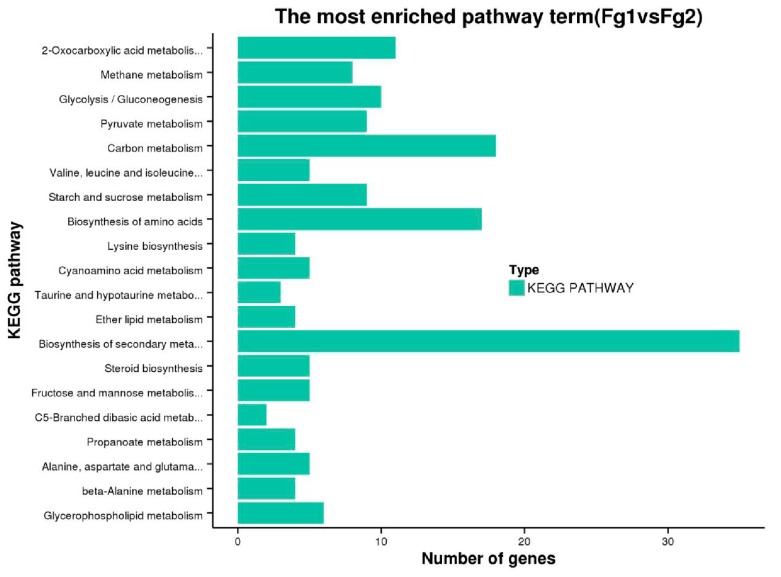
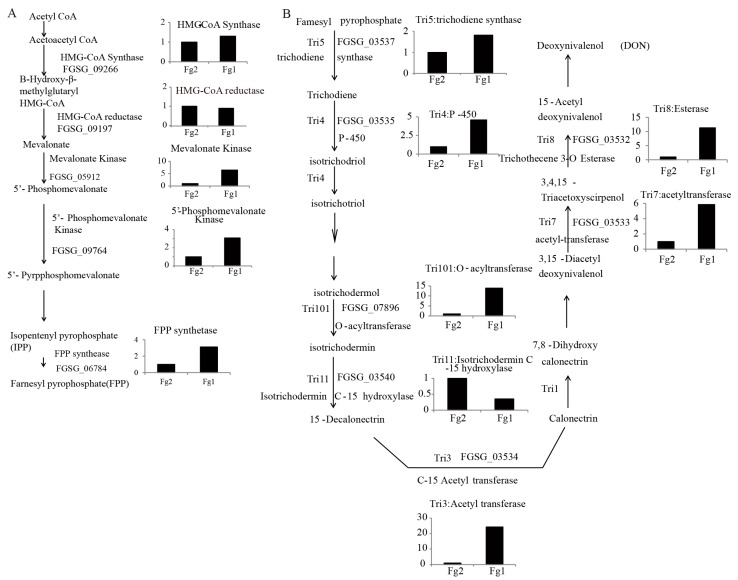
In this study, seven strains of were isolated from wheat, of which six were identified to produce deoxynivalenol and the production of deoxynivalenol was assessed. strain Fg1 was noted to produce 1.0 μg/g deoxynivalenol during the incubation period in the Czapek yeast broth, while none was detected in strain Fg2. Hence, the differences in proteomes and transcriptomes of Fg1 and Fg2 were compared to analyze the mechanism underlying deoxynivalenol production. Among the 66 significantly differentially expressed proteins in Fg1, 39 and 27 were more or less abundant expressed. Functional analysis suggested that the enzymes involved in the methylerythritol 4-phosphate and mevalonate pathways, which provide a substrate for biosynthesis of farnesyl pyrophosphate, a precursor of DON, were activated in Fg1. The transcriptomics data demonstrated that the expression level of a majority of genes, including trichothecene biosynthetic genes, protein kinases, and transcription factors, involved in trichothecene biosynthesis was higher in Fg1 than in Fg2. The results also revealed differential expression profiles of deoxynivalenol biosynthesis genes in strains Fg1 and Fg2, which emphasized their deoxynivalenol producing ability and the underlying mechanism.
在本研究中,从小麦中分离出七株[具体菌株名称未给出],其中六株被鉴定为能产生脱氧雪腐镰刀菌烯醇,并对脱氧雪腐镰刀菌烯醇的产生情况进行了评估。菌株Fg1在察氏酵母肉汤培养期间被发现能产生1.0μg/g脱氧雪腐镰刀菌烯醇,而在菌株Fg2中未检测到。因此,比较了Fg1和Fg2的蛋白质组和转录组差异,以分析脱氧雪腐镰刀菌烯醇产生的潜在机制。在Fg1中66个显著差异表达的蛋白质中,39个表达量或多或少有所增加,27个表达量或多或少有所减少。功能分析表明,参与4-磷酸甲基赤藓糖醇和甲羟戊酸途径的酶在Fg1中被激活,这些途径为脱氧雪腐镰刀菌烯醇的前体法尼基焦磷酸的生物合成提供底物。转录组学数据表明,在Fg1中,参与单端孢霉烯生物合成的大多数基因,包括单端孢霉烯生物合成基因、蛋白激酶和转录因子的表达水平高于Fg2。结果还揭示了Fg1和Fg2菌株中脱氧雪腐镰刀菌烯醇生物合成基因的差异表达谱,突出了它们产生脱氧雪腐镰刀菌烯醇的能力及潜在机制。