Levenson Jessica C, Rollman Bruce L, Ritterband Lee M, Strollo Patrick J, Smith Kenneth J, Yabes Jonathan G, Moore Charity G, Harvey Allison G, Buysse Daniel J
Department of Psychiatry, University of Pittsburgh School of Medicine, 3811 O'Hara Street, E-1123 TDH, Pittsburgh, PA, 15213, USA.
Division of General Internal Medicine, Center for Behavioral Health and Smart Technology, University of Pittsburgh School of Medicine, Pittsburgh, PA, USA.
Trials. 2017 Jun 6;18(1):256. doi: 10.1186/s13063-017-2001-9.
Insomnia is common in primary care medical practices. Although behavioral treatments for insomnia are safe, efficacious, and recommended in practice guidelines, they are not widely-available, and their effects on comorbid medical conditions remain uncertain. We are conducting a pragmatic clinical trial to test the efficacy of two cognitive behavioral treatments for insomnia (Brief Behavioral Treatment for Insomnia (BBTI) and Sleep Healthy Using the Internet (SHUTi)) versus an enhanced usual care condition (EUC).
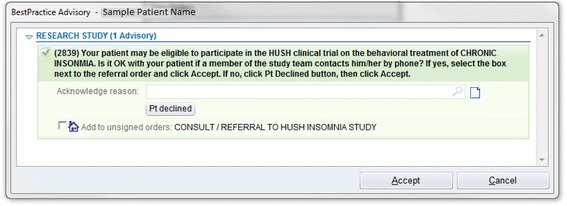
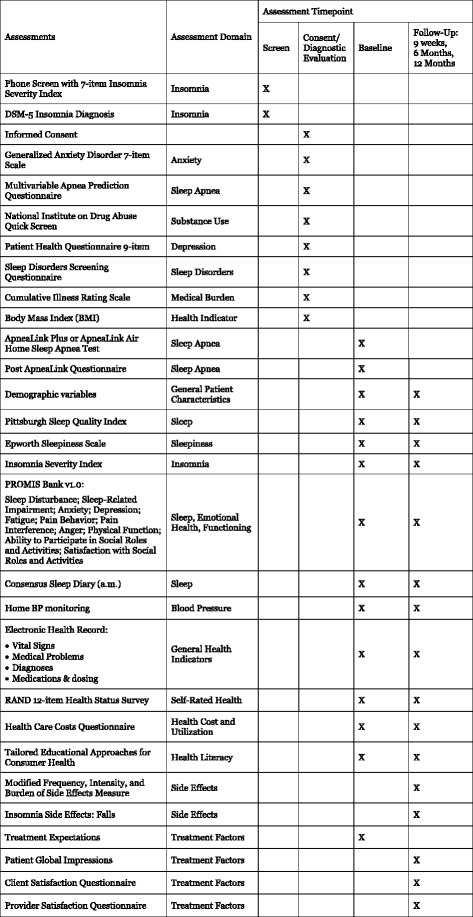
METHODS/DESIGN: The study is a three-arm, parallel group, randomized controlled trial. Participants include 625 adults with hypertension and insomnia, recruited via electronic health records from primary care practices affiliated with a large academic medical center. After screening and baseline assessments, participants are randomized to treatment. BBTI is delivered individually with a live therapist via web-interface/telehealth sessions, while SHUTi is a self-guided, automated, interactive, web-based form of cognitive behavioral therapy for insomnia. Participants in EUC receive an individualized sleep report, educational resources, and an online educational video. Treatment outcomes are measured at 9 weeks, 6 months, and 12 months. The primary outcome is patient-reported sleep disturbances. Secondary outcomes include other self-reported sleep measures, home blood pressure, body mass index, quality of life, health functioning, healthcare utilization, and side effects.
This randomized clinical trial compares two efficacious insomnia interventions to EUC, and provides a cost-effective and efficient examination of their similarities and differences. The pragmatic orientation of this trial may impact sleep treatment delivery in real world clinical settings and advance the dissemination and implementation of behavioral sleep interventions.
ClinicalTrials.gov (Identifier: NCT02508129 ; Date Registered: July 21, 2015).
失眠在基层医疗实践中很常见。虽然失眠的行为治疗是安全、有效的,且在实践指南中被推荐,但它们并未广泛可得,其对合并症的影响仍不确定。我们正在进行一项实用临床试验,以测试两种失眠认知行为治疗方法(失眠简短行为治疗(BBTI)和互联网睡眠健康(SHUTi))与强化常规护理条件(EUC)相比的疗效。
方法/设计:该研究是一项三臂、平行组、随机对照试验。参与者包括625名患有高血压和失眠的成年人,通过电子健康记录从一家大型学术医疗中心附属的基层医疗实践中招募。经过筛查和基线评估后,参与者被随机分配接受治疗。BBTI通过网络界面/远程医疗会议由现场治疗师单独提供,而SHUTi是一种自我指导、自动化、交互式的基于网络的失眠认知行为治疗形式。EUC组的参与者会收到一份个性化的睡眠报告、教育资源和一个在线教育视频。在9周、6个月和12个月时测量治疗结果。主要结果是患者报告的睡眠障碍。次要结果包括其他自我报告的睡眠指标、家庭血压、体重指数、生活质量、健康功能、医疗保健利用情况和副作用。
这项随机临床试验将两种有效的失眠干预措施与EUC进行比较,并对它们的异同进行了具有成本效益和高效的检验。该试验的实用导向可能会影响现实世界临床环境中的睡眠治疗实施,并推进行为睡眠干预措施的传播和实施。
ClinicalTrials.gov(标识符:NCT02508129;注册日期:2015年7月21日)。