Hou Xin, Xiao Meng, Chen Sharon C-A, Kong Fanrong, Wang He, Chu Yun-Zhuo, Kang Mei, Sun Zi-Yong, Hu Zhi-Dong, Li Ruo-Yu, Lu Juan, Liao Kang, Hu Tie-Shi, Ni Yu-Xing, Zou Gui-Ling, Zhang Ge, Fan Xin, Zhao Yu-Pei, Xu Ying-Chun
Department of Clinical Laboratory, Peking Union Medical College Hospital, Chinese Academy of Medical SciencesBeijing, China.
Graduate School, Peking Union Medical College, Chinese Academy of Medical SciencesBeijing, China.
Front Microbiol. 2017 May 23;8:880. doi: 10.3389/fmicb.2017.00880. eCollection 2017.
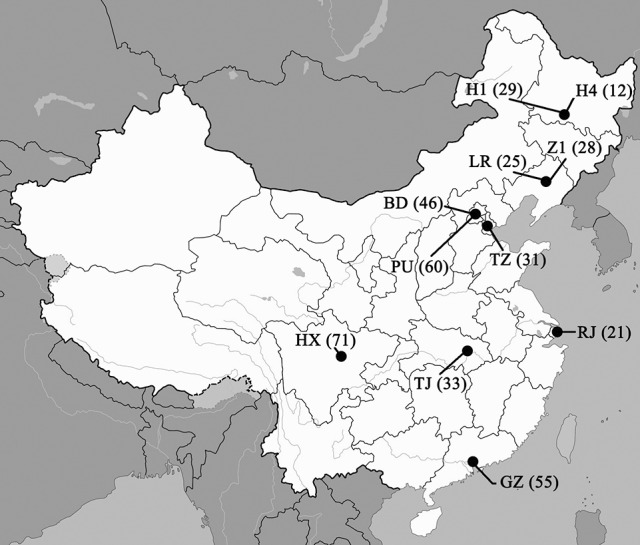
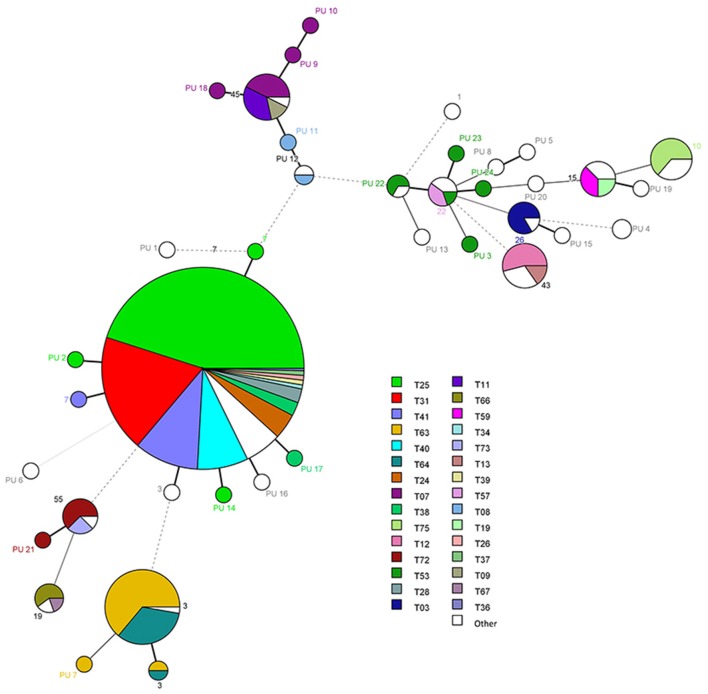
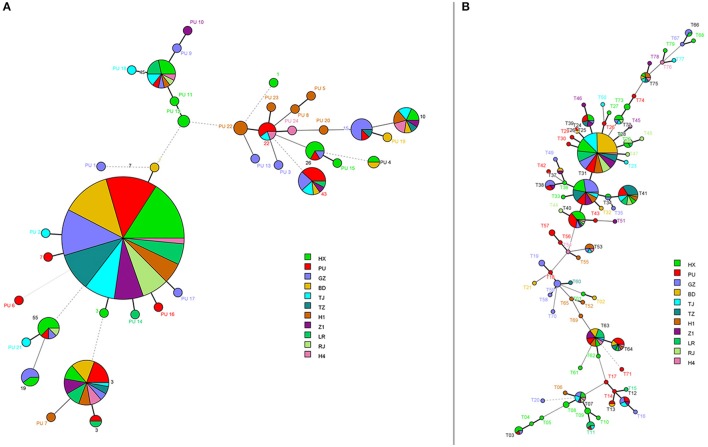
is an increasingly important cause of invasive candidiasis. In China, relatively little is known of the molecular epidemiology of and of its antifungal susceptibility patterns. Here we studied 411 non-duplicate isolates from 411 patients at 11 hospitals participating in the National China Hospital Invasive Fungal Surveillance Net program (CHIF-NET; 2010-2014). Genotyping was performed using multilocus sequence typing (MLST) employing six genetic loci and by microsatellite analysis. Antifungal susceptibility testing was performed using Sensititre YeastOne™ YO10 methodology. Of 411 isolates, 35 sequence types (ST) were identified by MLST and 79 different genotypes by microsatellite typing; the latter had higher discriminatory power than MLST in the molecular typing of . Using MLST, ST7 and ST3 were the most common STs (66.4 and 9.5% of all isolates, respectively) with 24 novel STs identified; the most common microsatellite types were T25 (30.4% of all isolates) and T31 (12.4%). Resistance to fluconazole (MIC > 32 μg/mL) was seen in 16.5% (68/411) of isolates whilst MICs of >0.5 μg/mL for voriconazole, >2 μg/mL for itraconazole and >2 μg/mL for posaconazole were seen for 28.7, 6.8, and 7.3% of isolates, respectively; 14.8% of all isolates cross-resistant/non-wide-type to fluconazole and voriconazole. Fluconazole resistant rates increased 3-fold over the 5-year period whilst that of isolates with non-WT MICs to voriconazole, 7-fold. All echinocandins exhibited >99% susceptibility rates against all isolates but notably one isolate exhibited multi-drug resistance to the azoles and echinocandins. The study has provided a global picture of the molecular epidemiology and drug resistance rates of in China during the period of the study.
是侵袭性念珠菌病日益重要的病因。在中国,对其分子流行病学及其抗真菌药敏模式了解相对较少。在此,我们研究了参与中国全国医院侵袭性真菌监测网项目(CHIF-NET;2010 - 2014年)的11家医院411例患者的411株非重复分离株。使用包含6个基因位点的多位点序列分型(MLST)和微卫星分析进行基因分型。使用Sensititre YeastOne™ YO10方法进行抗真菌药敏试验。在411株分离株中,通过MLST鉴定出35种序列类型(ST),通过微卫星分型鉴定出79种不同基因型;在该菌的分子分型中,后者比MLST具有更高的鉴别力。使用MLST,ST7和ST3是最常见的STs(分别占所有分离株的66.4%和9.5%),鉴定出24种新的STs;最常见的微卫星类型是T25(占所有分离株的30.4%)和T31(12.4%)。16.5%(68/411)的分离株对氟康唑耐药(MIC > 32 μg/mL),而伏立康唑MIC > 0.5 μg/mL、伊曲康唑MIC > 2 μg/mL和泊沙康唑MIC > 2 μg/mL的分离株分别占28.7%、6.8%和7.3%;所有分离株中有14.8%对氟康唑和伏立康唑交叉耐药/非野生型。在5年期间,氟康唑耐药率增加了3倍,而对伏立康唑非野生型MIC的分离株耐药率增加了7倍。所有棘白菌素对所有分离株的药敏率均>99%,但值得注意的是,有1株分离株对唑类和棘白菌素表现出多重耐药。该研究提供了研究期间中国该菌分子流行病学和耐药率的总体情况。