Morse Ben, Grépin Karen A, Blair Robert A, Tsai Lily
Political Science Department, Massachusetts Institute of Technology, Cambridge, Massachusetts, USA.
Robert F. Wagner Graduate School of Public Service, New York University, New York, New York, USA.
BMJ Glob Health. 2016 May 18;1(1):e000007. doi: 10.1136/bmjgh-2015-000007. eCollection 2016.
The recent Ebola virus disease (EVD) outbreak was unprecedented in magnitude, duration and geographic scope. Hitherto there have been no population-based estimates of its impact on non-EVD health outcomes and health-seeking behaviour.
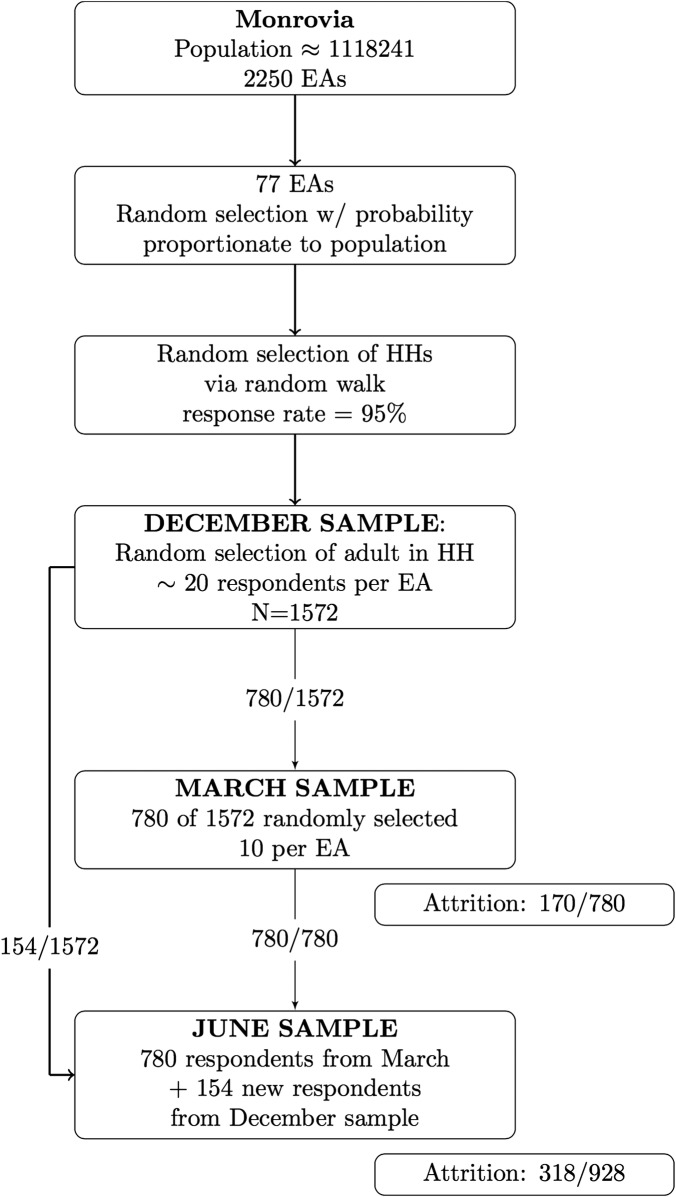
We use data from a population-based panel survey conducted in the late-crisis period and two postcrisis periods to track trends in (1) the prevalence of adult and child illness, (2) subsequent usage of health services and (3) the determinants thereof.
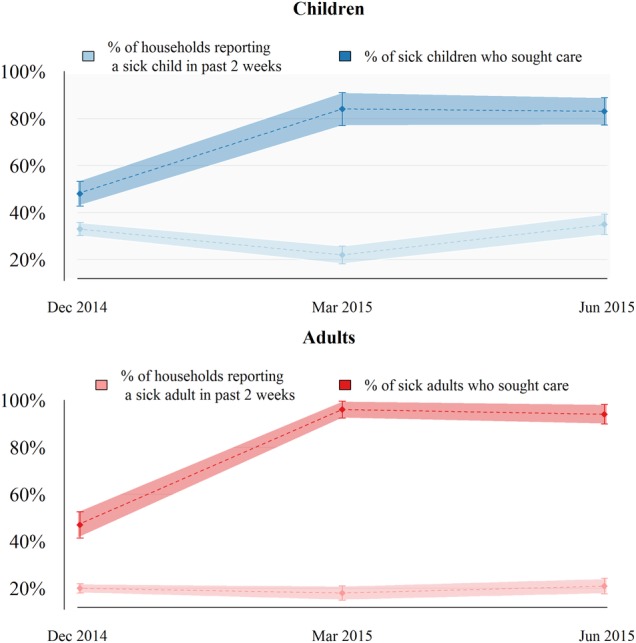
The prevalence of child and adult illness remained relatively steady across all periods. Usage of health services for children and adults increased by 77% and 104%, respectively, between the late-crisis period and the postcrisis periods. In the late-crisis period, (1) socioeconomic factors weakly predict usage, (2) distrust in government strongly predicts usage, (3) direct exposure to the EVD outbreak, as measured by witnessing dead bodies or knowing Ebola victims, negatively predicts trust and usage and (4) exposure to government-organised community outreach predicts higher trust and usage. These patterns do not obtain in the post-crisis period.
Supply-side and socioeconomic factors are insufficient to account for lower health-seeking behaviour during the crisis. Rather, it appears that distrust and negative EVD-related experiences reduced demand during the outbreak. The absence of these patterns outside the crisis period suggests that the rebound after the crisis reflects recovery of demand. Policymakers should anticipate the importance of demand-side factors, including fear and trust, on usage of health services during health crises.
最近的埃博拉病毒病(EVD)疫情在规模、持续时间和地理范围上都是前所未有的。迄今为止,尚无基于人群的评估其对非埃博拉病毒病健康结果和就医行为影响的研究。
我们使用在危机后期和两个危机后时期进行的基于人群的面板调查数据,来追踪以下方面的趋势:(1)成人和儿童疾病的患病率;(2)随后的医疗服务使用情况;(3)其决定因素。
在所有时期,儿童和成人疾病的患病率保持相对稳定。在危机后期和危机后时期之间,儿童和成人的医疗服务使用率分别增加了77%和104%。在危机后期,(1)社会经济因素对使用率的预测作用较弱;(2)对政府的不信任强烈预测使用率;(3)通过目睹尸体或认识埃博拉受害者来衡量的直接接触埃博拉病毒病疫情,对信任和使用率有负面预测作用;(4)接触政府组织的社区外展活动预测更高的信任和使用率。这些模式在危机后时期并不存在。
供应方和社会经济因素不足以解释危机期间较低的就医行为。相反,似乎不信任和与埃博拉病毒病相关的负面经历在疫情期间降低了需求。危机时期之外不存在这些模式表明,危机后的反弹反映了需求的恢复。政策制定者应认识到需求方因素,包括恐惧和信任,对健康危机期间医疗服务使用情况的重要性。