Arensdorf Angela M, Dillard Miriam E, Menke Jacob M, Frank Matthew W, Rock Charles O, Ogden Stacey K
Department of Cell and Molecular Biology, St. Jude Children's Research Hospital, Memphis, TN 38105, USA.
Department of Cell and Molecular Biology, St. Jude Children's Research Hospital, Memphis, TN 38105, USA; Rhodes College St. Jude Summer Plus Program, Rhodes College, Memphis, TN 38112, USA.
Cell Rep. 2017 Jun 6;19(10):2074-2087. doi: 10.1016/j.celrep.2017.05.033.
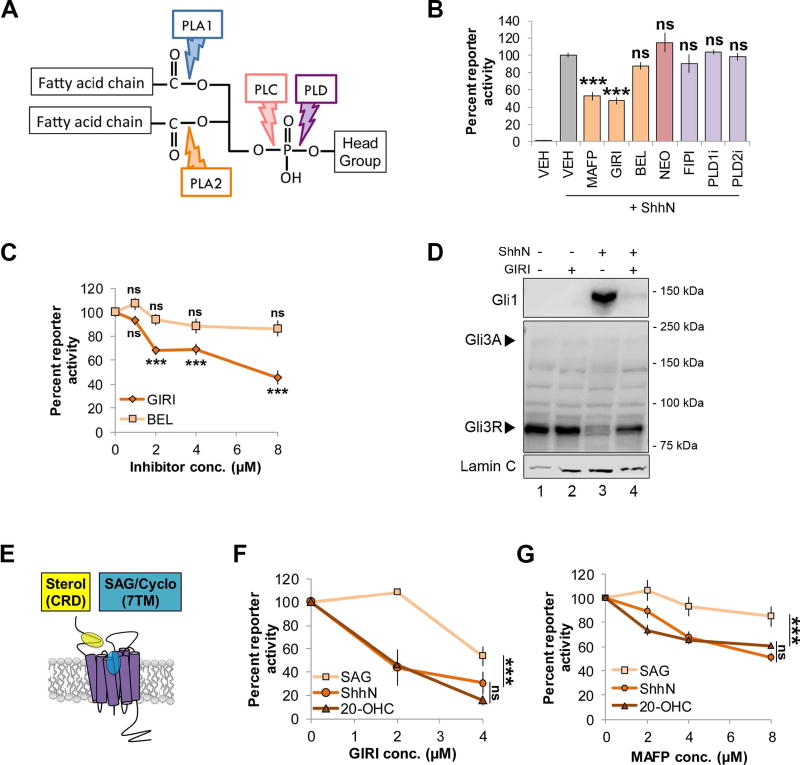
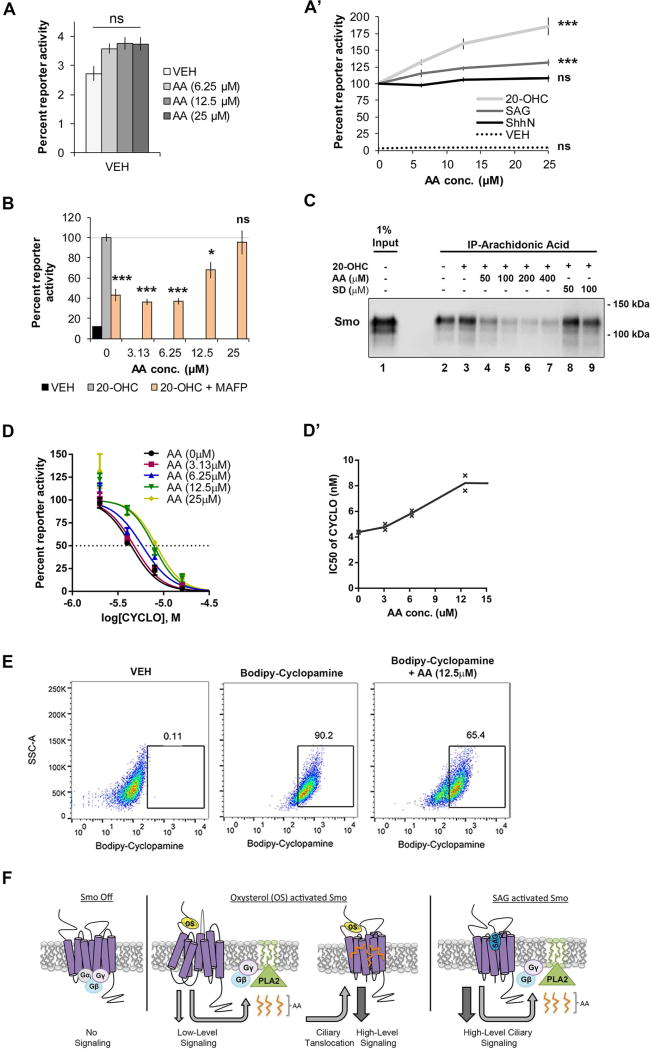
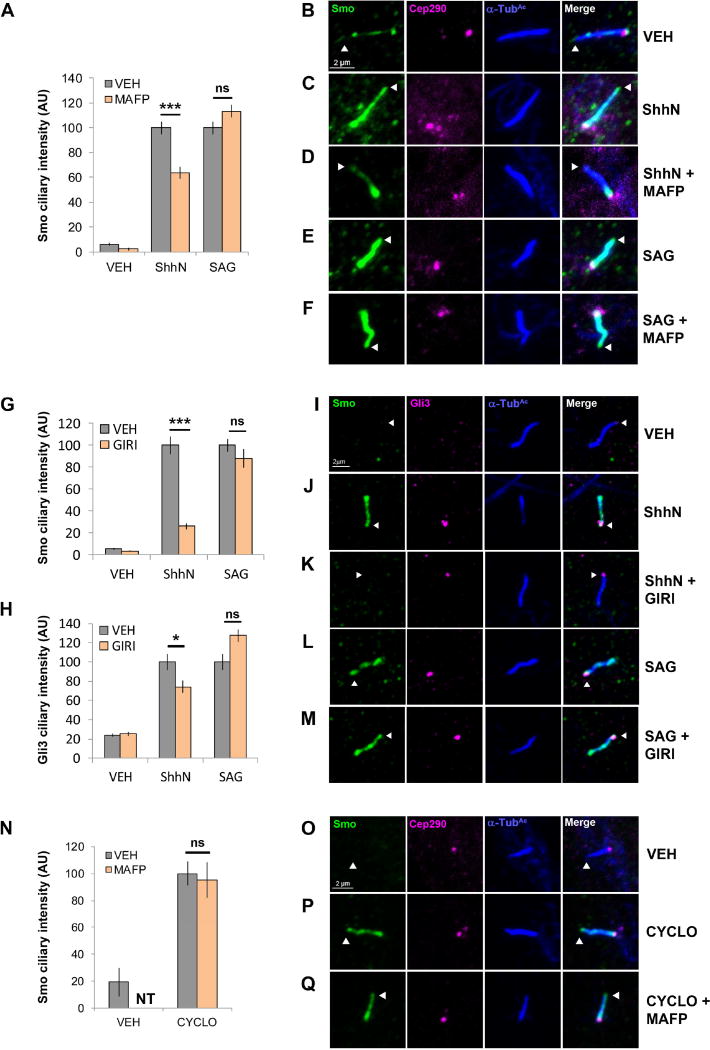
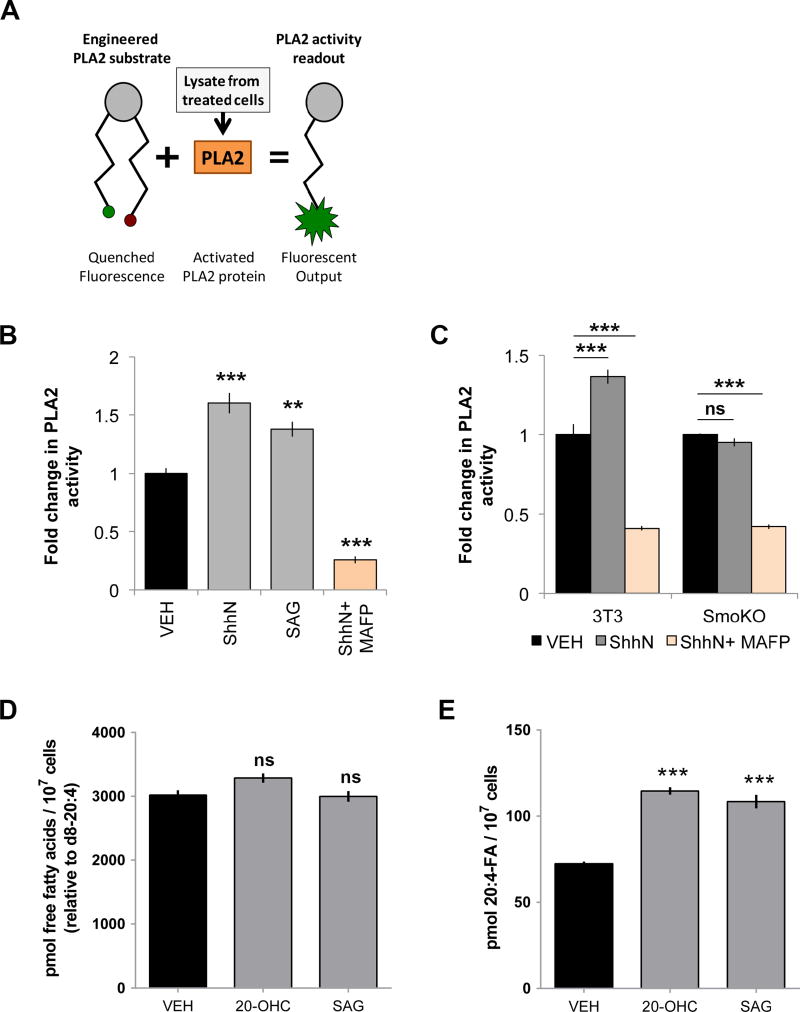
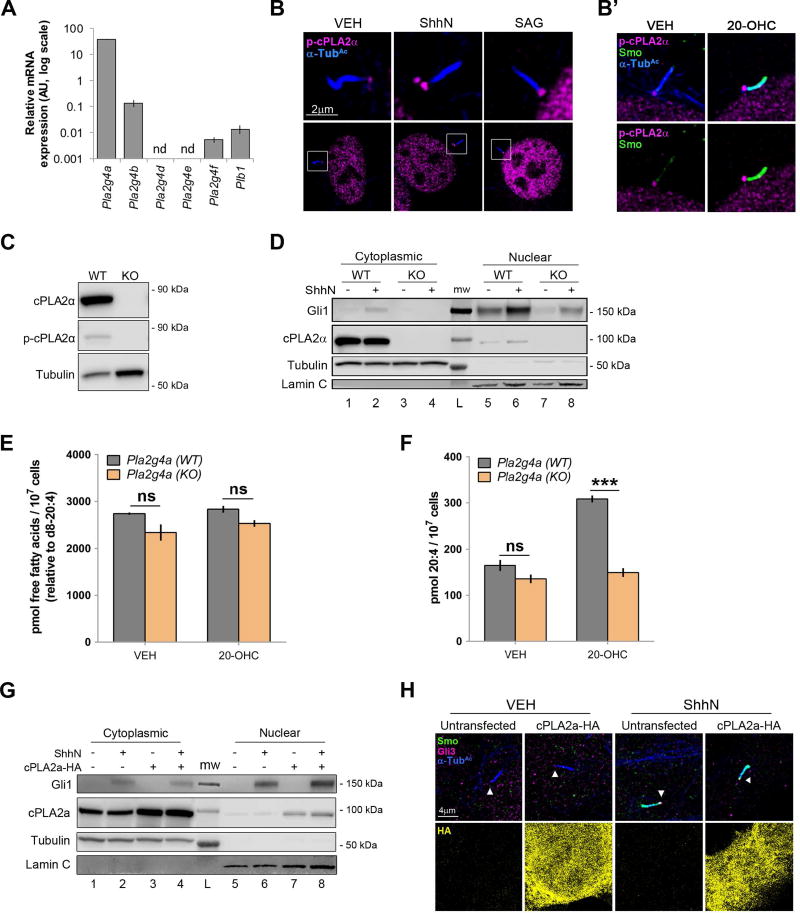
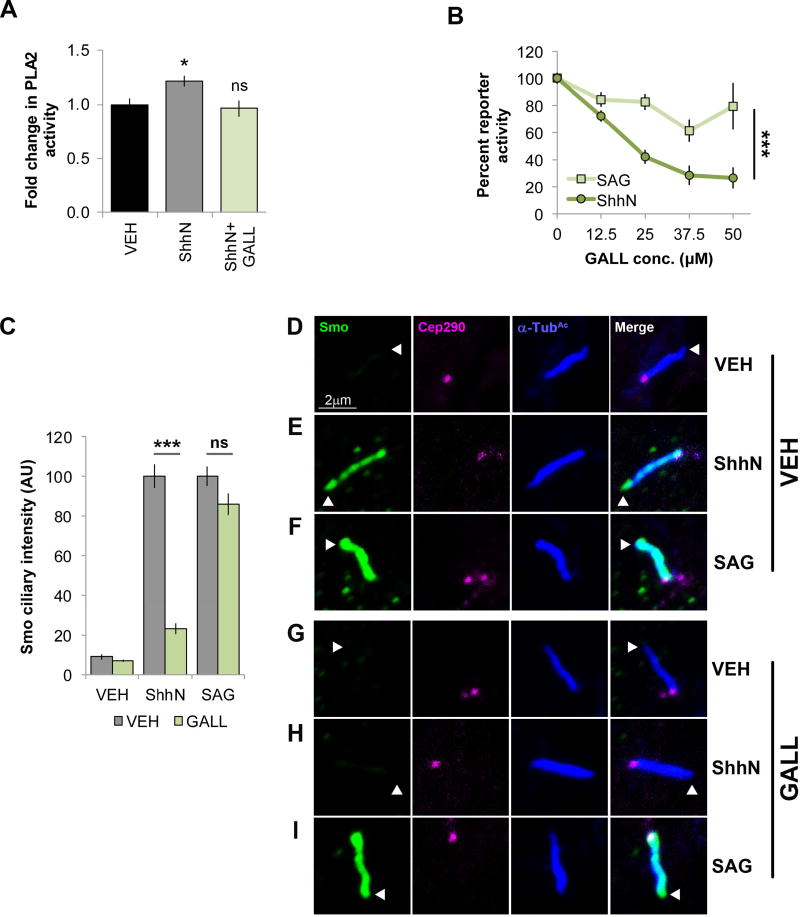
The G protein-coupled receptor Smoothened (Smo) is the signal transducer of the Sonic Hedgehog (Shh) pathway. Smo signals through G protein-dependent and -independent routes, with G protein-independent canonical signaling to Gli effectors requiring Smo accumulation in the primary cilium. The mechanisms controlling Smo activation and trafficking are not yet clear but likely entail small-molecule binding to pockets in its extracellular cysteine-rich domain (CRD) and/or transmembrane bundle. Here, we demonstrate that the cytosolic phospholipase cPLA2α is activated through Gβγ downstream of Smo to release arachidonic acid. Arachidonic acid binds Smo and synergizes with CRD-binding agonists, promoting Smo ciliary trafficking and high-level signaling. Chemical or genetic cPLA2α inhibition dampens Smo signaling to Gli, revealing an unexpected contribution of G protein-dependent signaling to canonical pathway activity. Arachidonic acid displaces the Smo transmembrane domain inhibitor cyclopamine to rescue CRD agonist-induced signaling, suggesting that arachidonic acid may target the transmembrane bundle to allosterically enhance signaling by CRD agonist-bound Smo.
G蛋白偶联受体Smo(Smoothened)是音猬因子(Shh)信号通路的信号转导子。Smo通过依赖G蛋白和不依赖G蛋白的途径进行信号传导,不依赖G蛋白的经典信号传导至Gli效应子需要Smo在初级纤毛中积累。控制Smo激活和转运的机制尚不清楚,但可能涉及小分子与细胞外富含半胱氨酸结构域(CRD)和/或跨膜束中的口袋结合。在此,我们证明胞质磷脂酶cPLA2α在Smo下游通过Gβγ被激活以释放花生四烯酸。花生四烯酸结合Smo并与CRD结合激动剂协同作用,促进Smo向纤毛的转运和高水平信号传导。化学或基因抑制cPLA2α会减弱Smo向Gli的信号传导,揭示了G蛋白依赖性信号传导对经典途径活性的意外贡献。花生四烯酸取代Smo跨膜结构域抑制剂环杷明以挽救CRD激动剂诱导的信号传导,表明花生四烯酸可能靶向跨膜束以变构增强与CRD激动剂结合的Smo的信号传导。