Villa Isabella, Senesi Pamela, Montesano Anna, Ferraretto Anita, Vacante Fernanda, Spinello Alice, Bottani Michela, Bolamperti Simona, Rubinacci Alessandro, Luzi Livio, Terruzzi Ileana
Bone Metabolism Unit, San Raffaele Scientific Institute, Milan, Italy.
Metabolism Research Center, IRCCS Policlinico San Donato, San Donato Milanese, Milan, Italy.
J Transl Med. 2017 Jun 7;15(1):132. doi: 10.1186/s12967-017-1233-5.
Betaine (BET), a component of many foods, is an essential osmolyte and a source of methyl groups; it also shows an antioxidant activity. Moreover, BET stimulates muscle differentiation via insulin like growth factor I (IGF-I). The processes of myogenesis and osteogenesis involve common mechanisms with skeletal muscle cells and osteoblasts sharing the same precursor. Therefore, we have hypothesized that BET might be effective on osteoblast cell differentiation.
The effect of BET was tested in human osteoblasts (hObs) derived from trabecular bone samples obtained from waste material of orthopedic surgery. Cells were treated with 10 mM BET at 5, 15, 60 min and 3, 6 and 24 h. The possible effects of BET on hObs differentiation were evaluated by real time PCR, western blot and immunofluorescence analysis. Calcium imaging was used to monitor intracellular calcium changes.
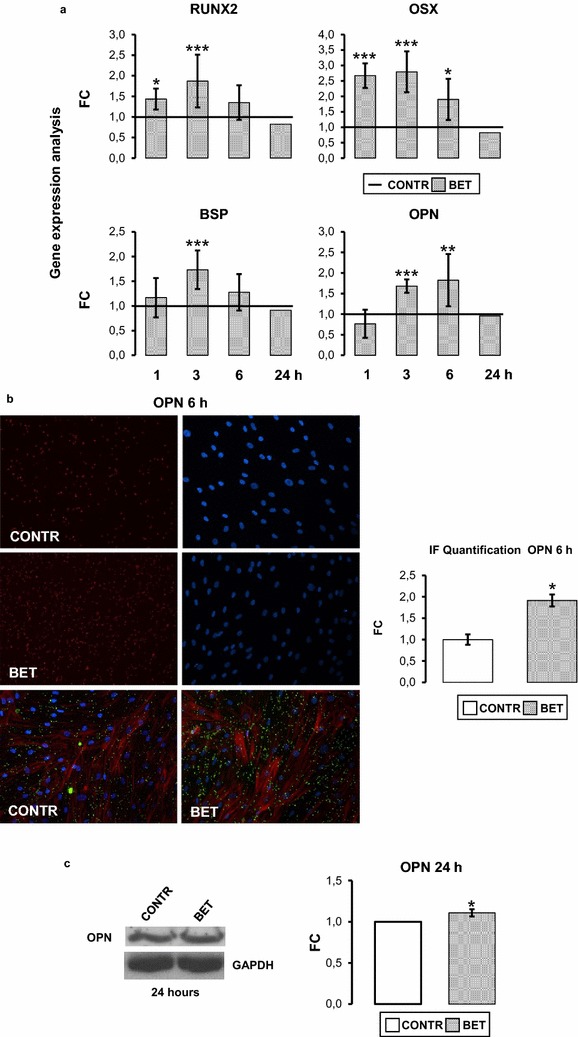
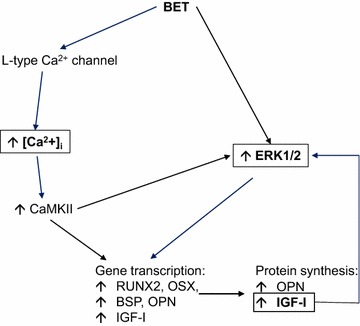
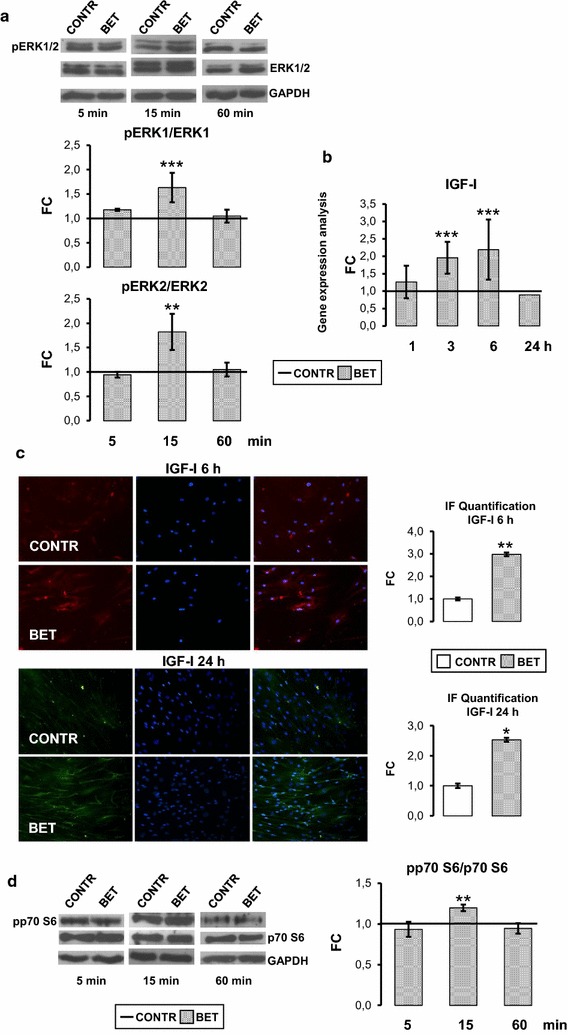
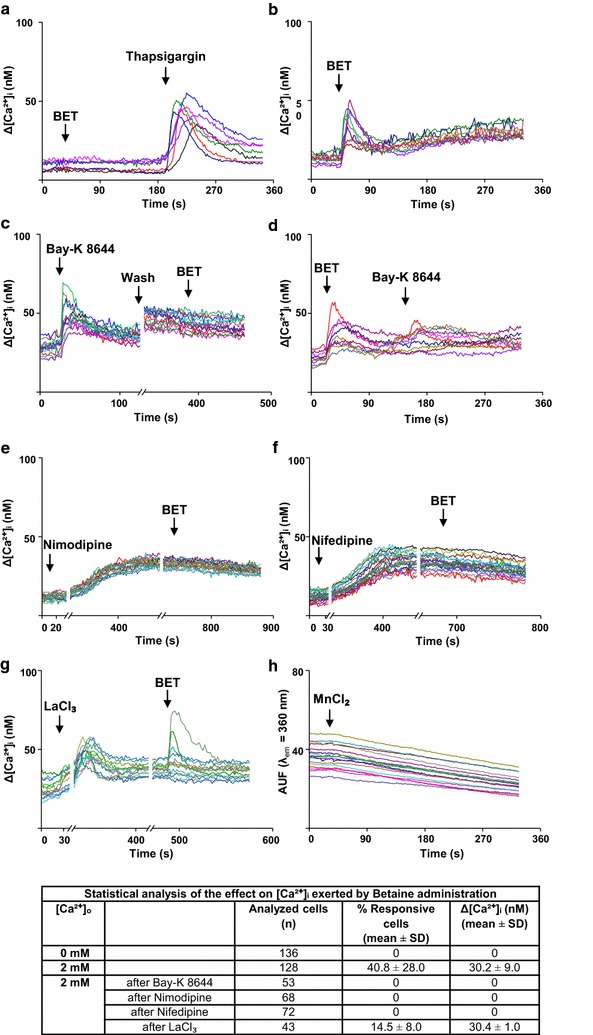
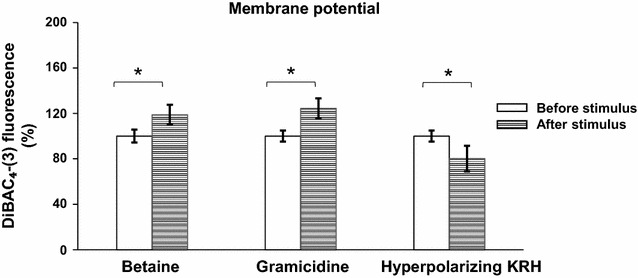
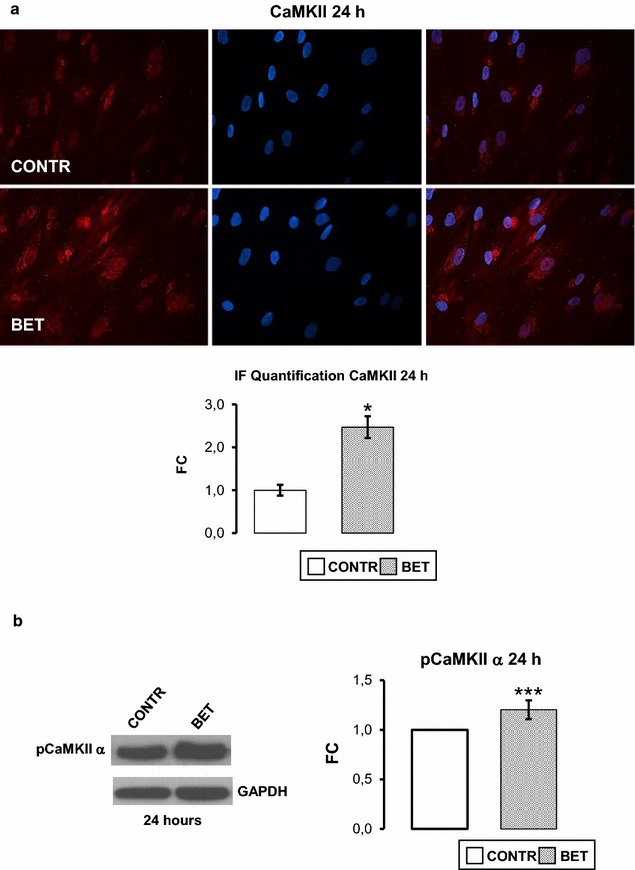
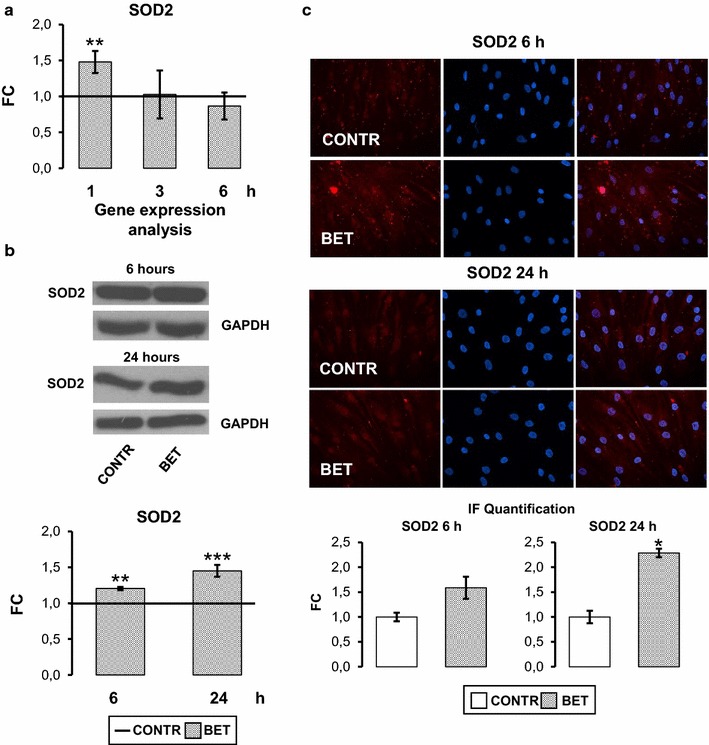
Real time PCR results showed that BET stimulated significantly the expression of RUNX2, osterix, bone sialoprotein and osteopontin. Western blot and immunofluorescence confirmed BET stimulation of osteopontin protein synthesis. BET stimulated ERK signaling, key pathway involved in osteoblastogenesis and calcium signaling. BET induced a rise of intracellular calcium by means of the calcium ions influx from the extracellular milieu through the L-type calcium channels and CaMKII signaling activation. A significant rise in IGF-I mRNA at 3 and 6 h and a significant increase of IGF-I protein at 6 and 24 h after BET stimulus was detected. Furthermore, BET was able to increase significantly both SOD2 gene expression and protein content.
Our study showed that three signaling pathways, i.e. cytosolic calcium influx, ERK activation and IGF-I production, are enhanced by BET in human osteoblasts. These pathways could have synergistic effects on osteogenic gene expression and protein synthesis, thus potentially leading to enhanced bone formation. Taken together, these results suggest that BET could be a promising nutraceutical therapeutic agent in the strategy to counteract the concomitant and interacting impact of sarcopenia and osteoporosis, i.e. the major determinants of senile frailty and related mortality.
甜菜碱(BET)是许多食物的组成成分,是一种必需的渗透溶质和甲基来源;它还具有抗氧化活性。此外,BET通过胰岛素样生长因子I(IGF-I)刺激肌肉分化。肌生成和成骨过程涉及共同机制,骨骼肌细胞和成骨细胞具有相同的前体。因此,我们推测BET可能对成骨细胞分化有效。
在从骨科手术废料中获取的小梁骨样本衍生的人成骨细胞(hObs)中测试BET的作用。细胞在5、15、60分钟以及3、6和24小时用10 mM BET处理。通过实时PCR、蛋白质印迹和免疫荧光分析评估BET对hObs分化的可能影响。使用钙成像监测细胞内钙变化。
实时PCR结果显示,BET显著刺激了RUNX2、osterix、骨唾液蛋白和骨桥蛋白的表达。蛋白质印迹和免疫荧光证实了BET对骨桥蛋白蛋白质合成的刺激。BET刺激了ERK信号传导,这是参与成骨细胞生成和钙信号传导的关键途径。BET通过L型钙通道使细胞外环境中的钙离子内流并激活CaMKII信号传导,从而诱导细胞内钙升高。在BET刺激后3和6小时检测到IGF-I mRNA显著升高,在6和24小时检测到IGF-I蛋白质显著增加。此外,BET能够显著增加SOD2基因表达和蛋白质含量。
我们的研究表明,BET在人成骨细胞中增强了三种信号通路,即胞质钙内流、ERK激活和IGF-I产生。这些通路可能对成骨基因表达和蛋白质合成具有协同作用,从而可能导致骨形成增强。综上所述,这些结果表明,在对抗肌肉减少症和骨质疏松症(即老年虚弱和相关死亡率的主要决定因素)的伴随和相互作用影响的策略中,BET可能是一种有前景的数据营养治疗剂。