Department of Biomedical Sciences for Health, Università degli Studi di Milano, Via Luigi Mangiagalli, 31, 20133 Milano, Italy.
Metabolism Research Center, IRCCS Policlinico San Donato, Piazza Edmondo Malan, 2, 20097 San Donato Milanese, Italy.
Biomed Res Int. 2019 Jan 20;2019:5678548. doi: 10.1155/2019/5678548. eCollection 2019.
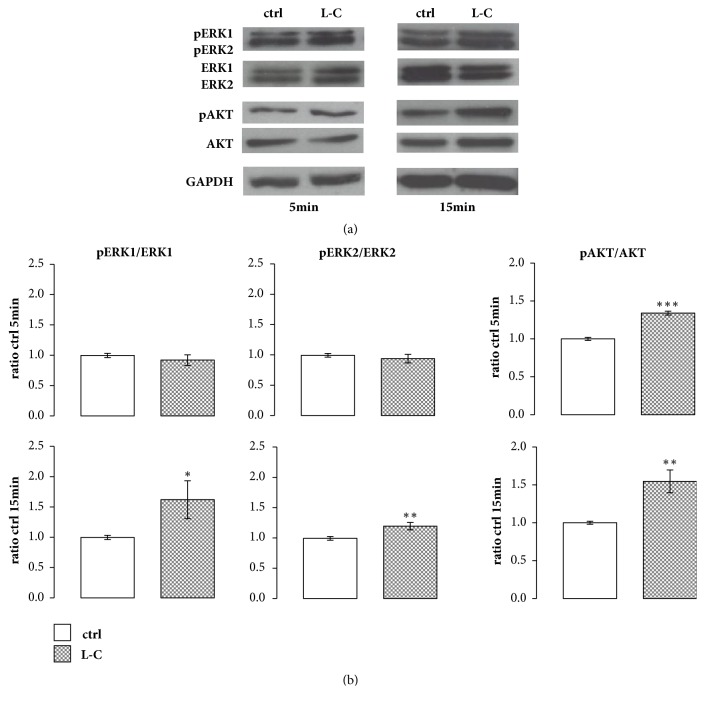
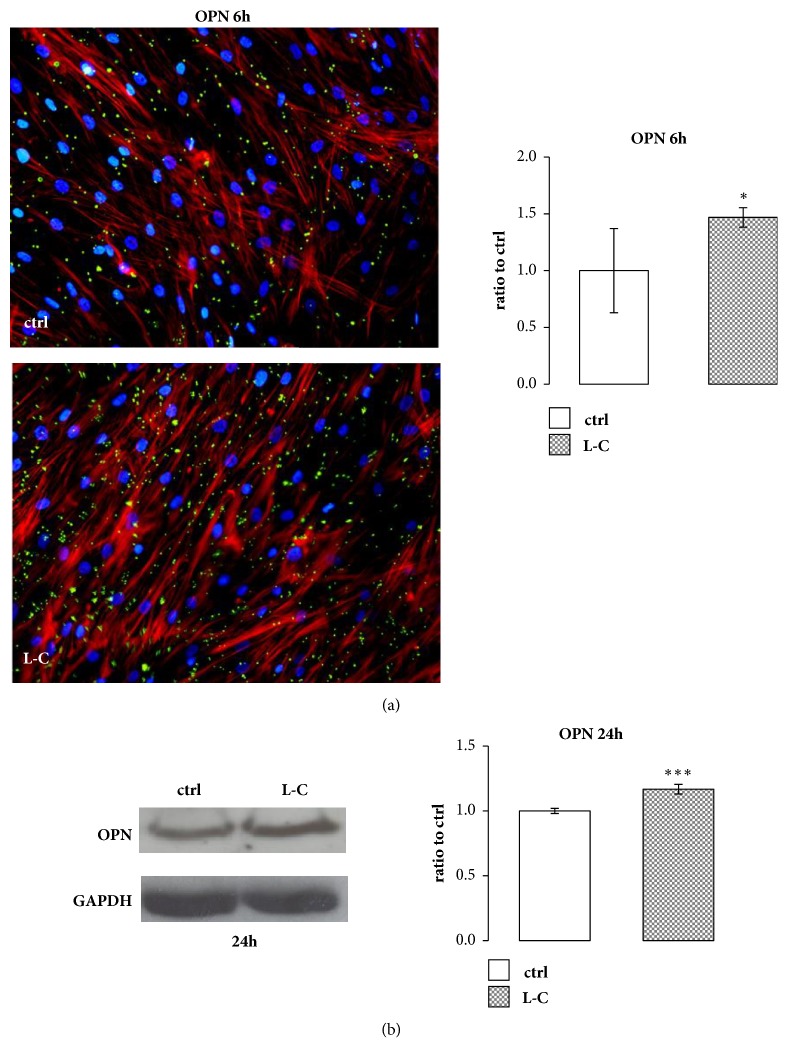
Bone fragility and associated fracture risk are major problems in aging. Oxidative stress and mitochondrial dysfunction play a key role in the development of bone fragility. Mitochondrial dysfunction is closely associated with excessive production of reactive oxygen species (ROS). L-Carnitine (L-C), a fundamental cofactor in lipid metabolism, has an important antioxidant property. Several studies have shown how L-C enhances osteoblastic proliferation and activity. In the current study, we investigated the potential effects of L-C on mitochondrial activity, ROS production, and gene expression involved in osteoblastic differentiation using osteoblast-like cells (hOBs) derived from elderly patients. The effect of 5mM L-C treatment on mitochondrial activity and L-C antioxidant activity was studied by ROS production evaluation and cell-based antioxidant activity assay. The possible effects of L-C on hOBs differentiation were assessed by analyzing gene and protein expression by Real Time PCR and western blotting, respectively. L-C enhanced mitochondrial activity and improved antioxidant defense of hOBs. Furthermore, L-C increased the phosphorylation of Ca/calmodulin-dependent protein kinase II. Additionally, L-C induced the phosphorylation of ERK1/2 and AKT and the main kinases involved in osteoblastic differentiation and upregulated the expression of osteogenic related genes, RUNX2, osterix (OSX), bone sialoprotein (BSP), and osteopontin (OPN) as well as OPN protein synthesis, suggesting that L-C exerts a positive modulation of key osteogenic factors. In conclusion, L-C supplementation could represent a possible adjuvant in the treatment of bone fragility, counteracting oxidative phenomena and promoting bone quality maintenance.
骨骼脆弱及相关骨折风险是老龄化的主要问题。氧化应激和线粒体功能障碍在骨骼脆弱的发展中起关键作用。线粒体功能障碍与活性氧(ROS)的过度产生密切相关。左旋肉碱(L-C)是脂质代谢的基本辅助因子,具有重要的抗氧化特性。几项研究表明 L-C 如何增强成骨细胞的增殖和活性。在目前的研究中,我们使用源自老年患者的成骨样细胞(hOB)研究了 L-C 对线粒体活性、ROS 产生和参与成骨细胞分化的基因表达的潜在影响。通过 ROS 产生评估和基于细胞的抗氧化活性测定研究了 5mM L-C 处理对线粒体活性和 L-C 抗氧化活性的影响。通过实时 PCR 和 Western blot 分别分析基因和蛋白质表达来评估 L-C 对 hOB 分化的可能影响。L-C 增强了 hOB 的线粒体活性并改善了其抗氧化防御能力。此外,L-C 增加了 Ca/钙调蛋白依赖性蛋白激酶 II 的磷酸化。此外,L-C 诱导了 ERK1/2 和 AKT 的磷酸化以及参与成骨细胞分化的主要激酶,并上调了成骨相关基因的表达,包括 RUNX2、osterix(OSX)、骨唾液蛋白(BSP)和骨桥蛋白(OPN)以及 OPN 蛋白的合成,表明 L-C 对关键成骨因子具有正向调节作用。总之,L-C 补充可能代表治疗骨骼脆弱的一种潜在辅助手段,可抵抗氧化现象并促进骨质量的维持。