Tang Sindy K Y, Marshall Wallace F
Department of Mechanical Engineering, Stanford University, Stanford, CA, USA.
Department of Biochemistry and Biophysics, University of California-San Francisco, San Francisco, CA, USA.
Science. 2017 Jun 9;356(6342):1022-1025. doi: 10.1126/science.aam6496.
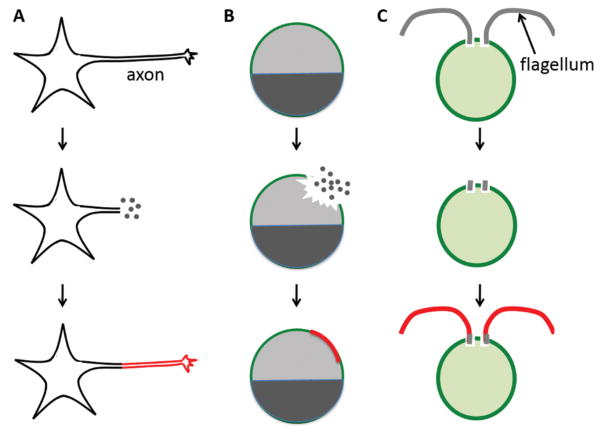
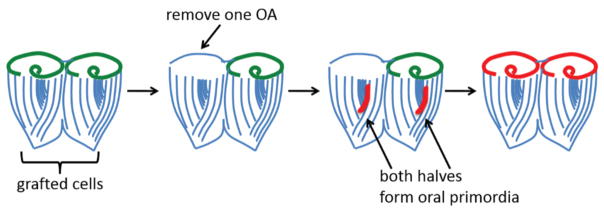
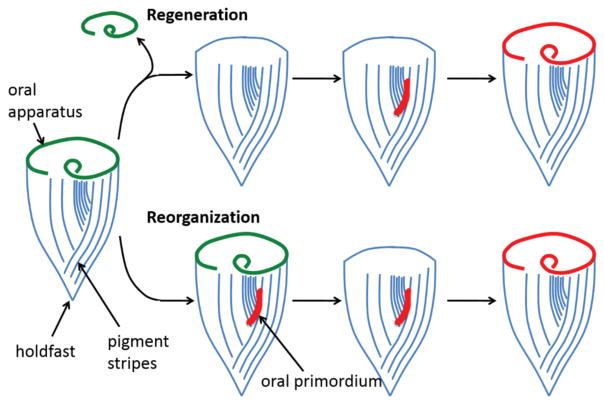
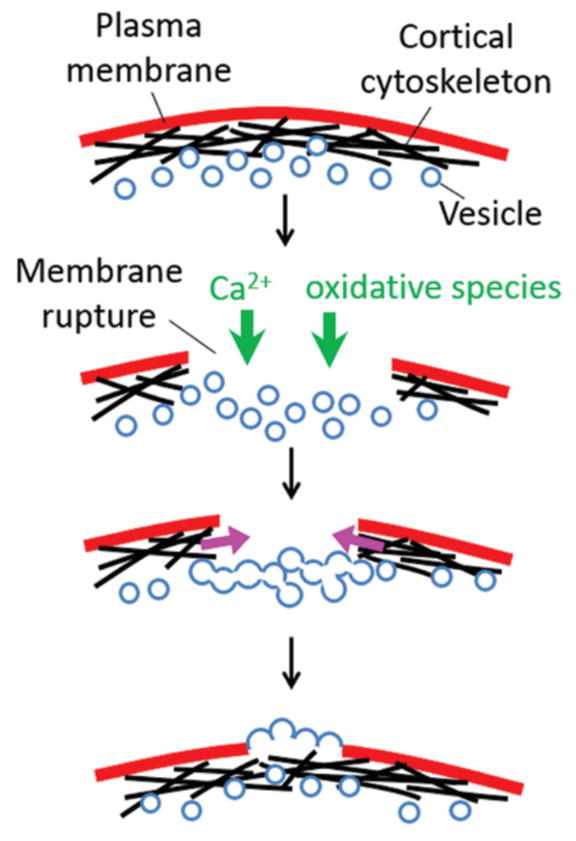
Many organisms and tissues display the ability to heal and regenerate as needed for normal physiology and as a result of pathogenesis. However, these repair activities can also be observed at the single-cell level. The physical and molecular mechanisms by which a cell can heal membrane ruptures and rebuild damaged or missing cellular structures remain poorly understood. This Review presents current understanding in wound healing and regeneration as two distinct aspects of cellular self-repair by examining a few model organisms that have displayed robust repair capacity, including oocytes, , and Although many open questions remain, elucidating how cells repair themselves is important for our mechanistic understanding of cell biology. It also holds the potential for new applications and therapeutic approaches for treating human disease.
许多生物体和组织表现出根据正常生理需求以及发病机制进行愈合和再生的能力。然而,这些修复活动在单细胞水平也能观察到。细胞修复膜破裂以及重建受损或缺失的细胞结构的物理和分子机制仍知之甚少。本综述通过研究一些具有强大修复能力的模式生物,包括卵母细胞等,将伤口愈合和再生作为细胞自我修复的两个不同方面呈现了当前的认识。尽管仍有许多未解决的问题,但阐明细胞如何自我修复对于我们从机制上理解细胞生物学很重要。它还具有治疗人类疾病新应用和治疗方法的潜力。