Marshall Wallace F
Department Biochemistry and Biophysics, University of California, San Francisco, San Francisco, CA, United States.
Chan Zuckerberg Biohub, San Francisco, CA, United States.
Front Cell Dev Biol. 2021 Sep 29;9:753625. doi: 10.3389/fcell.2021.753625. eCollection 2021.
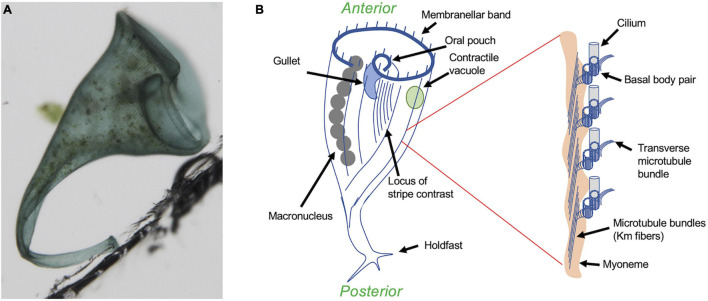
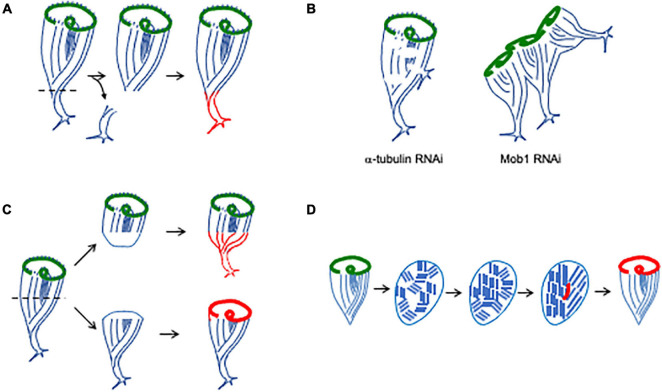
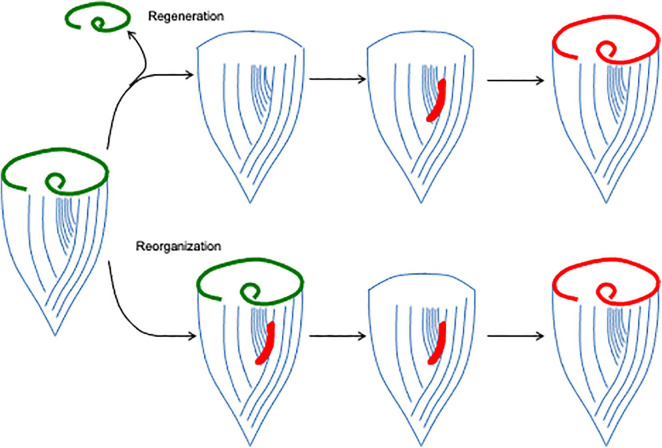
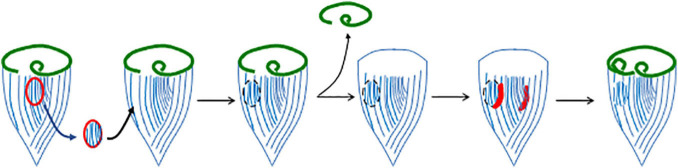
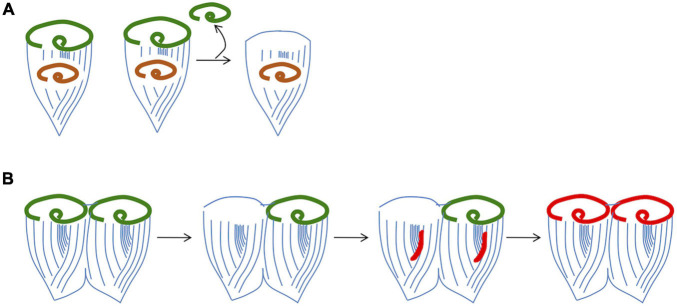
We often think about regeneration in terms of replacing missing structures, such as organs or tissues, with new structures generated via cell proliferation and differentiation. But at a smaller scale, single cells, themselves, are capable of regenerating when part of the cell has been removed. A classic model organism that facilitates the study of cellular regeneration in the giant ciliate . These cells, which can grow to more than a millimeter in size, have the ability to survive after extensive wounding of their surface, and are able to regenerate missing structures. Even a small piece of a cell can regenerate a whole cell with normal geometry, in a matter of hours. Such regeneration requires cells to be able to trigger organelle biogenesis in response to loss of structures. But subcellular regeneration also relies on intracellular mechanisms to create and maintain global patterning within the cell. These mechanisms are not understood, but at a conceptual level they involve processes that resemble those seen in animal development and regeneration. Here we discuss single-celled regeneration in from the viewpoint of standard regeneration paradigms in animals. For example, there is evidence that regeneration of the oral apparatus in follows a sender-receiver model similar to crustacean eyestalk regeneration. By drawing these analogies, we find that many of the concepts already known from the study of animal-scale regeneration and development can be applied to the study of regeneration at the cellular level, such as the concepts of determination, induction, mosaic vs. regulative development, and epimorphosis vs. morphallaxis. We propose that the similarities may go beyond analogy, and that some aspects of animal development and regeneration may have evolved by exploiting pre-existing subcellular developmental strategies from unicellular ancestors.
我们常常从用通过细胞增殖和分化产生的新结构来替换缺失结构(如器官或组织)的角度来思考再生。但在更小的尺度上,单个细胞自身在其部分被移除时也能够再生。一种促进对大型纤毛虫细胞再生进行研究的经典模式生物。这些细胞能长到超过一毫米大小,在其表面受到广泛损伤后仍有存活能力,并且能够再生缺失的结构。即使是一小片细胞也能在数小时内再生出具有正常形态的完整细胞。这种再生要求细胞能够响应结构缺失而触发细胞器生物发生。但亚细胞再生也依赖于细胞内机制来在细胞内创建和维持整体模式。这些机制尚不清楚,但在概念层面上,它们涉及类似于在动物发育和再生中所见到的过程。在这里,我们从动物标准再生范式的角度来讨论单细胞再生。例如,有证据表明纤毛虫口器的再生遵循类似于甲壳类动物眼柄再生的发送者 - 接收者模型。通过进行这些类比,我们发现许多从动物尺度的再生和发育研究中已经熟知的概念可以应用于细胞水平的再生研究,比如决定、诱导、镶嵌发育与调节发育以及再分化与形态发生的概念。我们提出这些相似性可能不仅仅是类比,而且动物发育和再生的某些方面可能是通过利用来自单细胞祖先预先存在的亚细胞发育策略而进化而来的。