Murtaza Munazza, Khan Gulnaz, Aftab Meha Fatima, Afridi Shabbir Khan, Ghaffar Safina, Ahmed Ayaz, Hafizur Rahman M, Waraich Rizwana Sanaullah
Dr. Panjwani Center for Molecular Medicine and Drug Research, International Center for Chemical and Biological Sciences, University of Karachi, Karachi, Pakistan.
PLoS One. 2017 Jun 9;12(6):e0178910. doi: 10.1371/journal.pone.0178910. eCollection 2017.
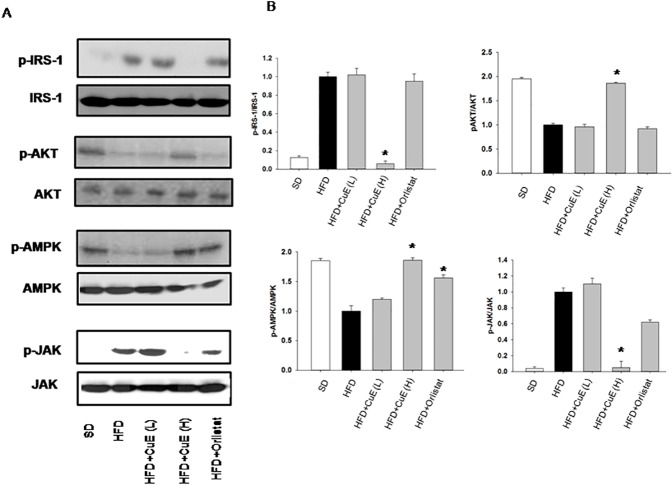
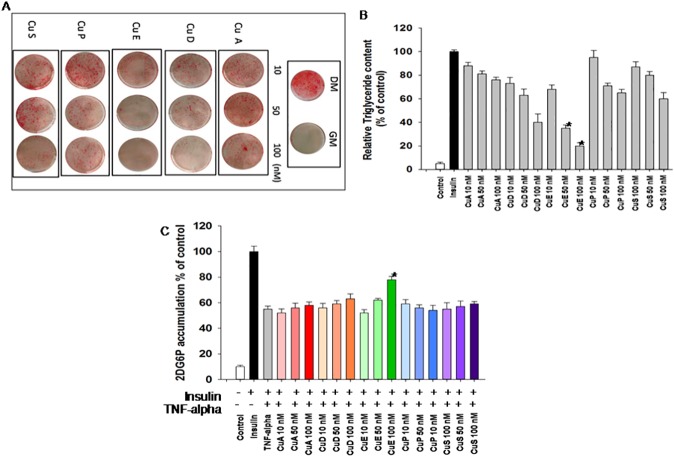
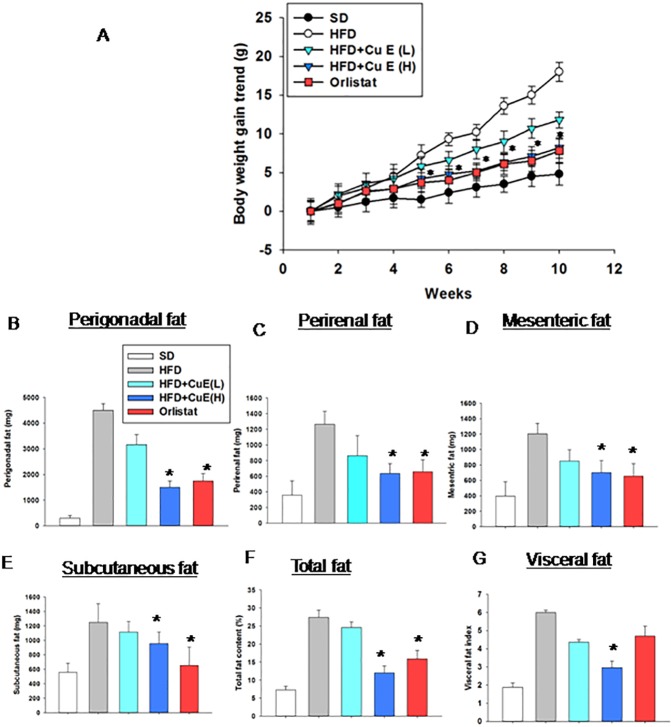
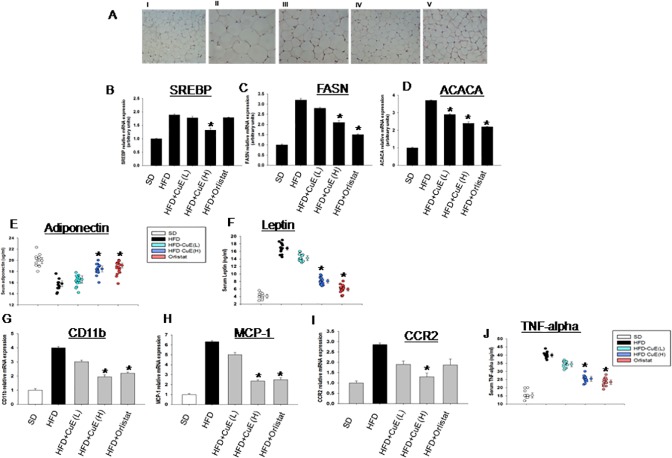
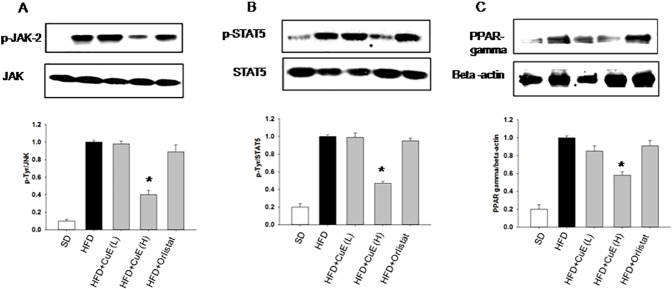
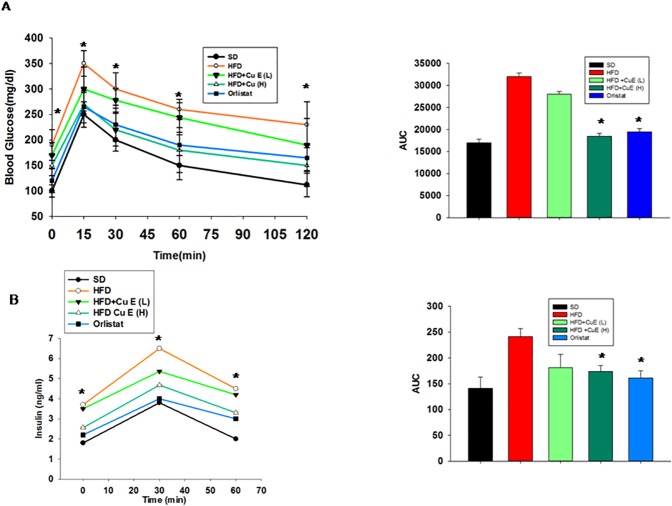
Several members of cucurbitaceae family have been reported to regulate growth of cancer by interfering with STAT3 signaling. In the present study, we investigated the unique role and molecular mechanism of cucurbitacins (Cucs) in reducing symptoms of metabolic syndrome in mice. Cucurbitacin E (CuE) was found to reduce adipogenesis in murine adipocytes. CuE treatment diminished hypertrophy of adipocytes, visceral obesity and lipogenesis gene expression in diet induced mice model of metabolic syndrome (MetS). CuE also ameliorated adipose tissue dysfunction by reducing hyperleptinemia and TNF-alpha levels and enhancing hypoadiponectinemia. Results show that CuE mediated these effects by attenuating Jenus kinase- Signal transducer and activator of transcription 5 (JAK- STAT5) signaling in visceral fat tissue. As a result, CuE treatment also reduced PPAR gamma expression. Glucose uptake enhanced in adipocytes after stimulation with CuE and insulin resistance diminished in mice treated with CuE, as reflected by reduced glucose intolerance and glucose stimulated insulin secretion. CuE restored insulin sensitivity indirectly by inhibiting JAK phosphorylation and improving AMPK activity. Consequently, insulin signaling was up-regulated in mice muscle. As CuE positively regulated adipose tissue function and suppressed visceral obesity, dyslipedemia, hyperglycemia and insulin resistance in mice model of MetS, we suggest that CuE can be used as novel approach to treat metabolic diseases.
据报道,葫芦科的几种植物通过干扰信号转导和转录激活因子3(STAT3)信号通路来调节癌症生长。在本研究中,我们研究了葫芦素(Cucs)在减轻小鼠代谢综合征症状方面的独特作用和分子机制。发现葫芦素E(CuE)可减少小鼠脂肪细胞的脂肪生成。在饮食诱导的代谢综合征(MetS)小鼠模型中,CuE处理可减少脂肪细胞肥大、内脏肥胖和脂肪生成基因表达。CuE还通过降低高瘦素血症和肿瘤坏死因子-α水平以及改善低脂联素血症来改善脂肪组织功能障碍。结果表明,CuE通过减弱内脏脂肪组织中的酪氨酸激酶-信号转导和转录激活因子5(JAK-STAT5)信号通路介导这些作用。因此,CuE处理也降低了过氧化物酶体增殖物激活受体γ(PPARγ)的表达。用CuE刺激后,脂肪细胞中的葡萄糖摄取增加,用CuE处理的小鼠的胰岛素抵抗降低,这表现为葡萄糖耐量降低和葡萄糖刺激的胰岛素分泌减少。CuE通过抑制JAK磷酸化和提高腺苷酸活化蛋白激酶(AMPK)活性间接恢复胰岛素敏感性。因此,小鼠肌肉中的胰岛素信号通路被上调。由于CuE在MetS小鼠模型中对脂肪组织功能具有正向调节作用,并抑制内脏肥胖、血脂异常、高血糖和胰岛素抵抗,我们认为CuE可作为治疗代谢性疾病的新方法。