Hernandez-Unzueta Iera, Benedicto Aitor, Olaso Elvira, Sanz Eduardo, Viera Cristina, Arteta Beatriz, Márquez Joana
Department Cell Biology and Histology, School of Medicine and Dentistry, Basque Country University, Leioa, E-48940 Bizkaia, Spain.
Catalysis S.L, Toledo, E-28016 Madrid, Spain.
Oncol Lett. 2017 Jun;13(6):4002-4012. doi: 10.3892/ol.2017.6016. Epub 2017 Apr 10.
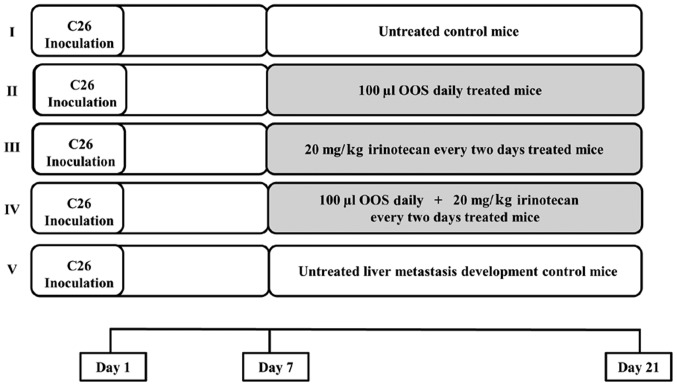
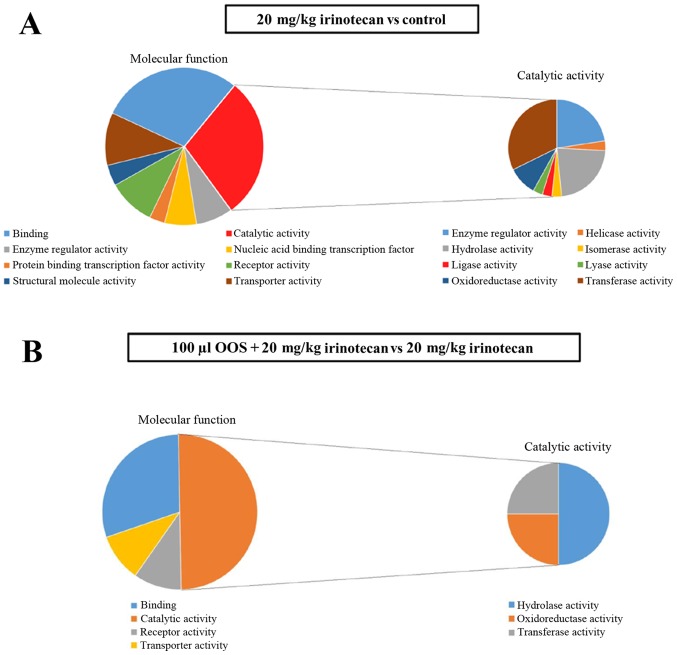
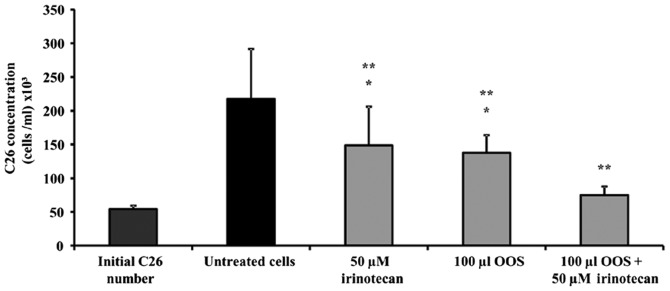
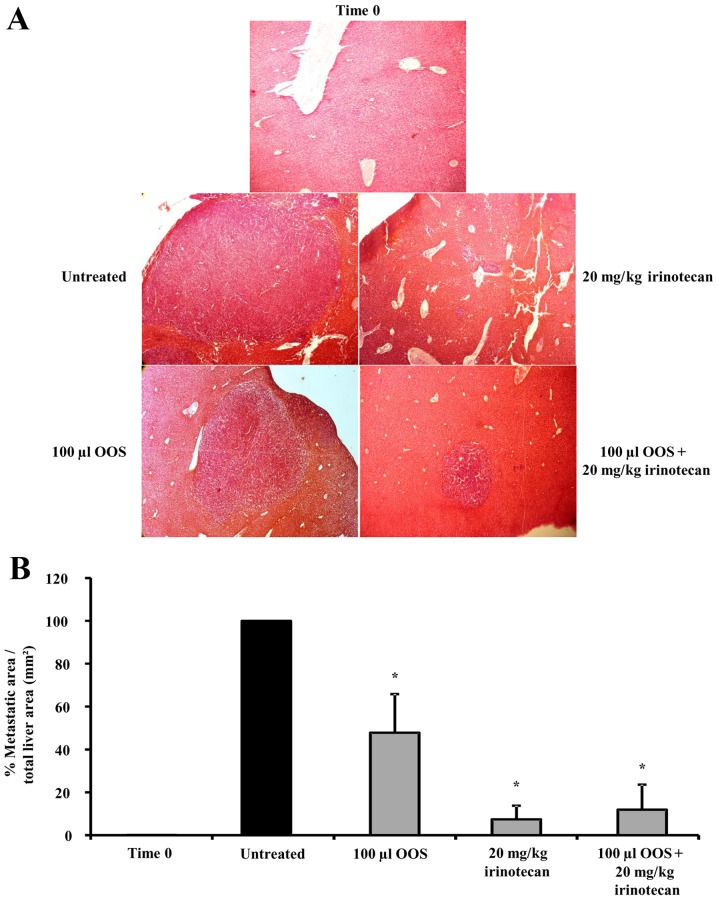
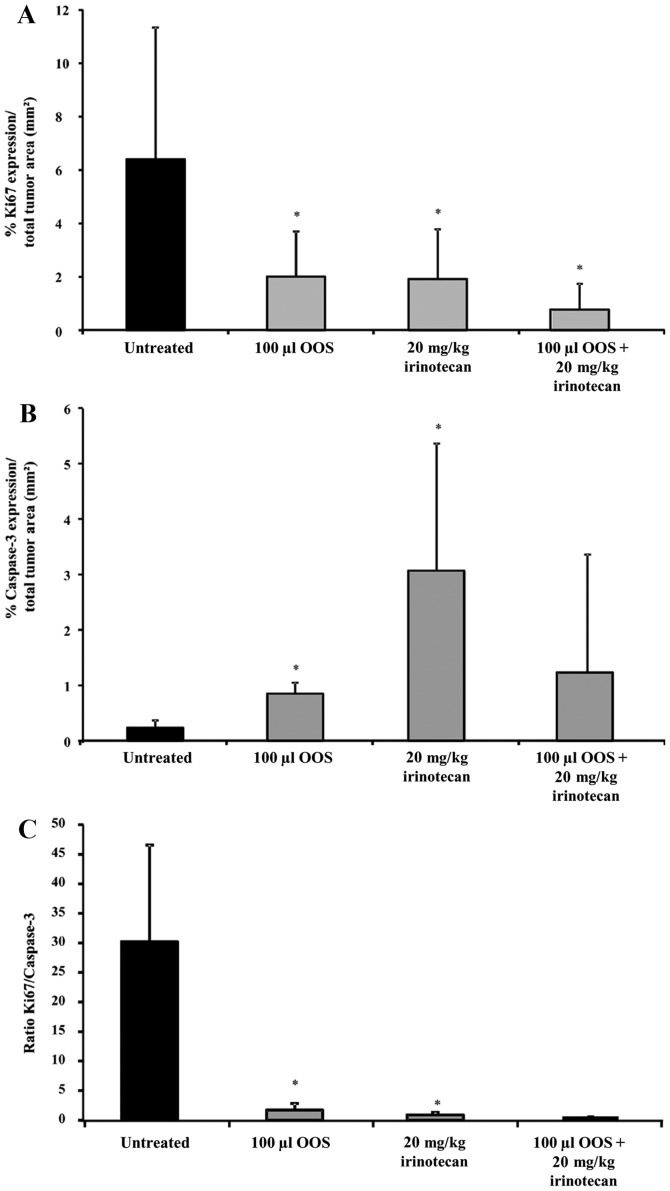
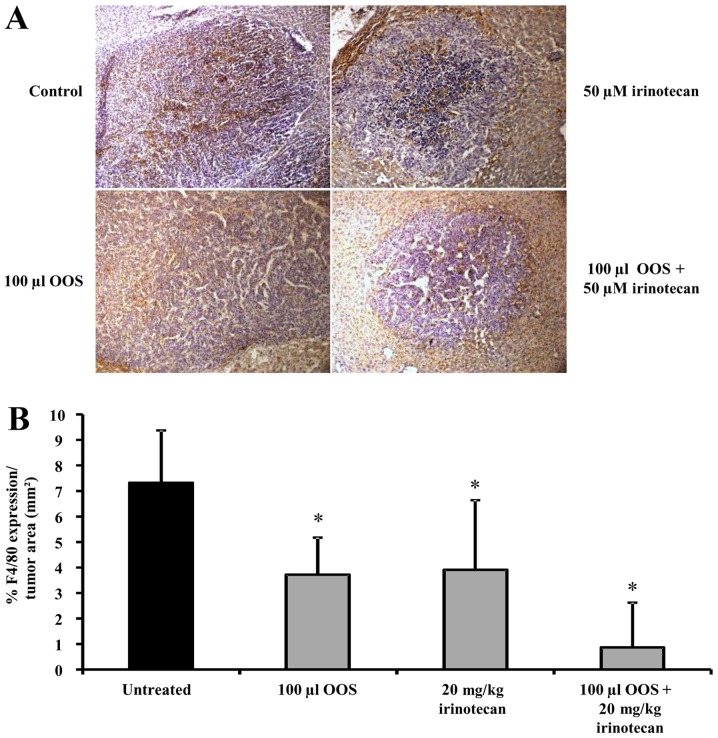
Colorectal cancer (CRC) is an aggressive disease in which patients usually die due to its metastatic progression to the liver. Up to date, irinotecan is one of the most used chemotherapeutic agents to treat CRC metastasis with demonstrated efficacy. However, the severity of the side effects constitute the main limitation to its use in the treatment. Consequently, new complementary therapies are being developed to avoid these adverse effects while maintaining the efficacy of the antitumoral drugs. Ocoxin oral solution (OOS) is a nutritional mixture containing biologically active compounds with demonstrated antitumoral and immunomodulatory effects. Thus, we aimed to analyze the effect of OOS as a suitable complement to irinotecan therapy in the treatment of CRC metastasis to the liver. First, the effect of OOS, irinotecan and the combination of both on the viability of C26 cells was tested and . Second, the expression of caspase-3, Ki67 and the macrophage infiltration by F4/80 marker was quantified in liver tissue sections by immunohistochemistry. Finally, mRNA microarray study was carried out on tumor cells isolated from tumor-bearing livers collected from mice subjected to the above treatments. Our results show that OOS administered as a complementary therapy to irinotecan reduced tumor cell viability . Moreover, irinotecan administered either alone or in combination with 100 µl OOS from the 7th day after tumor cell inoculation decreased the metastatic growth in the liver. Besides, several genes with binding and catalytic activities showed to be deregulated by RNA microarray analysis. In conclusion, OOS, when administered as a complement to irinotecan, reduced the metastatic development of colorectal cancer to the liver. Additionally, the overall health state of the animals improved. These results point out OOS as a potential supplement to the anti-tumoral treatments used in clinical settings in patients suffering from disseminated colorectal cancer.
结直肠癌(CRC)是一种侵袭性疾病,患者通常因癌症转移至肝脏而死亡。到目前为止,伊立替康是治疗CRC转移最常用的化疗药物之一,已证实具有疗效。然而,副作用的严重性是其在治疗中应用的主要限制。因此,正在开发新的辅助疗法,以避免这些不良反应,同时保持抗肿瘤药物的疗效。奥昔康口服溶液(OOS)是一种营养混合物,含有具有抗肿瘤和免疫调节作用的生物活性化合物。因此,我们旨在分析OOS作为伊立替康治疗CRC肝转移合适辅助药物的效果。首先,测试了OOS、伊立替康以及两者组合对C26细胞活力的影响。其次,通过免疫组织化学对肝组织切片中caspase-3、Ki67的表达以及F4/80标记的巨噬细胞浸润进行定量。最后,对从接受上述治疗的小鼠的荷瘤肝脏中分离的肿瘤细胞进行mRNA微阵列研究。我们的结果表明,作为伊立替康辅助疗法给药的OOS降低了肿瘤细胞活力。此外,从肿瘤细胞接种后第7天起,单独给予伊立替康或与100 μl OOS联合使用,均可减少肝脏中的转移瘤生长。此外,RNA微阵列分析显示,一些具有结合和催化活性的基因表达失调。总之,OOS作为伊立替康的辅助药物给药时,可减少结直肠癌向肝脏的转移发展。此外,动物的整体健康状况有所改善。这些结果表明,OOS可能是临床环境中用于治疗播散性结直肠癌患者的抗肿瘤治疗的潜在补充药物。