Molecular Endocrinology and Pharmacology, Harry Perkins Institute of Medical Research, QEII Medical Centre, Nedlands, Western Australia, 6009, Australia.
Centre for Medical Research, The University of Western Australia, Crawley, Western Australia, 6009, Australia.
Sci Rep. 2017 Jun 9;7(1):3187. doi: 10.1038/s41598-017-03486-2.
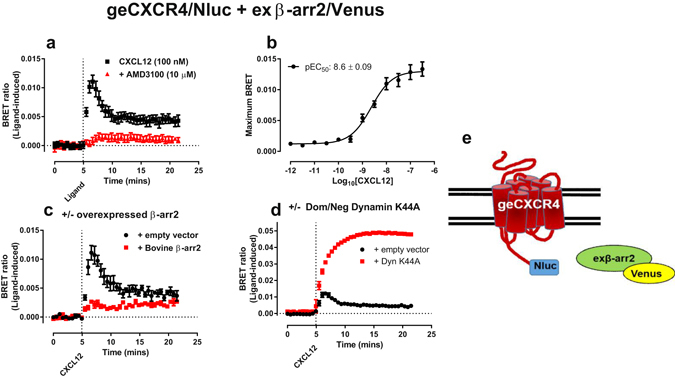
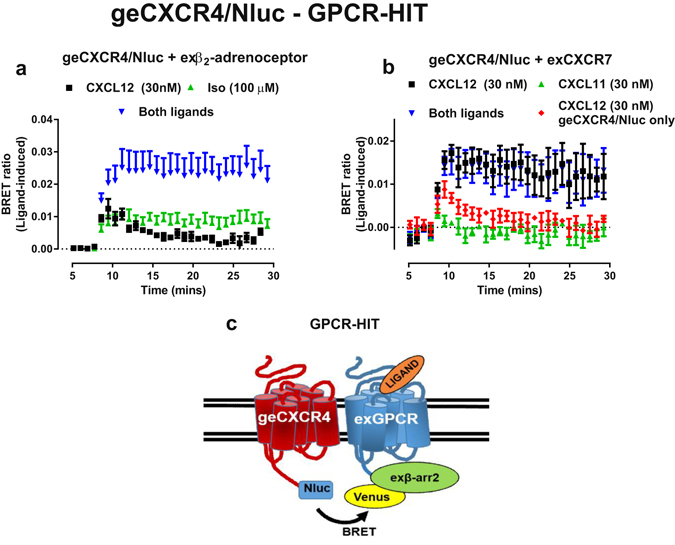
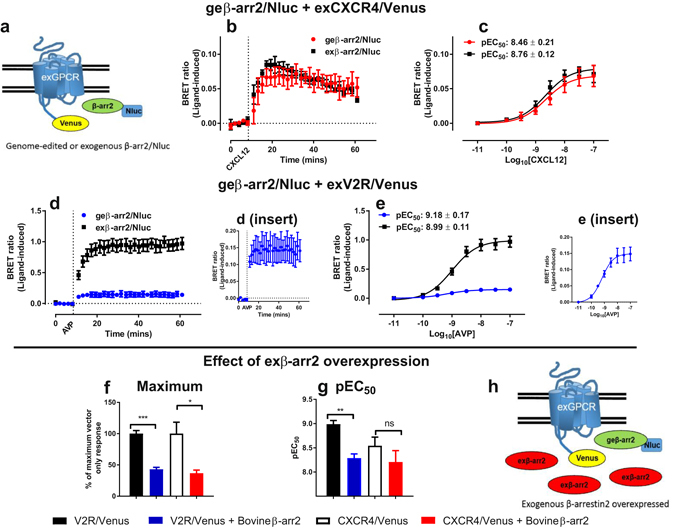
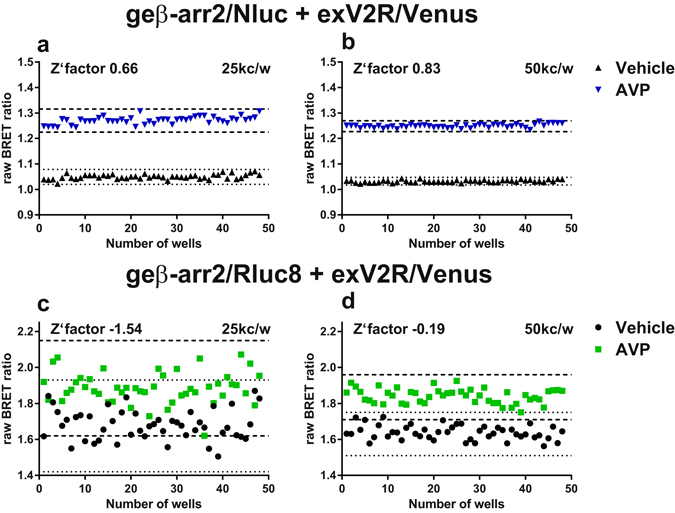
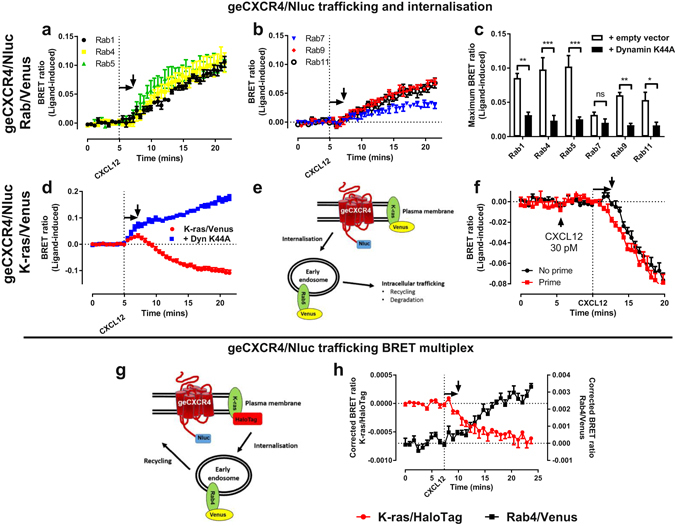
Bioluminescence resonance energy transfer (BRET) has been a vital tool for understanding G protein-coupled receptor (GPCR) function. It has been used to investigate GPCR-protein and/or -ligand interactions as well as GPCR oligomerisation. However the utility of BRET is limited by the requirement that the fusion proteins, and in particular the donor, need to be exogenously expressed. To address this, we have used CRISPR/Cas9-mediated homology-directed repair to generate protein-Nanoluciferase (Nluc) fusions under endogenous promotion, thus allowing investigation of proximity between the genome-edited protein and an exogenously expressed protein by BRET. Here we report BRET monitoring of GPCR-mediated β-arrestin2 recruitment and internalisation where the donor luciferase was under endogenous promotion, in live cells and in real time. We have investigated the utility of CRISPR/Cas9 genome editing to create genome-edited fusion proteins that can be used as BRET donors and propose that this strategy can be used to overcome the need for exogenous donor expression.
生物发光共振能量转移(BRET)一直是研究 G 蛋白偶联受体(GPCR)功能的重要工具。它被用于研究 GPCR-蛋白和/或-配体相互作用以及 GPCR 寡聚化。然而,BRET 的实用性受到融合蛋白(特别是供体)需要外源性表达的限制。为了解决这个问题,我们使用 CRISPR/Cas9 介导的同源定向修复,在内源启动子的控制下生成蛋白-纳米荧光素酶(Nluc)融合蛋白,从而允许通过 BRET 研究基因组编辑蛋白与外源性表达蛋白之间的接近程度。在这里,我们报告了实时监测 GPCR 介导的β-arrestin2 募集和内化的 BRET,其中供体荧光素酶受内源启动子的控制,在活细胞中进行。我们研究了使用 CRISPR/Cas9 基因组编辑创建可用于 BRET 供体的基因组编辑融合蛋白的实用性,并提出该策略可用于克服对外源供体表达的需求。