Department of Pharmacology, Yale University, 333 Cedar St, New Haven, CT, 06520, USA.
Department of Pharmacology, Yale University, 333 Cedar St, New Haven, CT, 06520, USA; Department of Cellular and Molecular Physiology, Yale University, 333 Cedar St, New Haven, CT, 06520, USA.
Cell Calcium. 2018 Jan;69:37-45. doi: 10.1016/j.ceca.2017.05.011. Epub 2017 May 24.
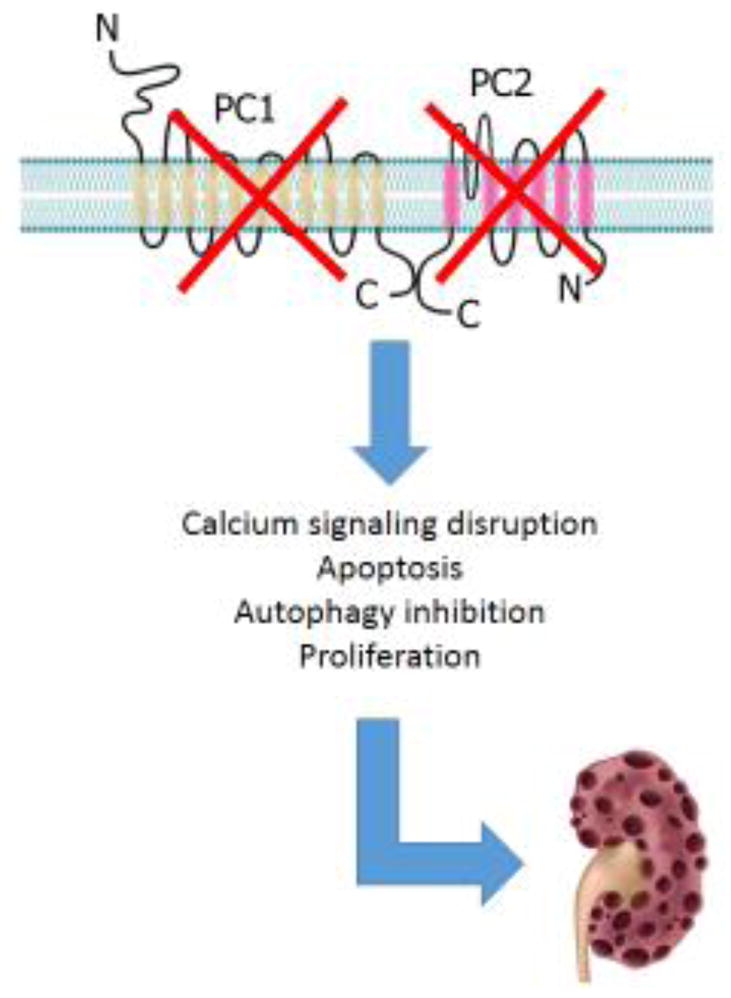
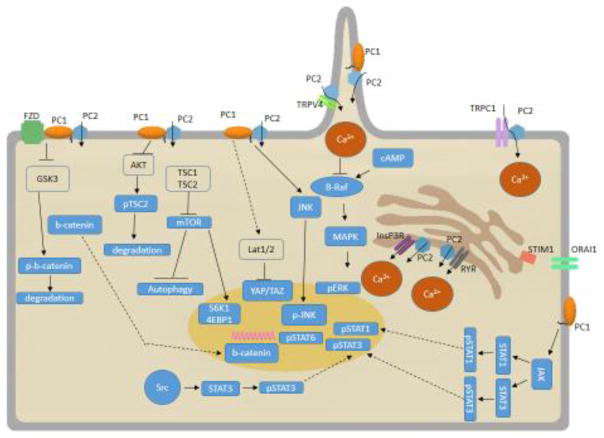
Mutations in polycystin-1 (PC1) and polycystin-2 (PC2) result in a commonly occurring genetic disorder, called Autosomal Dominant Polycystic Kidney Disease (ADPKD), that is characterized by the formation and development of kidney cysts. Epithelial cells with loss-of-function of PC1 or PC2 show higher rates of proliferation and apoptosis and reduced autophagy. PC1 is a large multifunctional transmembrane protein that serves as a sensor that is usually found in complex with PC2, a calcium (Ca)-permeable cation channel. In addition to decreased Ca signaling, several other cell fate-related pathways are de-regulated in ADPKD, including cAMP, MAPK, Wnt, JAK-STAT, Hippo, Src, and mTOR. In this review we discuss how polycystins regulate cell death and survival, highlighting the complexity of molecular cascades that are involved in ADPKD.
多囊蛋白-1(PC1)和多囊蛋白-2(PC2)的突变导致一种常见的遗传疾病,称为常染色体显性多囊肾病(ADPKD),其特征是肾脏囊肿的形成和发展。丧失 PC1 或 PC2 功能的上皮细胞表现出更高的增殖和凋亡率,以及更低的自噬水平。PC1 是一种大型多功能跨膜蛋白,作为一种传感器,通常与钙(Ca)可渗透的阳离子通道 PC2 形成复合物。除了钙信号降低外,ADPKD 中还有几个其他与细胞命运相关的途径被失调,包括 cAMP、MAPK、Wnt、JAK-STAT、Hippo、Src 和 mTOR。在这篇综述中,我们讨论了多囊蛋白如何调节细胞死亡和存活,强调了参与 ADPKD 的分子级联的复杂性。