Zhang Kai, Foster Helen E, Rondelet Arnaud, Lacey Samuel E, Bahi-Buisson Nadia, Bird Alexander W, Carter Andrew P
MRC Laboratory of Molecular Biology, Cambridge CB2 0QH, UK.
Max Planck Institute of Molecular Physiology, 44227 Dortmund, Germany.
Cell. 2017 Jun 15;169(7):1303-1314.e18. doi: 10.1016/j.cell.2017.05.025. Epub 2017 Jun 8.
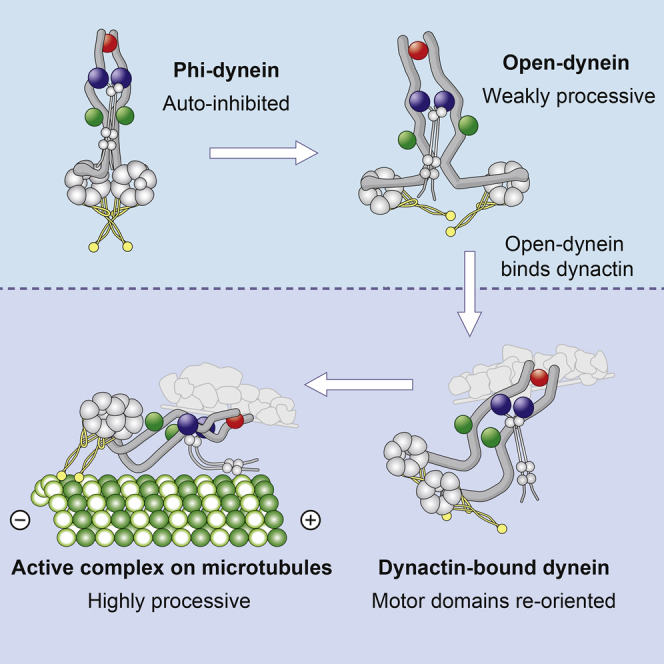
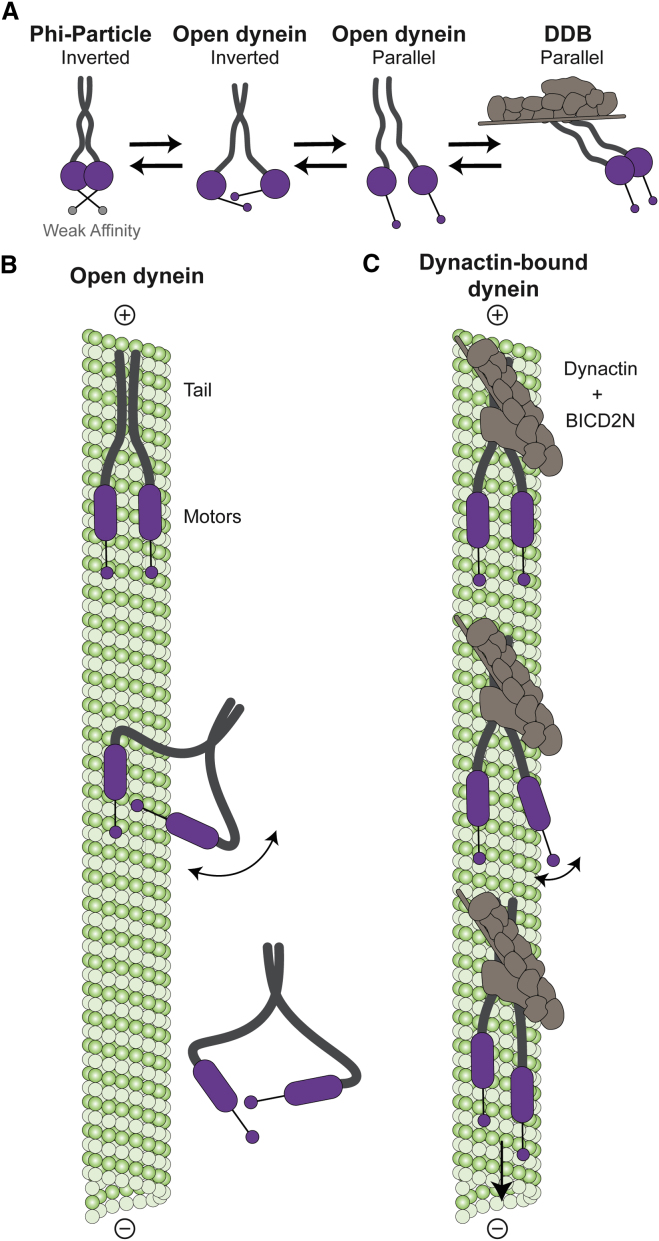
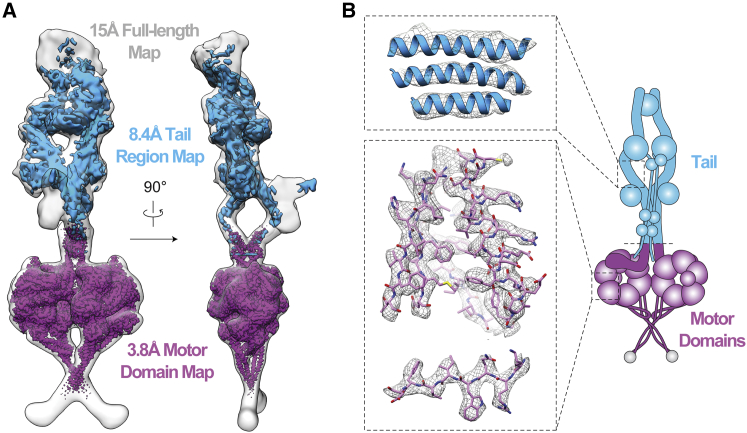
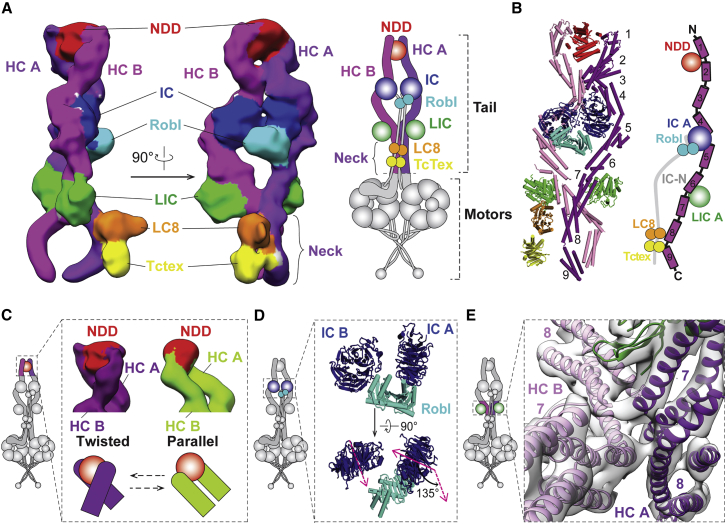
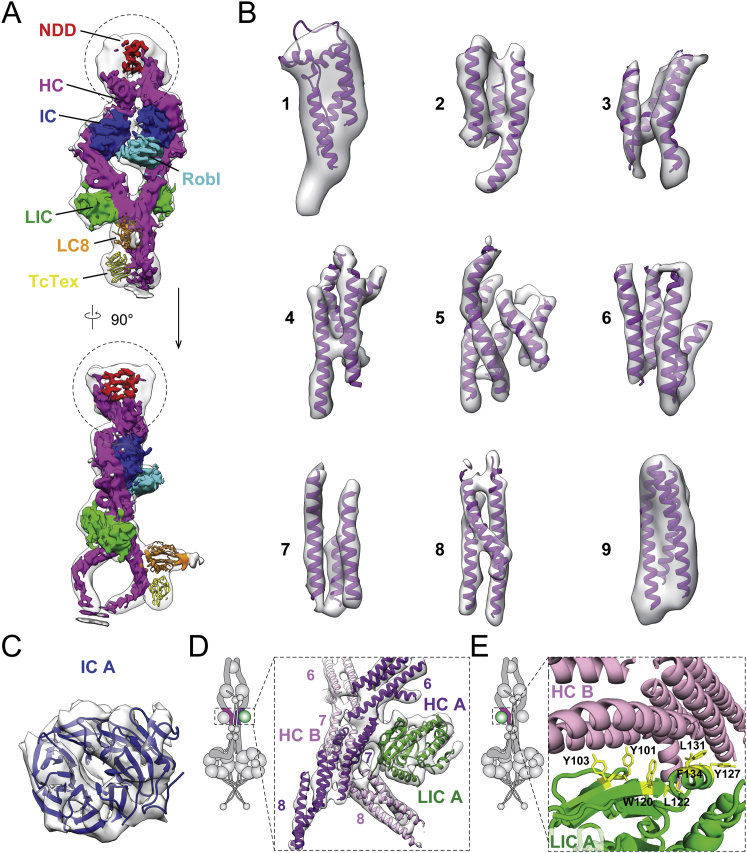
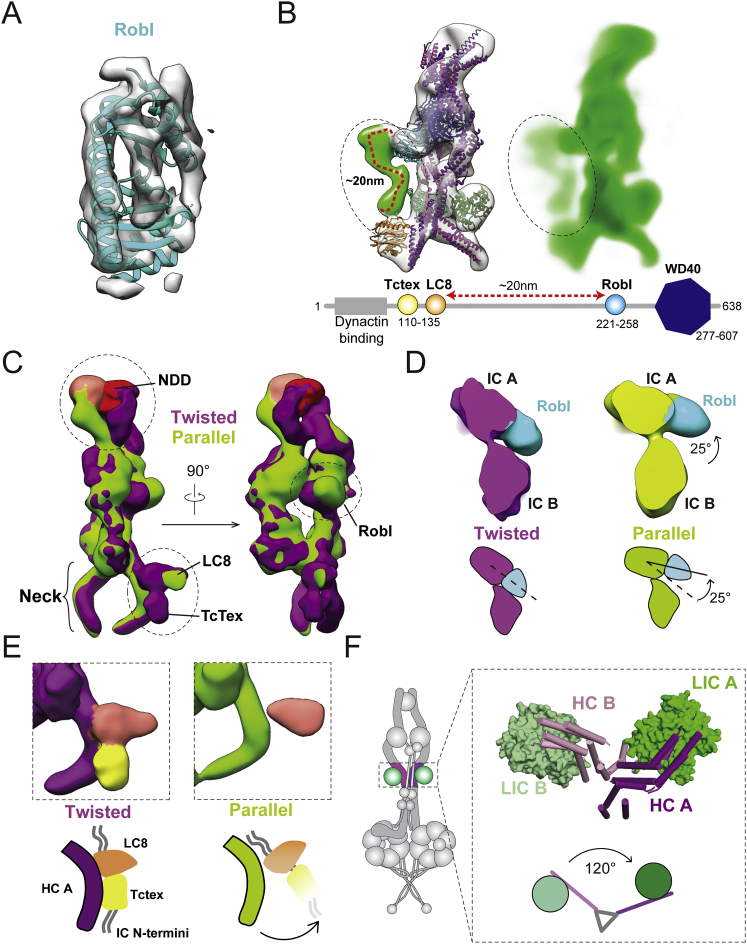
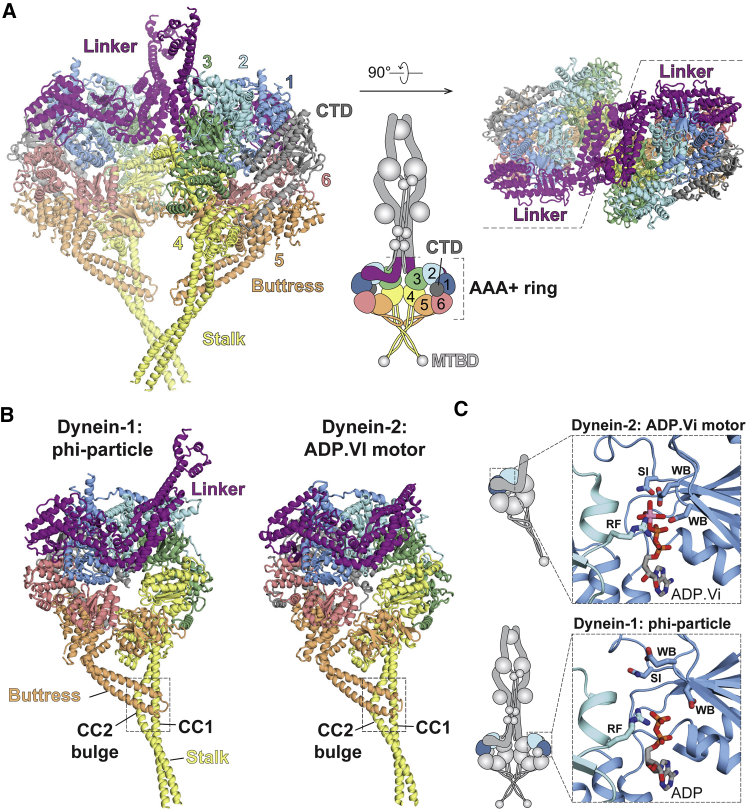
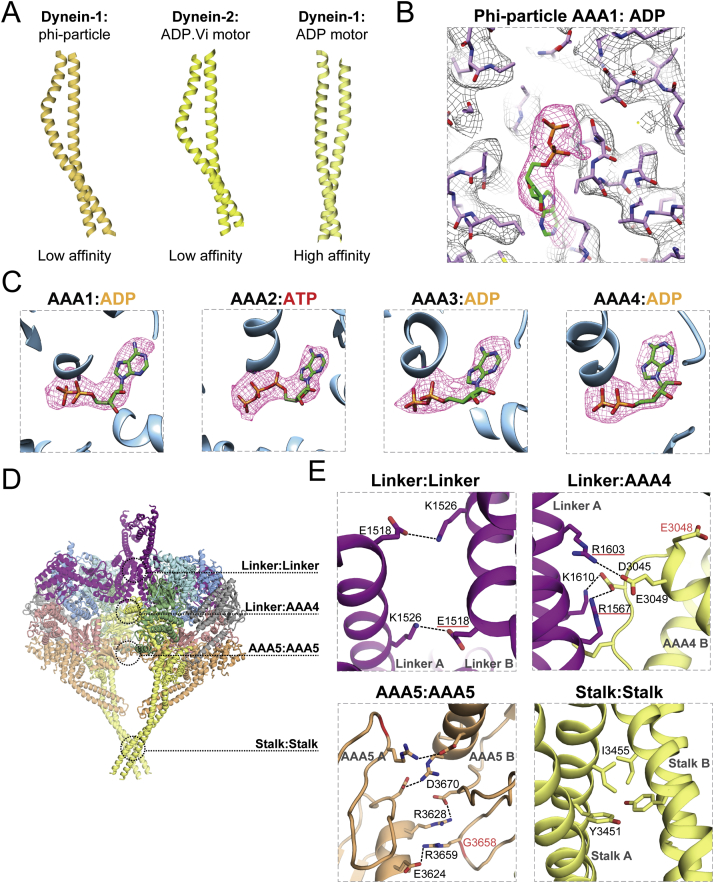
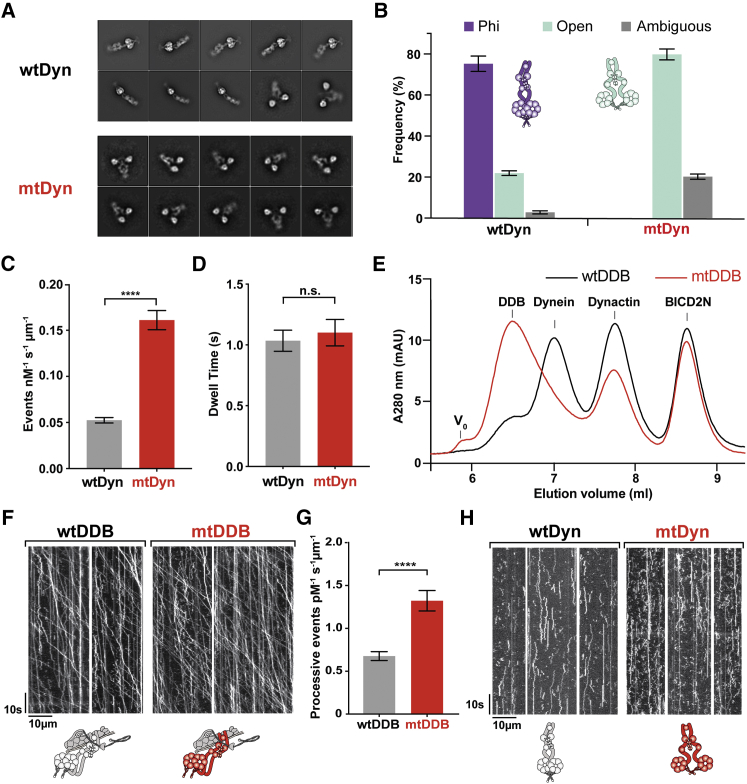
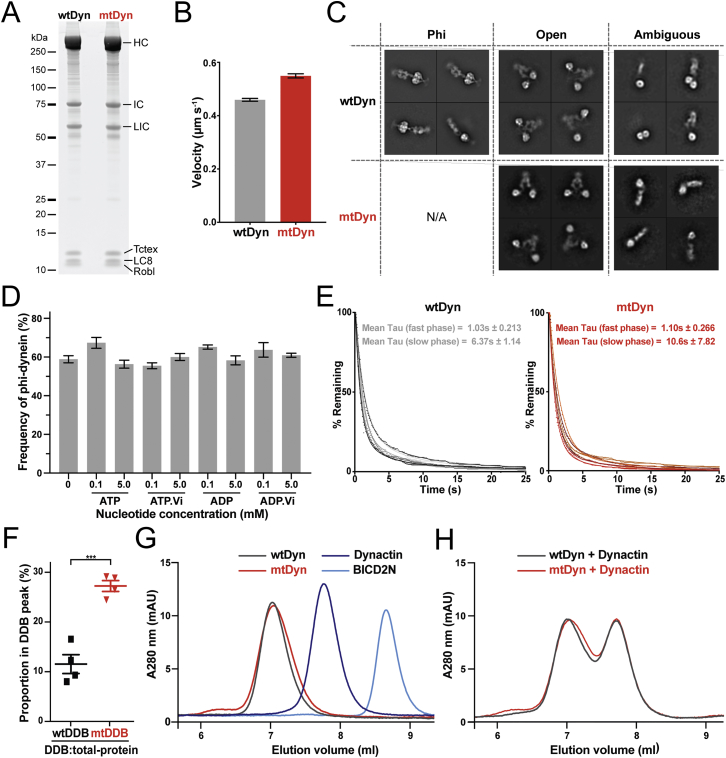
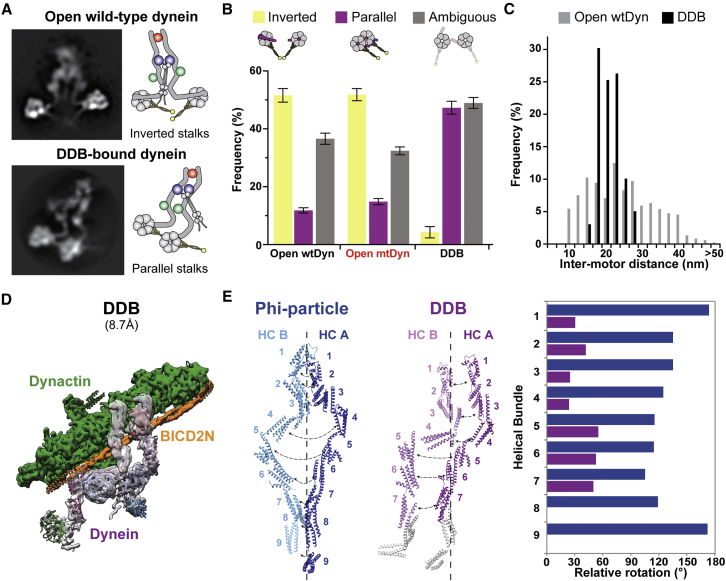
Cytoplasmic dynein-1 binds dynactin and cargo adaptor proteins to form a transport machine capable of long-distance processive movement along microtubules. However, it is unclear why dynein-1 moves poorly on its own or how it is activated by dynactin. Here, we present a cryoelectron microscopy structure of the complete 1.4-megadalton human dynein-1 complex in an inhibited state known as the phi-particle. We reveal the 3D structure of the cargo binding dynein tail and show how self-dimerization of the motor domains locks them in a conformation with low microtubule affinity. Disrupting motor dimerization with structure-based mutagenesis drives dynein-1 into an open form with higher affinity for both microtubules and dynactin. We find the open form is also inhibited for movement and that dynactin relieves this by reorienting the motor domains to interact correctly with microtubules. Our model explains how dynactin binding to the dynein-1 tail directly stimulates its motor activity.
胞质动力蛋白-1结合动力蛋白激活蛋白和货物适配蛋白,形成一个能够沿微管进行长距离连续运动的运输机器。然而,目前尚不清楚动力蛋白-1自身移动性为何较差,以及它是如何被动力蛋白激活蛋白激活的。在此,我们展示了处于一种被称为φ颗粒的抑制状态下的完整的140万道尔顿人类动力蛋白-1复合物的冷冻电镜结构。我们揭示了货物结合动力蛋白尾部的三维结构,并展示了马达结构域的自我二聚化如何将它们锁定在一种对微管亲和力较低的构象中。通过基于结构的诱变破坏马达二聚化,会使动力蛋白-1转变为一种对微管和动力蛋白激活蛋白都具有更高亲和力的开放形式。我们发现这种开放形式的运动也受到抑制,而动力蛋白激活蛋白通过重新定向马达结构域使其与微管正确相互作用来解除这种抑制。我们的模型解释了动力蛋白激活蛋白与动力蛋白-1尾部的结合如何直接刺激其马达活性。