Kimoto Minoru, Okada Kyoji, Sakamoto Hitoshi, Kondou Takanori
Department of Physical Therapy, Akita University Graduate School of Health Sciences, Japan.
Department of Medicine, Akita Prefectural Center on Development and Disability, Japan.
J Phys Ther Sci. 2017 May;29(5):822-827. doi: 10.1589/jpts.2017.822. Epub 2017 May 16.
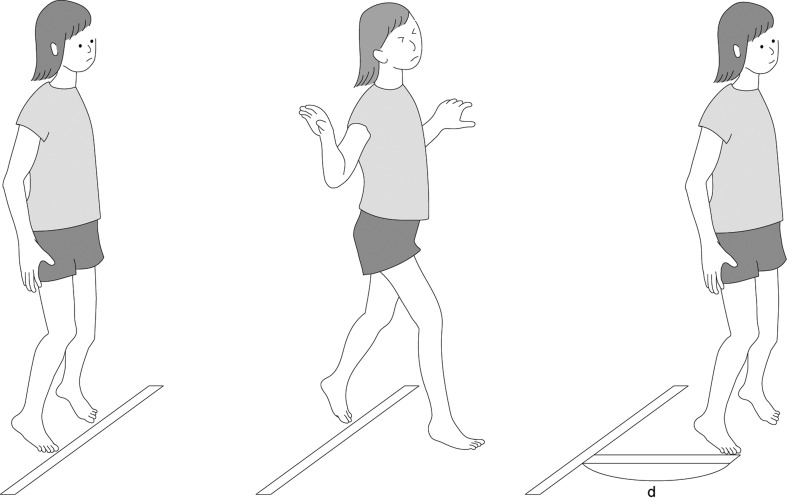
[Purpose] To improve walking efficiency could be useful for reducing fatigue and extending possible period of walking in children with cerebral palsy (CP). For this purpose, current study compared conventional parameters of gross motor performance, step length, and cadence in the evaluation of walking efficiency in children with CP. [Subjects and Methods] Thirty-one children with CP (21 boys, 10 girls; mean age, 12.3 ± 2.7 years) participated. Parameters of gross motor performance, including the maximum step length (MSL), maximum side step length, step number, lateral step up number, and single leg standing time, were measured in both dominant and non-dominant sides. Spatio-temporal parameters of walking, including speed, step length, and cadence, were calculated. Total heart beat index (THBI), a parameter of walking efficiency, was also calculated from heartbeats and walking distance in 10 minutes of walking. To analyze the relationships between these parameters and the THBI, the coefficients of determination were calculated using stepwise analysis. [Results] The MSL of the dominant side best accounted for the THBI (R=0.759). [Conclusion] The MSL of the dominant side was the best explanatory parameter for walking efficiency in children with CP.
[目的] 提高步行效率可能有助于减轻脑瘫(CP)患儿的疲劳并延长其可能的步行时间。为此,本研究比较了粗大运动表现、步长和步频等传统参数在评估CP患儿步行效率中的作用。[对象与方法] 31例CP患儿(男21例,女10例;平均年龄12.3±2.7岁)参与研究。测量了粗大运动表现参数,包括最大步长(MSL)、最大侧步长、步数、侧向上步数和单腿站立时间,测量部位为优势侧和非优势侧。计算了步行的时空参数,包括速度、步长和步频。还根据10分钟步行中的心跳数和步行距离计算了步行效率参数总心跳指数(THBI)。为分析这些参数与THBI之间的关系,采用逐步分析计算决定系数。[结果] 优势侧的MSL对THBI的解释力最强(R=0.759)。[结论] 优势侧的MSL是CP患儿步行效率的最佳解释参数。