• 文献检索
  • 文档翻译
  • 深度研究
  • 学术资讯
  • Suppr Zotero 插件Zotero 插件
  • 邀请有礼
  • 套餐&价格
  • 历史记录
应用&插件
Suppr Zotero 插件Zotero 插件浏览器插件Mac 客户端Windows 客户端微信小程序
定价
高级版会员购买积分包购买API积分包
服务
文献检索文档翻译深度研究API 文档MCP 服务
关于我们
关于 Suppr公司介绍联系我们用户协议隐私条款
关注我们

Suppr 超能文献

核心技术专利:CN118964589B侵权必究
粤ICP备2023148730 号-1Suppr @ 2026

文献检索

告别复杂PubMed语法,用中文像聊天一样搜索,搜遍4000万医学文献。AI智能推荐,让科研检索更轻松。

立即免费搜索

文件翻译

保留排版,准确专业,支持PDF/Word/PPT等文件格式,支持 12+语言互译。

免费翻译文档

深度研究

AI帮你快速写综述,25分钟生成高质量综述,智能提取关键信息,辅助科研写作。

立即免费体验

负重坐立抗阻运动对轻度痉挛型双瘫儿童的有效性:一项随机临床试验。

Effectiveness of loaded sit-to-stand resistance exercise for children with mild spastic diplegia: a randomized clinical trial.

作者信息

Liao Hua-Fang, Liu Ying-Chi, Liu Wen-Yu, Lin Yuh-Ting

机构信息

School and Graduate Institute of Physical Therapy, College of Medicine, National Taiwan University, Taipei, Taiwan.

出版信息

Arch Phys Med Rehabil. 2007 Jan;88(1):25-31. doi: 10.1016/j.apmr.2006.10.006.

DOI:10.1016/j.apmr.2006.10.006
PMID:17207671
原文链接:https://pmc.ncbi.nlm.nih.gov/articles/PMC7094466/
Abstract

OBJECTIVE

To investigate effectiveness of a functional strengthening program, the loaded sit-to-stand (STS) resistance exercise, for children with cerebral palsy (CP).

DESIGN

A single-blind, randomized block design.

SETTING

STS exercises were carried out at the children's homes.

PARTICIPANTS

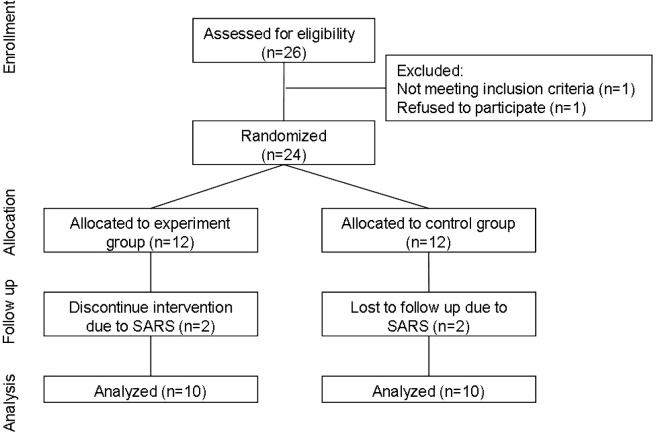
Twenty children (12 boys, 8 girls; age range, 5-12y) with spastic diplegia CP and classified by the Gross Motor Function Classification System as level I or II were stratified by their severity and age and randomly allocated into either the experimental or control group.

INTERVENTION

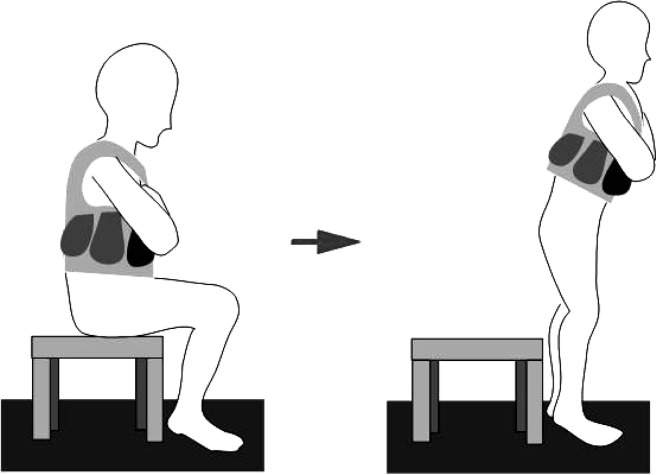
Both groups received their regular physical therapy. The experimental group underwent loaded STS exercise 3 times a week for 6 weeks.

MAIN OUTCOME MEASURES

Goal dimension scores of the Gross Motor Function Measure (GMFM), gait speed, 1 repetition maximum (1-RM) of the loaded STS, isometric strength of knee extensor, and Physiological Cost Index (PCI). The outcome measures were conducted at the beginning and end of the 6-week study.

RESULTS

After loaded STS exercise, the experimental group showed statistically significant differences in GMFM goal dimension scores, 1-RM STS, and PCI from the control group. The changes in gait speed and isometric strength of the knee extensor did not differ significantly between the 2 groups.

CONCLUSIONS

After the loaded STS exercise, children with mild spastic diplegia improved their basic motor abilities, functional muscle strength, and walking efficiency.

摘要

目的

探讨功能性强化训练计划,即负重坐立位转换(STS)抗阻运动,对脑瘫(CP)患儿的有效性。

设计

单盲随机区组设计。

地点

在患儿家中进行STS训练。

参与者

20名痉挛型双瘫脑瘫患儿(12名男孩,8名女孩;年龄范围5 - 12岁),根据粗大运动功能分类系统分为I级或II级,按严重程度和年龄分层,随机分为实验组或对照组。

干预

两组均接受常规物理治疗。实验组每周进行3次负重STS运动,共6周。

主要观察指标

粗大运动功能测量(GMFM)目标维度评分、步态速度、负重STS的1次重复最大量(1-RM)、膝伸肌等长肌力和生理成本指数(PCI)。在为期6周的研究开始和结束时进行观察指标的测量。

结果

负重STS运动后,实验组在GMFM目标维度评分、1-RM STS和PCI方面与对照组相比有统计学显著差异。两组之间步态速度和膝伸肌等长肌力的变化无显著差异。

结论

负重STS运动后,轻度痉挛型双瘫患儿的基本运动能力、功能性肌肉力量和步行效率得到改善。
https://cdn.ncbi.nlm.nih.gov/pmc/blobs/9602/7094466/eac3245d1346/gr2_lrg.jpg
https://cdn.ncbi.nlm.nih.gov/pmc/blobs/9602/7094466/277dcf01dc3f/gr1_lrg.jpg
https://cdn.ncbi.nlm.nih.gov/pmc/blobs/9602/7094466/eac3245d1346/gr2_lrg.jpg
https://cdn.ncbi.nlm.nih.gov/pmc/blobs/9602/7094466/277dcf01dc3f/gr1_lrg.jpg
https://cdn.ncbi.nlm.nih.gov/pmc/blobs/9602/7094466/eac3245d1346/gr2_lrg.jpg

相似文献

1
Effectiveness of loaded sit-to-stand resistance exercise for children with mild spastic diplegia: a randomized clinical trial.负重坐立抗阻运动对轻度痉挛型双瘫儿童的有效性:一项随机临床试验。
Arch Phys Med Rehabil. 2007 Jan;88(1):25-31. doi: 10.1016/j.apmr.2006.10.006.
2
Impact of loaded sit-to-stand exercises at different speeds on the physiological cost of walking in children with spastic diplegia: A single-blind randomized clinical trial.不同速度的负重坐立练习对痉挛型双瘫儿童步行生理成本的影响:一项单盲随机临床试验。
Res Dev Disabil. 2016 Oct;57:85-91. doi: 10.1016/j.ridd.2016.06.006. Epub 2016 Jul 7.
3
Relationships between spasticity, strength, gait, and the GMFM-66 in persons with spastic diplegia cerebral palsy.痉挛型双侧瘫脑瘫患者的痉挛、肌力、步态与粗大运动功能测量量表-66项之间的关系
Arch Phys Med Rehabil. 2007 Sep;88(9):1114-20. doi: 10.1016/j.apmr.2007.06.011.
4
Reliability and validity of the five-repetition sit-to-stand test for children with cerebral palsy.脑瘫儿童五连坐站测试的信度和效度。
Clin Rehabil. 2012 Jul;26(7):664-71. doi: 10.1177/0269215511426889. Epub 2011 Nov 11.
5
Relationships between Isometric Muscle Strength, Gait Parameters, and Gross Motor Function Measure in Patients with Cerebral Palsy.脑瘫患者等长肌力、步态参数与粗大运动功能测量之间的关系。
Yonsei Med J. 2016 Jan;57(1):217-24. doi: 10.3349/ymj.2016.57.1.217.
6
Functional outcomes of strength training in spastic cerebral palsy.痉挛型脑瘫患者力量训练的功能预后
Arch Phys Med Rehabil. 1998 Feb;79(2):119-25. doi: 10.1016/s0003-9993(98)90287-8.
7
Knee muscle strength at varying angular velocities and associations with gross motor function in ambulatory children with cerebral palsy.脑瘫患儿在不同角速度下的膝关节肌肉力量与粗大运动功能的关系。
Res Dev Disabil. 2012 Nov-Dec;33(6):2308-16. doi: 10.1016/j.ridd.2012.07.010. Epub 2012 Jul 31.
8
A home-based program using patterned sensory enhancement improves resistance exercise effects for children with cerebral palsy: a randomized controlled trial.一项基于家庭的模式化感觉增强方案对脑瘫儿童抗阻运动效果的改善作用:一项随机对照试验
Neurorehabil Neural Repair. 2013 Oct;27(8):684-94. doi: 10.1177/1545968313491001. Epub 2013 Jun 10.
9
Sit-to-stand training for self-care and mobility in children with cerebral palsy: a randomized controlled trial.坐位到站位训练对脑瘫患儿自理和移动能力的影响:一项随机对照试验。
Dev Med Child Neurol. 2021 Dec;63(12):1476-1482. doi: 10.1111/dmcn.14979. Epub 2021 Jul 11.
10
Lower limb strength training in children with cerebral palsy--a randomized controlled trial protocol for functional strength training based on progressive resistance exercise principles.脑瘫患儿的下肢力量训练——基于渐进性抗阻运动原则的功能性力量训练随机对照试验方案
BMC Pediatr. 2008 Oct 8;8:41. doi: 10.1186/1471-2431-8-41.

引用本文的文献

1
Effects of various exercise interventions on motor function in cerebral palsy patients: a systematic review and network meta-analysis.各种运动干预对脑瘫患者运动功能的影响:系统评价和网络荟萃分析。
Neurol Sci. 2024 Dec;45(12):5915-5927. doi: 10.1007/s10072-024-07741-z. Epub 2024 Aug 27.
2
Sit-to-stand performance in children with cerebral palsy: a population-based cross-sectional study.脑瘫儿童的坐立转换表现:基于人群的横断面研究。
BMC Musculoskelet Disord. 2024 Jun 11;25(1):460. doi: 10.1186/s12891-024-07557-0.
3
Loaded Functional Strength Training versus Traditional Physical Therapy on Hip and Knee Extensors Strength and Function Walking Capacity in Children with Hemiplegic Cerebral Palsy: Randomized Comparative Study.

本文引用的文献

1
Test-retest reliability of the gross motor function measure in children with cerebral palsy.脑瘫患儿粗大运动功能测量的重测信度
Pediatr Phys Ther. 2000 Winter;12(4):200-2.
2
Proposed definition and classification of cerebral palsy, April 2005.2005年4月脑性瘫痪的拟议定义与分类
Dev Med Child Neurol. 2005 Aug;47(8):571-6. doi: 10.1017/s001216220500112x.
3
The effects of progressive resistance training for children with cerebral palsy.渐进性抗阻训练对脑瘫患儿的影响。
负重功能性力量训练与传统物理治疗对偏瘫型脑瘫患儿髋部和膝部伸肌力量、功能及步行能力的影响:随机对照研究
Children (Basel). 2022 Jun 24;9(7):946. doi: 10.3390/children9070946.
4
Effect of Pilates Exercises on Standing, Walking, and Balance in Children With Diplegic Cerebral Palsy.普拉提运动对双侧瘫脑瘫患儿站立、行走及平衡能力的影响
Ann Rehabil Med. 2022 Feb;46(1):45-52. doi: 10.5535/arm.21148. Epub 2022 Feb 28.
5
Aerobic Responses to FES-Assisted and Volitional Cycling in Children with Cerebral Palsy.脑瘫儿童的 FES 辅助和自主循环的有氧反应。
Sensors (Basel). 2021 Nov 15;21(22):7590. doi: 10.3390/s21227590.
6
Effect of muscle strength training in children and adolescents with spastic cerebral palsy: A systematic review and meta-analysis.痉挛型脑瘫患儿肌肉力量训练的效果:系统评价和荟萃分析。
Clin Rehabil. 2022 Jan;36(1):4-14. doi: 10.1177/02692155211040199. Epub 2021 Aug 18.
7
Effectiveness of exercise interventions for children with cerebral palsy: A systematic review and meta-analysis of randomized controlled trials.运动干预对脑瘫儿童的疗效:一项随机对照试验的系统评价和荟萃分析。
J Rehabil Med. 2021 Apr 1;53(4):jrm00176. doi: 10.2340/16501977-2772.
8
Six Months Guided Exercise Therapy Improves Motor Abilities and White Matter Connectivity in Children with Cerebral Palsy.六个月的引导式运动疗法可改善脑瘫患儿的运动能力和白质连通性。
Malays J Med Sci. 2020 Oct;27(5):90-100. doi: 10.21315/mjms2020.27.5.9. Epub 2020 Oct 27.
9
Effect of Functional Progressive Resistance Exercise on Lower Extremity Structure, Muscle Tone, Dynamic Balance and Functional Ability in Children with Spastic Cerebral Palsy.功能性渐进性抗阻运动对痉挛型脑瘫患儿下肢结构、肌张力、动态平衡及功能能力的影响
Children (Basel). 2020 Jul 31;7(8):85. doi: 10.3390/children7080085.
10
Effects of whole-body vibration combined with action observation on gross motor function, balance, and gait in children with spastic cerebral palsy: a preliminary study.全身振动联合动作观察对痉挛型脑瘫患儿粗大运动功能、平衡和步态的影响:一项初步研究。
J Exerc Rehabil. 2020 Jun 30;16(3):249-257. doi: 10.12965/jer.2040136.068. eCollection 2020 Jun.
Clin Rehabil. 2005 May;19(3):283-9. doi: 10.1191/0269215505cr804oa.
4
Effect of bench height on sit-to-stand in children without disabilities and children with cerebral palsy.工作台高度对无障碍儿童和脑瘫儿童从坐到站动作的影响。
Arch Phys Med Rehabil. 2004 Jan;85(1):70-6. doi: 10.1016/s0003-9993(03)00407-6.
5
A qualitative analysis of the benefits of strength training for young people with cerebral palsy.对脑瘫青少年进行力量训练益处的定性分析。
Dev Med Child Neurol. 2003 Oct;45(10):658-63. doi: 10.1017/s0012162203001233.
6
A randomized clinical trial of strength training in young people with cerebral palsy.一项针对脑瘫青少年进行力量训练的随机临床试验。
Dev Med Child Neurol. 2003 Oct;45(10):652-7. doi: 10.1017/s0012162203001221.
7
Functional strength training in cerebral palsy: a pilot study of a group circuit training class for children aged 4-8 years.脑瘫患儿的功能性力量训练:针对4 - 8岁儿童的团体循环训练课程的初步研究
Clin Rehabil. 2003 Feb;17(1):48-57. doi: 10.1191/0269215503cr584oa.
8
Feasibility of the physiological cost index as an outcome measure for the assessment of energy expenditure during walking.生理成本指数作为评估步行时能量消耗的结果指标的可行性。
Arch Phys Med Rehabil. 2002 Dec;83(12):1777-82. doi: 10.1053/apmr.2002.35655.
9
Natural progression of gait in children with cerebral palsy.脑瘫患儿步态的自然进展
J Pediatr Orthop. 2002 Sep-Oct;22(5):677-82.
10
A systematic review of the effectiveness of strength-training programs for people with cerebral palsy.对脑瘫患者力量训练计划有效性的系统评价。
Arch Phys Med Rehabil. 2002 Aug;83(8):1157-64. doi: 10.1053/apmr.2002.34286.