Cáceres-Gutiérrez Rodrigo, Herrera Luis A
Unidad de Investigación Biomédica en Cáncer, Instituto Nacional de Cancerología, Instituto de Investigaciones Biomédicas, Universidad Nacional Autónoma de México, Mexicocity, Mexico.
Curr Genomics. 2017 Jun;18(3):227-235. doi: 10.2174/1389202917666161102095508.
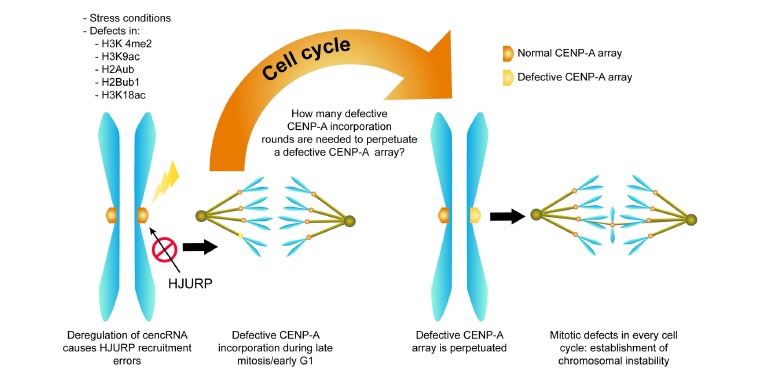
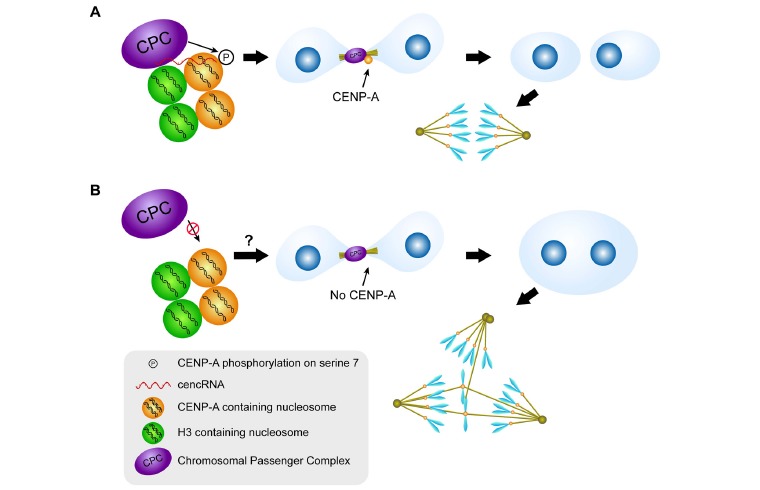
In eukaryotes, mitosis is tightly regulated to avoid the generation of numerical chromosome aberrations, or aneuploidies. The aneuploid phenotype is a consequence of chromosomal instability (CIN), i.e., an enhanced rate of chromosome segregation errors, which is frequently found in cancer cells and is associated with tumor aggressiveness and increased tumor cell survival potential. To avoid the generation of aneuploidies, cells rely on the spindle assembly checkpoint (SAC), a widely conserved mechanism that protects the genome against this type of error. This signaling pathway stops mitotic pro-gression before anaphase until all chromosomes are correctly attached to spindle microtubules. Howev-er, impairment of the SAC cannot account for the establishment of CIN because cells bearing this phe-notype have a functional SAC. Hence, in cells with CIN, anaphase is not triggered until all chromo-somes are correctly attached to spindle microtubules and congressed at the metaphase plate. Thus, an in-teresting question arises: What mechanisms actually mediate CIN in cancer cells? Recent research has shown that some pathways involved in chromosome segregation are closely associated to centromere-encoded non-coding RNA (cencRNA) and that these RNAs are deregulated in abnormal conditions, such as cancer. These mechanisms may provide new explanations for chromosome segregation errors. The present review discusses some of these findings and proposes novel mechanisms for the establish-ment of CIN based on regulation by cencRNA.
在真核生物中,有丝分裂受到严格调控,以避免产生染色体数目畸变或非整倍体。非整倍体表型是染色体不稳定(CIN)的结果,即染色体分离错误率增加,这在癌细胞中经常出现,并与肿瘤侵袭性和肿瘤细胞存活潜力增加有关。为避免产生非整倍体,细胞依赖纺锤体组装检查点(SAC),这是一种广泛保守的机制,可保护基因组免受此类错误影响。该信号通路在后期之前阻止有丝分裂进程,直到所有染色体正确附着于纺锤体微管。然而,SAC功能受损并不能解释CIN的形成,因为具有这种表型的细胞具有功能性SAC。因此,在具有CIN的细胞中,直到所有染色体正确附着于纺锤体微管并在中期板上排列后才会触发后期。于是,一个有趣的问题出现了:癌细胞中实际介导CIN的机制是什么?最近的研究表明,一些参与染色体分离的途径与着丝粒编码的非编码RNA(cencRNA)密切相关,并且这些RNA在诸如癌症等异常情况下会失调。这些机制可能为染色体分离错误提供新的解释。本综述讨论了其中一些发现,并基于cencRNA的调控提出了CIN形成的新机制。