Larsen David A, Borrill Lauren, Patel Ryan, Fregosi Lauren
Department of Public Health, Food Studies and Nutrition, Syracuse University, Syracuse, NY, USA.
Malar J. 2017 Jun 13;16(1):249. doi: 10.1186/s12936-017-1893-x.
Malaria is an important cause of morbidity and mortality in malaria-endemic areas. Indoor residual spray is an effective intervention to control malaria, but high community-level coverage is needed to maximize its impact.
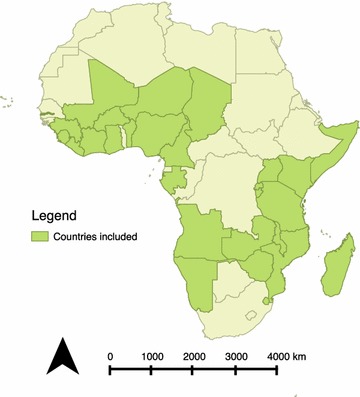
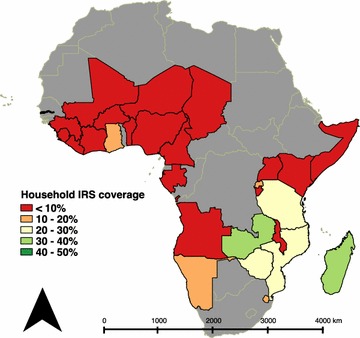
Using thirty-four two-stage cluster surveys (e.g., demographic and health surveys) and lot quality assurance sampling, indoor residual spray was estimated at the community level (i.e. enumeration-area) across sub-Saharan Africa since 2010. For communities receiving indoor residual spray a logistic regression predicted whether community-level coverage exceeded 50% or not. Household-level coverage was equitable both in terms of wealth and urban/rural, with poorer and rural houses more likely to be sprayed than richer and urban houses. Coverage of indoor residual spray at the community level is poor across the continent, with 54% of communities receiving the intervention not reaching 50% coverage. Having >50% coverage at the community-level was not associated with increasing the number of houses sprayed in the country.
Implementation and monitoring of indoor residual coverage at small geographical scales need to improve greatly to receive maximum benefit of the intervention.
疟疾是疟疾流行地区发病和死亡的重要原因。室内滞留喷洒是控制疟疾的有效干预措施,但需要较高的社区覆盖率才能使其影响最大化。
自2010年以来,利用34次两阶段整群调查(如人口与健康调查)和批量质量保证抽样,对撒哈拉以南非洲地区社区层面(即普查区)的室内滞留喷洒情况进行了估算。对于接受室内滞留喷洒的社区,通过逻辑回归预测社区层面的覆盖率是否超过50%。家庭层面的覆盖率在财富和城乡方面都是公平的,较贫困和农村地区的房屋比富裕和城市地区的房屋更有可能接受喷洒。整个非洲大陆社区层面的室内滞留喷洒覆盖率较低,接受干预的社区中有54%的覆盖率未达到50%。社区层面覆盖率超过50%与该国喷洒房屋数量的增加无关。
需要大幅改善小地理尺度上室内滞留喷洒覆盖率的实施和监测,以从该干预措施中获得最大益处。