Murad Hossam, Assaad Jana Mir, Al-Shemali Rasha, Abbady Abdul Qader
Department of Molecular Biology and Biotechnology, AECS, Damascus, Syria.
Front Endocrinol (Lausanne). 2017 May 30;8:115. doi: 10.3389/fendo.2017.00115. eCollection 2017.
Monitoring blood levels of human growth hormone (hGH) in most children with short stature deficiencies is crucial for taking a decision of treatment with extended course of daily and expensive doses of recombinant hGH (rhGH or Somatropin). Besides, misusing of rhGH by sportsmen is banned by the World Anti-Doping Agency and thus sensitive GH-detecting methods are highly welcome in this field. Nanobodies are the tiniest antigen-binding entity derived from camel heavy chain antibodies. They were successfully generated against numerous antigens including hormones.
A fully nanobody-based sandwich ELISA method was developed in this work for direct measurement of GH in biological samples.
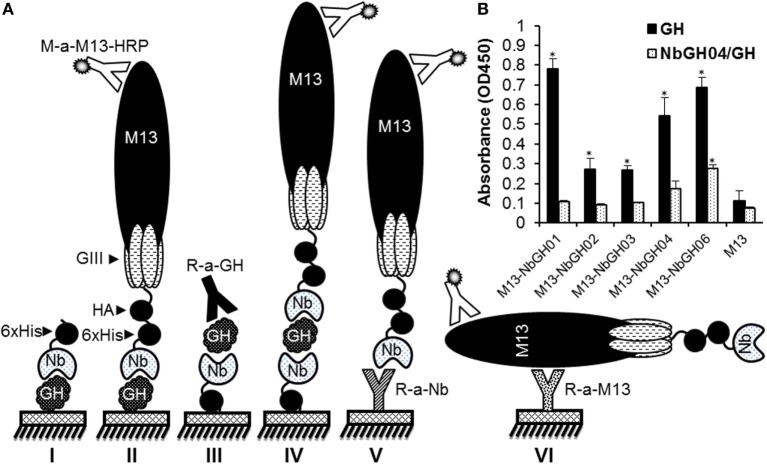
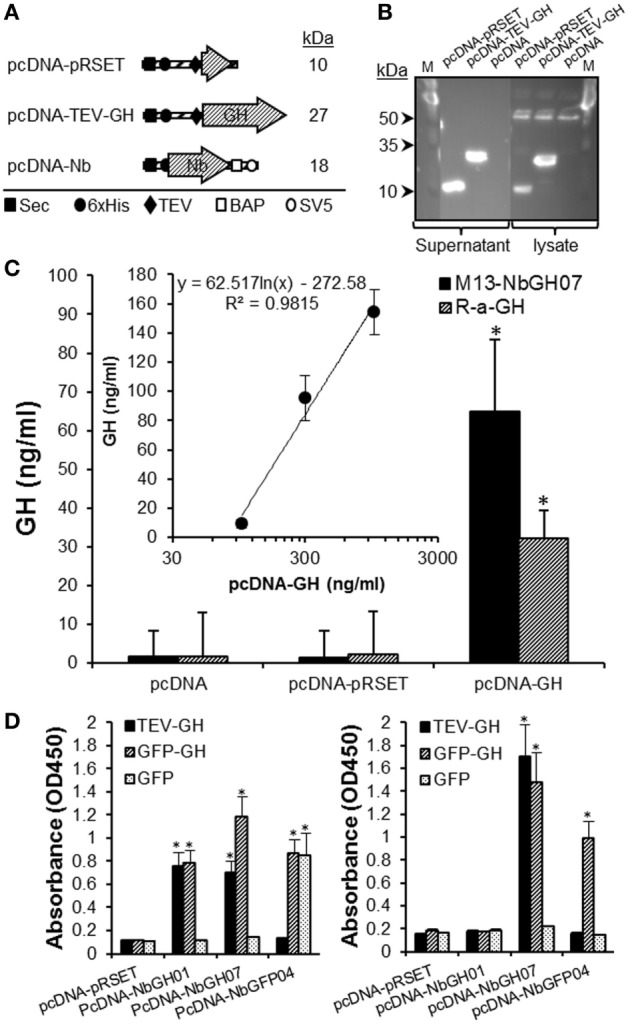
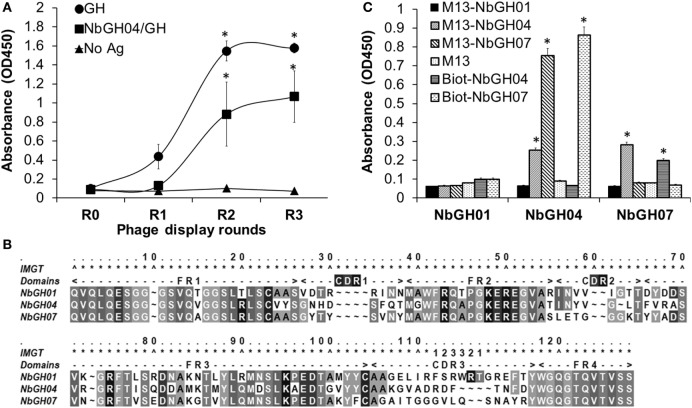
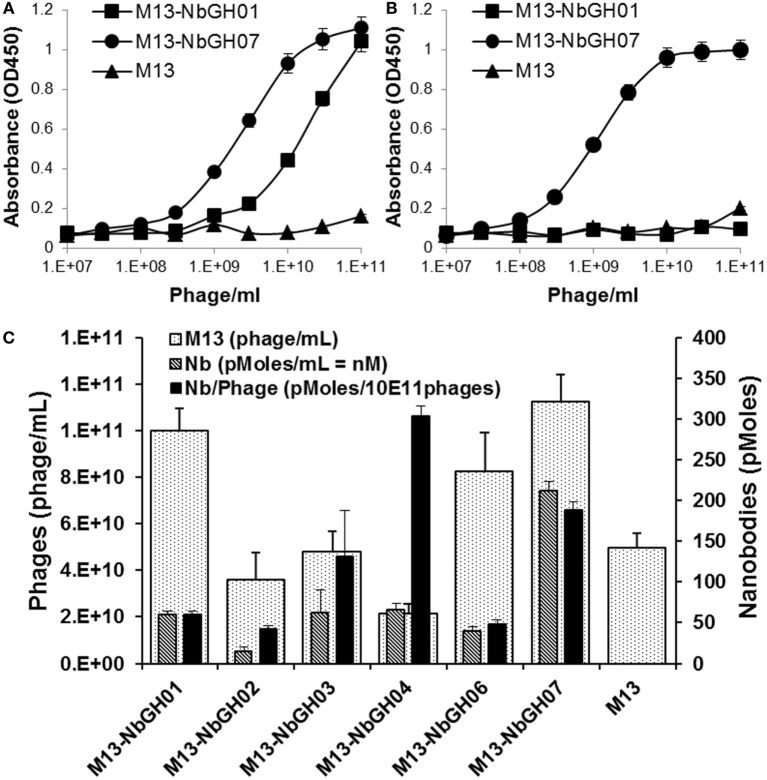
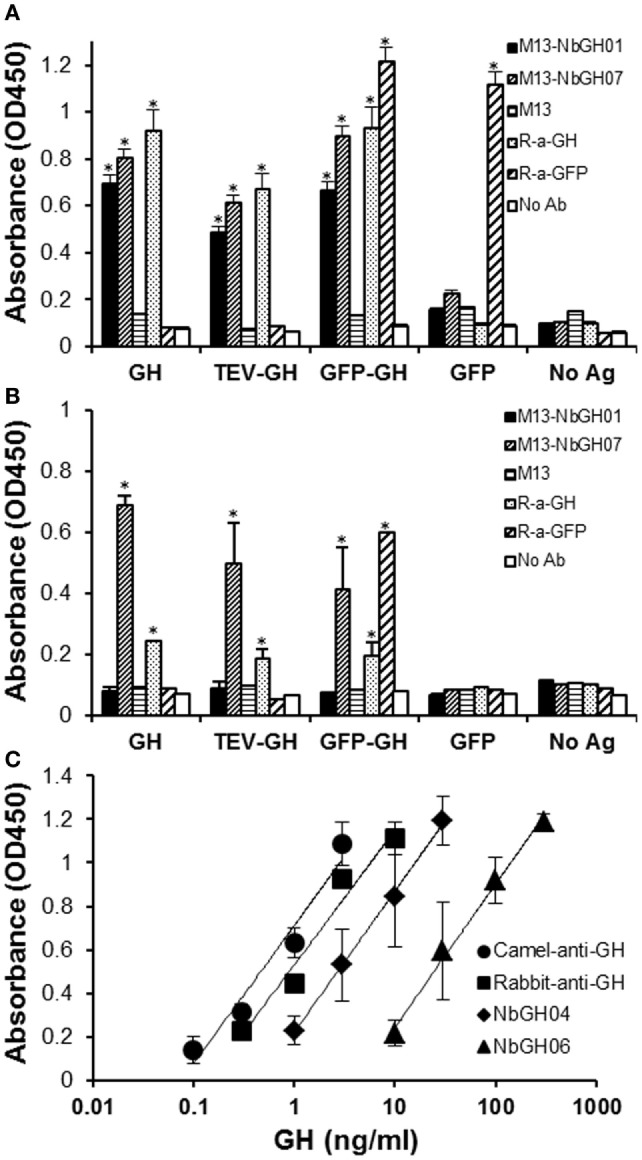
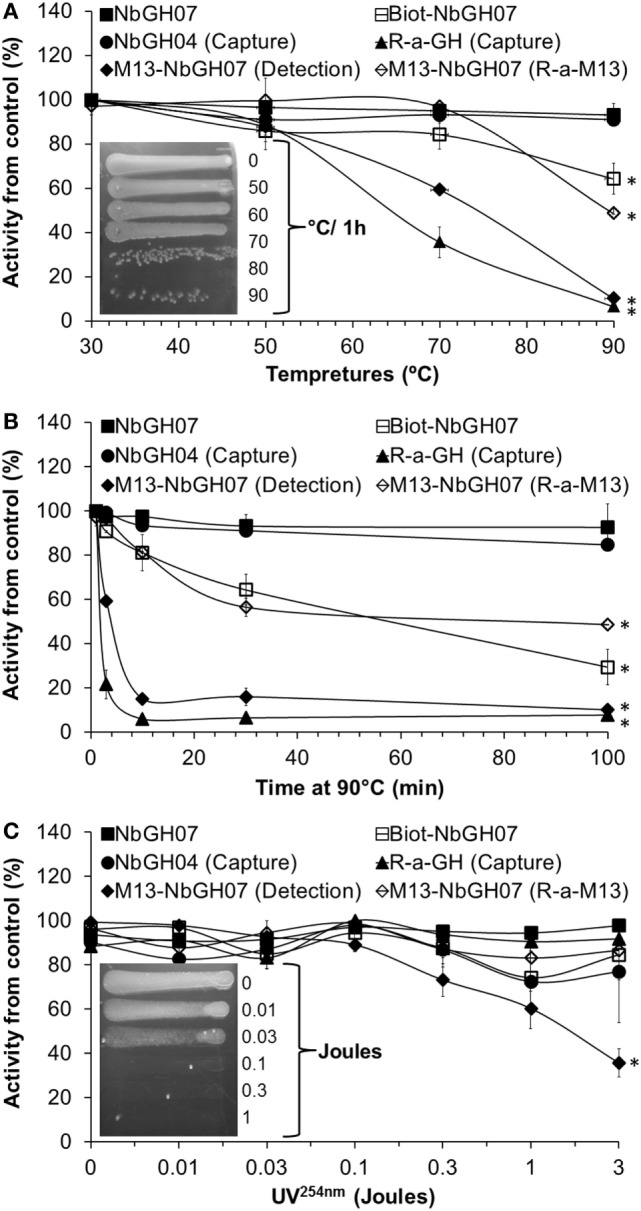
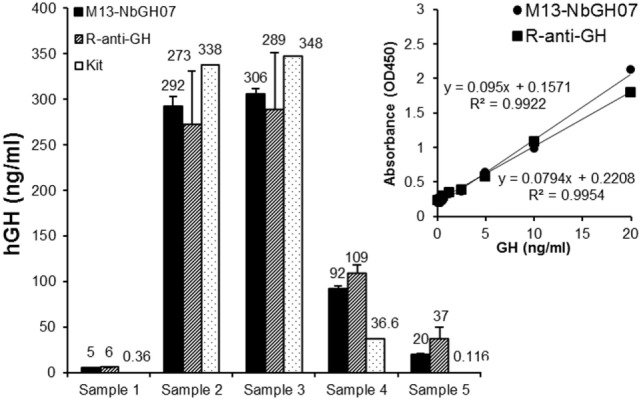
Two major characteristics of nanobody were exploited for this goal: the robust and stable structure of the nanobody (NbGH04) used to capture hGH from tested samples, and the great ability of tailoring, enabling the display of the anti-GH detector nanobody (NbGH07) on the tip of M13-phage. Such huge, stable, and easy-to-prepare phage-Nb was used in ELISA to provide an amplified signal. Previously, NbGH04 was retrieved on immobilized hGH by phage display from a wide "immune" cDNA library prepared from a hGH-immunized camel. Here, and in order to assure epitope heterogeneity, NbGH07 was isolated from the same library using NbGH04-captured hGH as bait. Interaction of both nanobodies with hGH was characterized and compared with different anti-GH nanobodies and antibodies. The sensitivity (~0.5 ng/ml) and stability of the nanobody-base sandwich ELISA were assessed using rhGH before testing in the quantification of hGH in blood sera and cell culture supernatants.
In regard to all advantages of nanobodies; stability, solubility, production affordability in , and gene tailoring, nanobody-based phage sandwich ELISA developed here would provide a valuable method for hGH detection and quantification.
对于大多数身材矮小的儿童,监测其血液中的人生长激素(hGH)水平对于决定是否采用每日剂量大且昂贵的重组hGH(rhGH或生长激素)进行长期治疗至关重要。此外,运动员滥用rhGH被世界反兴奋剂机构禁止,因此该领域非常欢迎灵敏的生长激素检测方法。纳米抗体是源自骆驼重链抗体的最小抗原结合实体。它们已成功针对包括激素在内的多种抗原产生。
本研究开发了一种基于纳米抗体的夹心ELISA方法,用于直接检测生物样品中的生长激素。
为实现这一目标,利用了纳米抗体的两个主要特性:用于从测试样品中捕获hGH的纳米抗体(NbGH04)结构坚固稳定,以及具有强大的定制能力,能够将抗生长激素检测纳米抗体(NbGH07)展示在M13噬菌体的尖端。这种巨大、稳定且易于制备的噬菌体-纳米抗体用于ELISA以提供放大信号。此前,通过噬菌体展示从经hGH免疫的骆驼制备的广泛“免疫”cDNA文库中,在固定化的hGH上筛选出了NbGH04。在此,为确保表位异质性,以NbGH04捕获的hGH为诱饵,从同一文库中分离出NbGH07。对两种纳米抗体与hGH的相互作用进行了表征,并与不同的抗生长激素纳米抗体和抗体进行了比较。在对血清和细胞培养上清液中的hGH进行定量测试之前,使用rhGH评估了基于纳米抗体的夹心ELISA的灵敏度(约0.5 ng/ml)和稳定性。
鉴于纳米抗体具有稳定性、溶解性、易于生产以及基因可定制等所有优点,本文开发的基于纳米抗体的噬菌体夹心ELISA将为hGH的检测和定量提供一种有价值的方法。