Troussellier Marc, Escalas Arthur, Bouvier Thierry, Mouillot David
MARBEC, UMR IRD-CNRS-UM-IFREMER 9190, Université MontpellierMontpellier, France.
Institute for Environmental Genomics, Department of Microbiology and Plant Biology, University of Oklahoma, NormanOK, United States.
Front Microbiol. 2017 May 29;8:947. doi: 10.3389/fmicb.2017.00947. eCollection 2017.
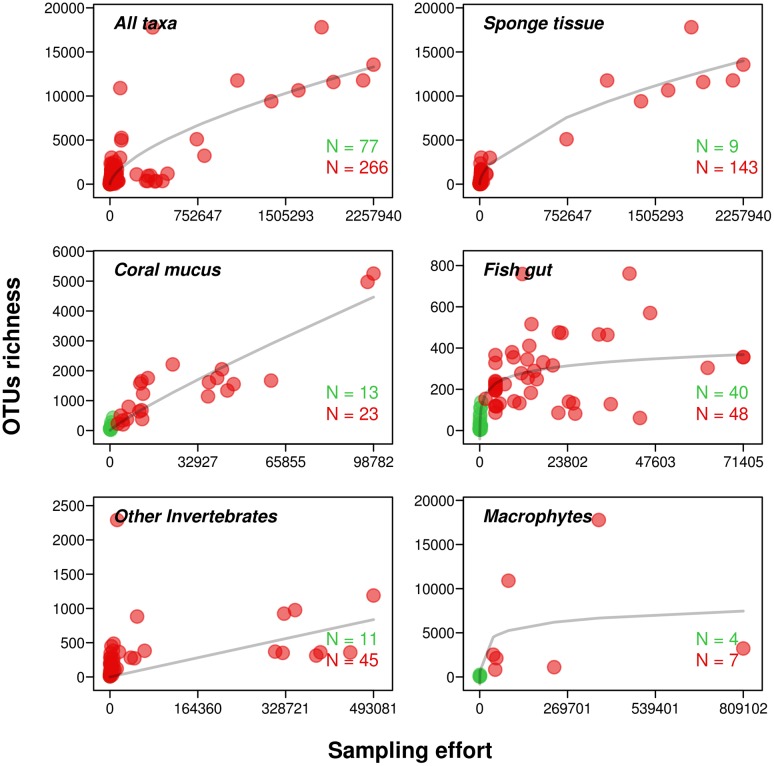
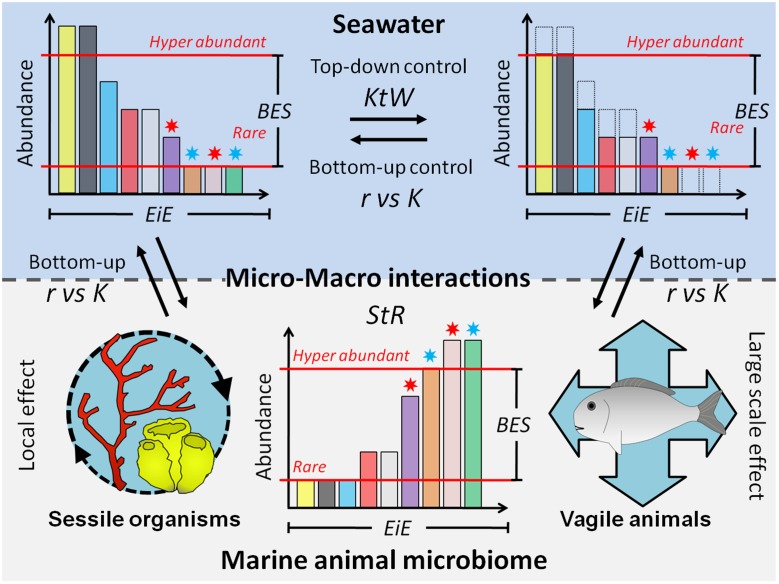
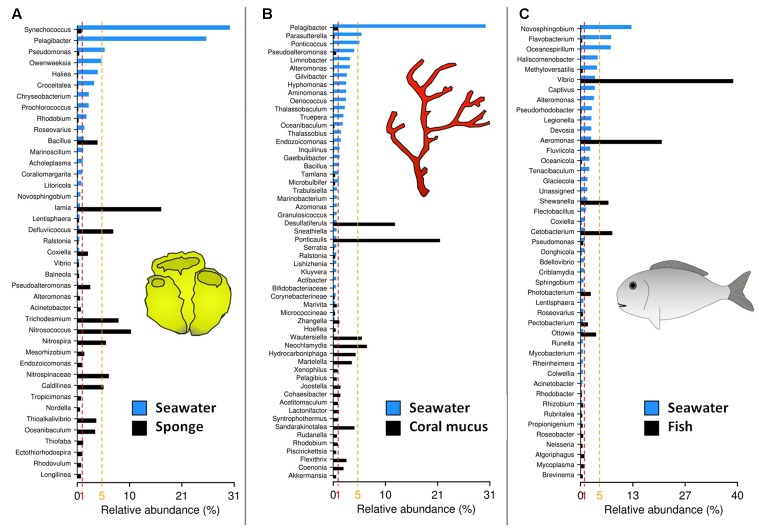
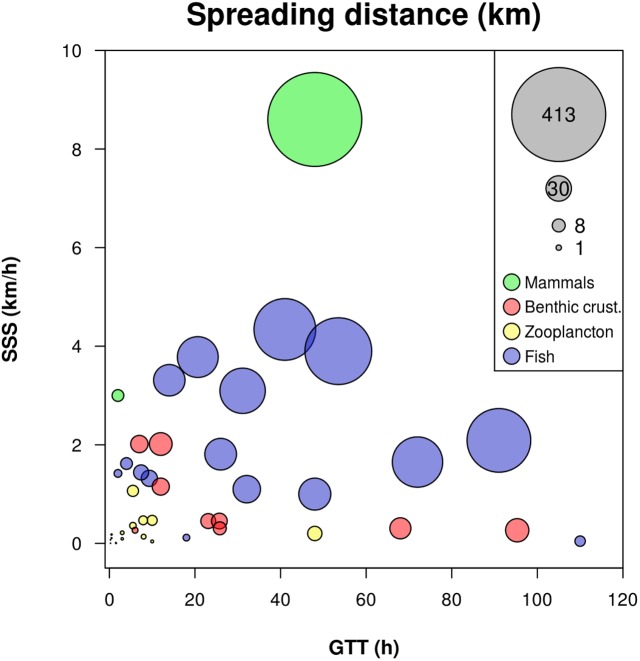
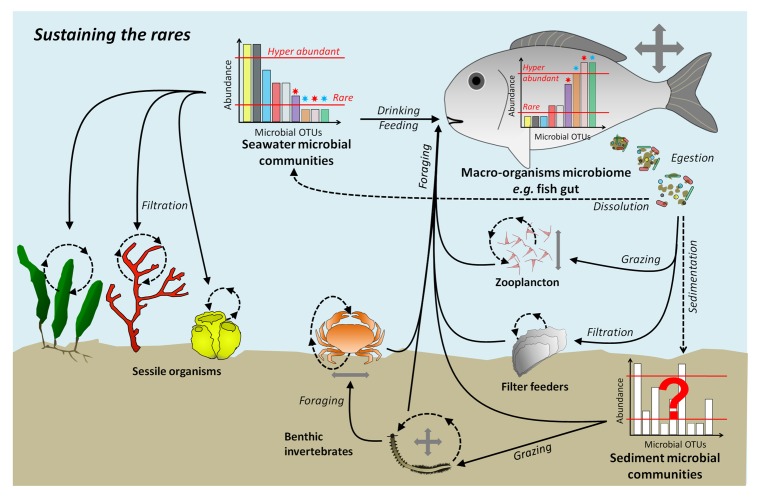
Recent analyses revealed that most of the biodiversity observed in marine microbial communities is represented by organisms with low abundance but, nonetheless essential for ecosystem dynamics and processes across both temporal and spatial scales. Surprisingly, few studies have considered the effect of macroorganism-microbe interactions on the ecology and distribution dynamics of rare microbial taxa. In this review, we synthesize several lines of evidence that these relationships cannot be neglected any longer. First, we provide empirical support that the microbiota of macroorganisms represents a significant part of marine bacterial biodiversity and that host-microbe interactions benefit to certain microbial populations which are part of the rare biosphere (i.e., opportunistic copiotrophic organisms). Second, we reveal the major role that macroorganisms may have on the dispersal and the geographic distribution of microbes. Third, we introduce an innovative and integrated view of the interactions between microbes and macroorganisms, namely , which suggests that macroorganisms favor the maintenance of marine microbial diversity and are involved in the regulation of its richness and dynamics. Finally, we show how this hypothesis complements existing theories in microbial ecology and offers new perspectives about the importance of macroorganisms for the microbial biosphere, particularly the rare members.
最近的分析表明,海洋微生物群落中观察到的大部分生物多样性由低丰度的生物体所代表,然而,这些生物体对于跨时空尺度的生态系统动态和过程至关重要。令人惊讶的是,很少有研究考虑大型生物与微生物相互作用对稀有微生物类群的生态学和分布动态的影响。在这篇综述中,我们综合了几方面的证据,表明这些关系再也不能被忽视。首先,我们提供了实证支持,即大型生物的微生物群是海洋细菌生物多样性的重要组成部分,并且宿主与微生物的相互作用有利于某些属于稀有生物圈的微生物种群(即机会性富营养生物)。其次,我们揭示了大型生物可能对微生物的扩散和地理分布具有的主要作用。第三,我们引入了一种关于微生物与大型生物相互作用的创新且综合的观点,即大型生物有利于维持海洋微生物多样性,并参与其丰富度和动态的调节。最后,我们展示了这一假设如何补充微生物生态学中的现有理论,并为大型生物对微生物生物圈,特别是稀有成员的重要性提供了新的视角。