Department of Biological Sciences, University of Maryland, Baltimore County, Baltimore, MD.
Monell Chemical Senses Center, Philadelphia, PA.
eNeuro. 2017 Jun 12;4(3). doi: 10.1523/ENEURO.0135-17.2017. eCollection 2017 May-Jun.
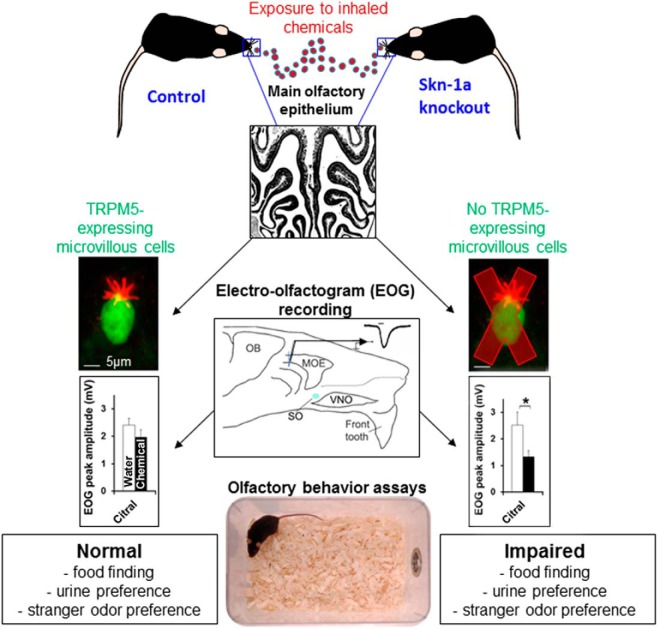
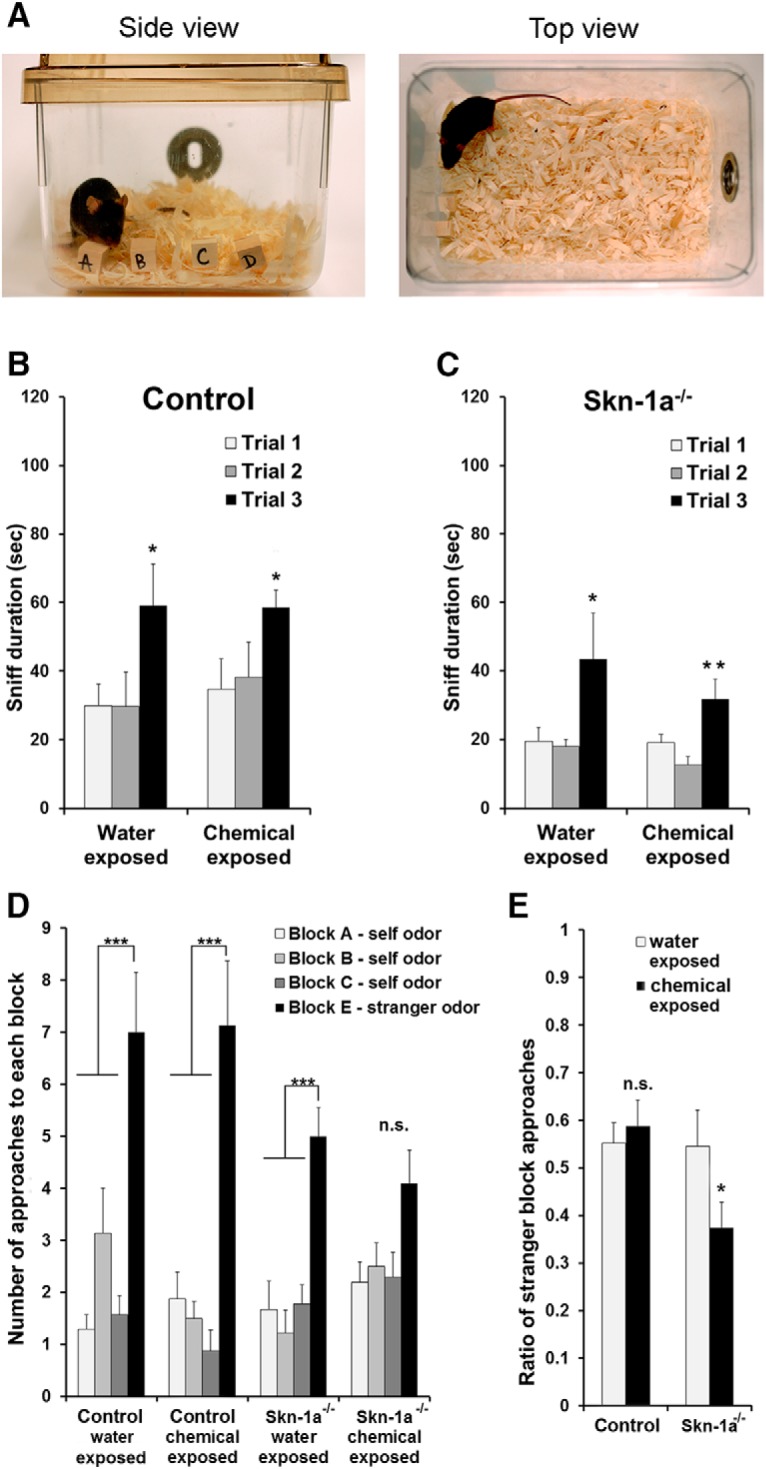
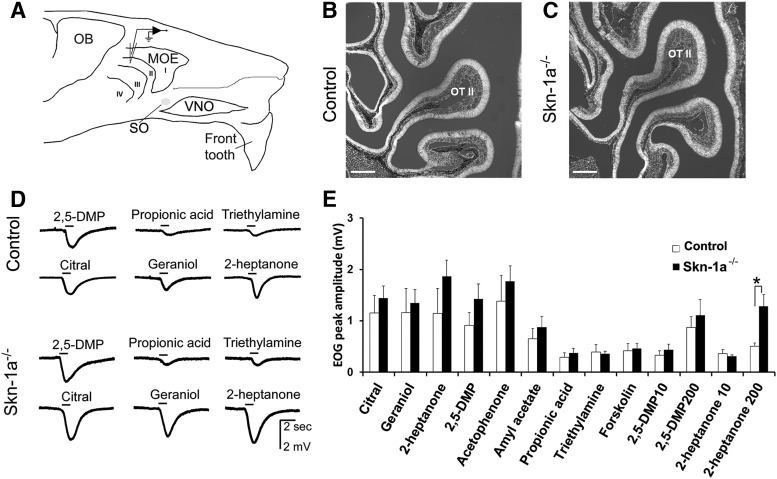
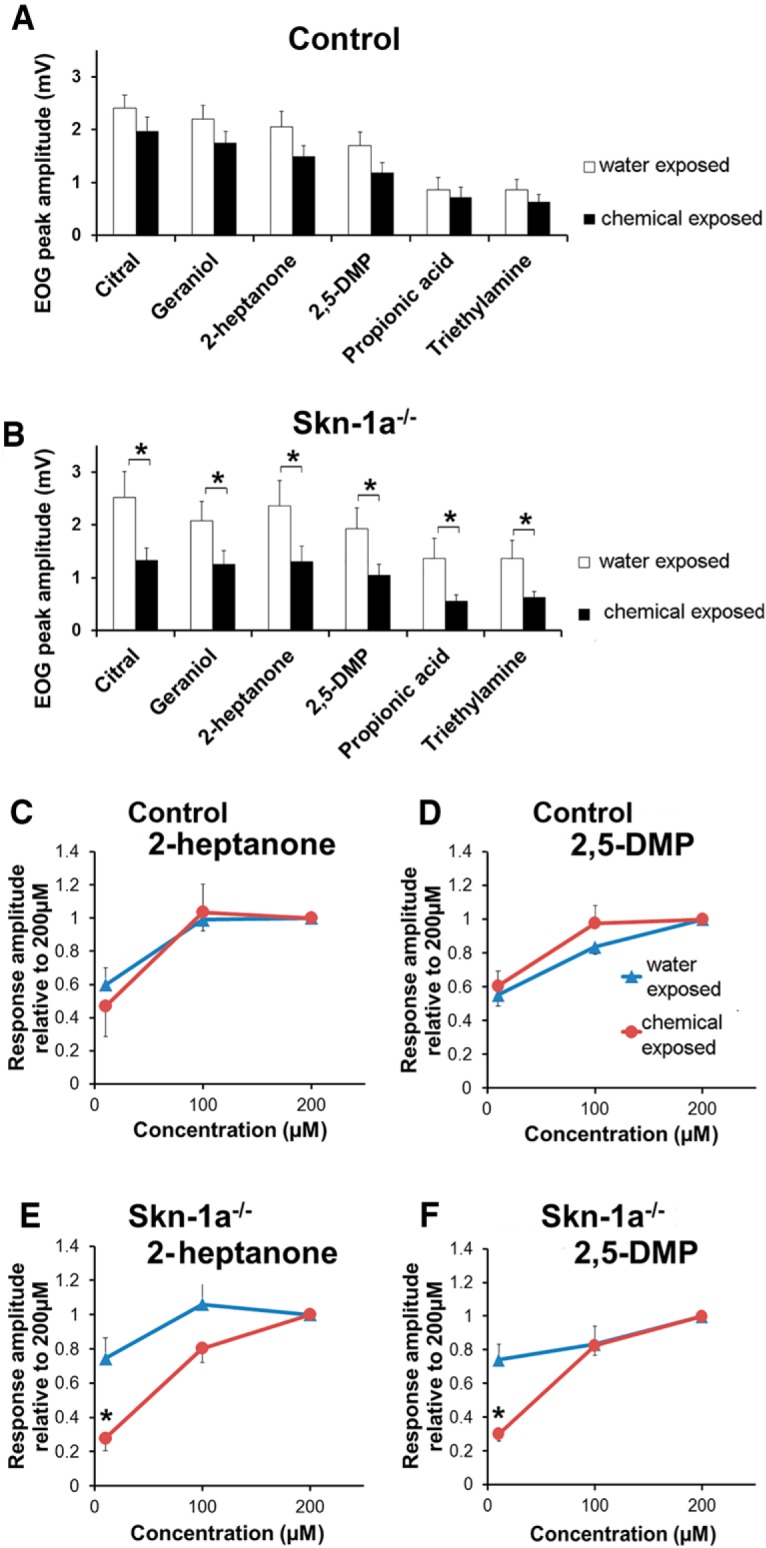
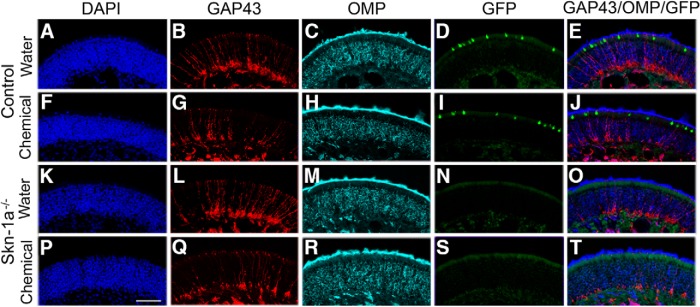
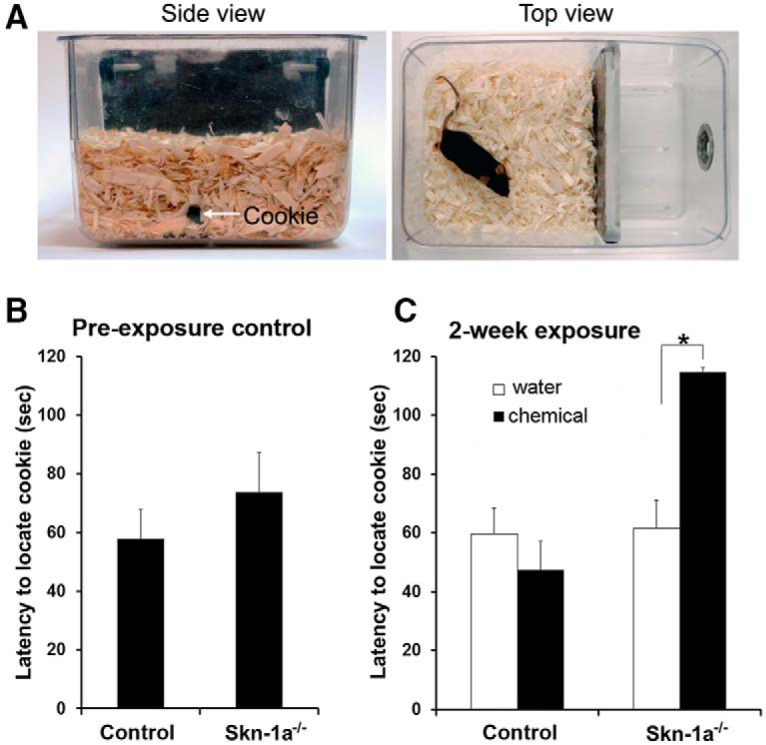
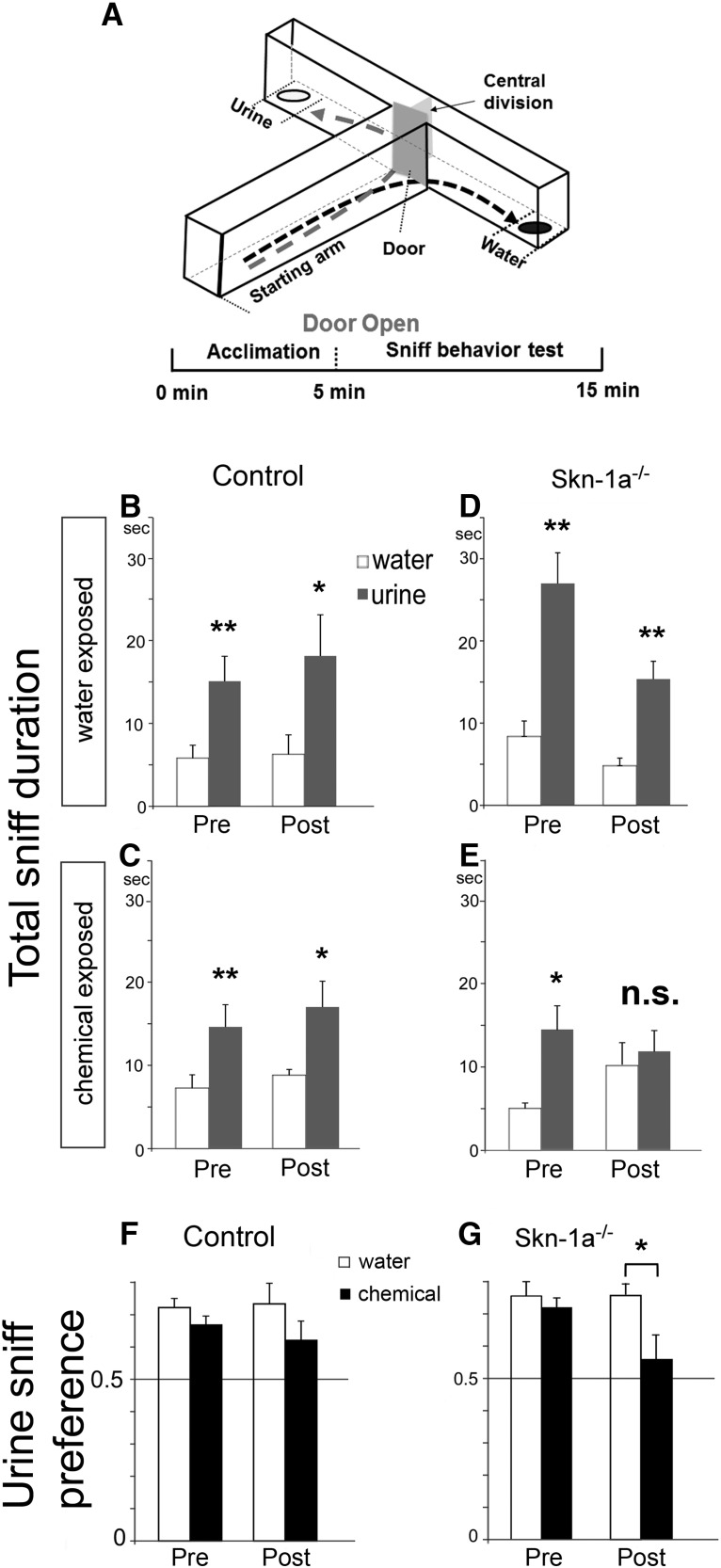
The mammalian main olfactory epithelium (MOE) modifies its activities in response to changes in the chemical environment. This process is essential for maintaining the functions of the olfactory system and the upper airway. However, mechanisms involved in this functional maintenance, especially those occurring via paracrine regulatory pathways within the multicellular MOE, are poorly understood. Previously, a population of non-neuronal, transient receptor potential M5-expressing microvillous cells (TRPM5-MCs) was identified in the MOE, and the initial characterization of these cells showed that they are cholinergic and responsive to various xenobiotics including odorants at high concentrations. Here, we investigated the role of TRPM5-MCs in maintaining olfactory function using transcription factor Skn-1a knockout (Skn-1a) mice, which lack TRPM5-MCs in the MOE. Under our standard housing conditions, Skn-1a mice do not differ significantly from control mice in odor-evoked electro-olfactogram (EOG) responses and olfactory-guided behaviors, including finding buried food and preference reactions to socially and sexually relevant odors. However, after a 2-wk exposure to high-concentration odor chemicals and chitin powder, Skn-1a mice exhibited a significant reduction in their odor and pheromone-evoked EOG responses. Consequently, their olfactory-guided behaviors were impaired compared with vehicle-exposed Skn-1a mice. Conversely, the chemical exposure did not induce significant changes in the EOG responses and olfactory behaviors of control mice. Therefore, our physiological and behavioral results indicate that TRPM5-MCs play a protective role in maintaining the olfactory function of the MOE.
哺乳动物的主要嗅觉上皮(MOE)会根据化学环境的变化改变其活动。这个过程对于维持嗅觉系统和上呼吸道的功能至关重要。然而,这种功能维持所涉及的机制,特别是在多细胞 MOE 中通过旁分泌调节途径发生的机制,仍知之甚少。先前,在 MOE 中鉴定出一群非神经元、瞬时受体电位 M5 表达微绒毛细胞(TRPM5-MCs),对这些细胞的初步特征表明它们是胆碱能的,并且对各种包括高浓度气味剂在内的外来物质有反应。在这里,我们使用转录因子 Skn-1a 敲除(Skn-1a)小鼠(MOE 中缺乏 TRPM5-MCs)来研究 TRPM5-MCs 在维持嗅觉功能中的作用。在我们的标准饲养条件下,Skn-1a 小鼠在气味诱发的电嗅图(EOG)反应和嗅觉引导行为方面与对照小鼠没有显著差异,包括寻找埋藏的食物以及对社交和性相关气味的偏好反应。然而,在 2 周暴露于高浓度气味化学品和几丁质粉末后,Skn-1a 小鼠的气味和信息素诱发的 EOG 反应明显减少。因此,它们的嗅觉引导行为与接受载体暴露的 Skn-1a 小鼠相比受到了损害。相反,化学暴露并没有诱导对照小鼠的 EOG 反应和嗅觉行为发生显著变化。因此,我们的生理和行为学结果表明,TRPM5-MCs 在维持 MOE 的嗅觉功能方面发挥保护作用。