Kundu Nandini, Brekman Angelika, Kim Jun Yeob, Xiao Gu, Gao Chong, Bargonetti Jill
The Department of Biological Sciences Hunter College, City University of New York, New York, NY 10065, USA.
PhD Program in Biology, The Graduate Center, City University of New York, New York, NY 10016, USA.
Oncotarget. 2017 Jul 18;8(29):47916-47930. doi: 10.18632/oncotarget.18147.
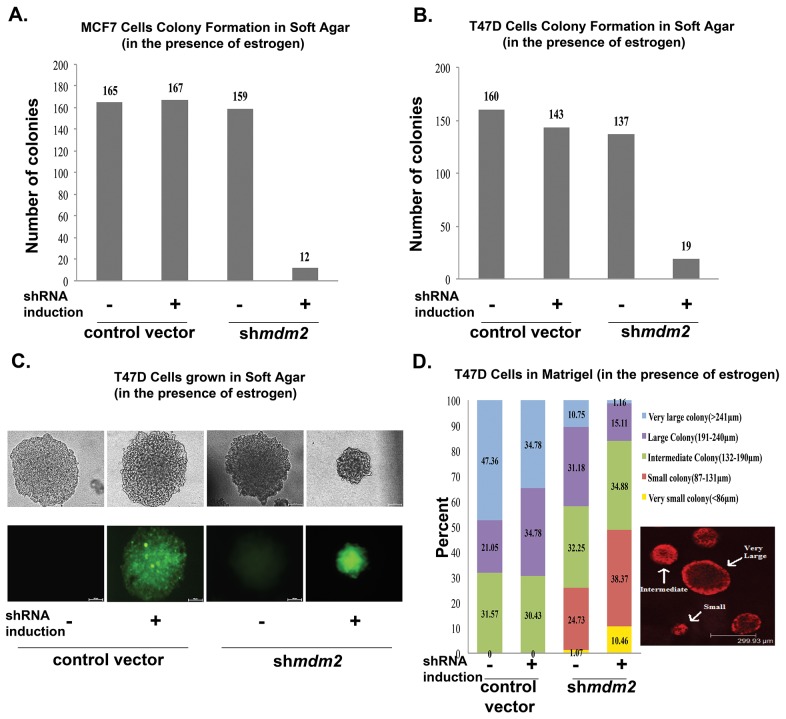
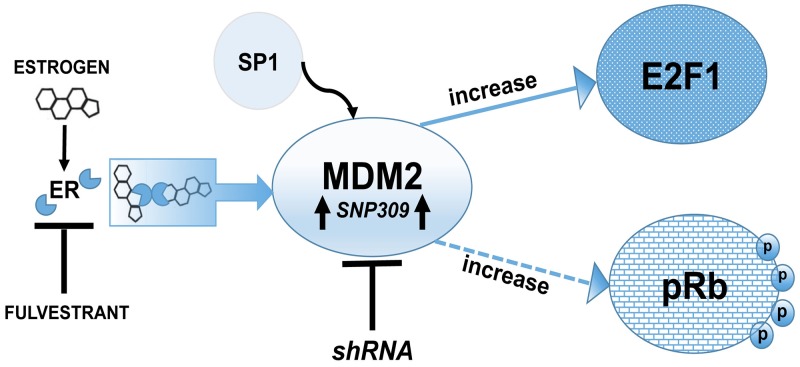
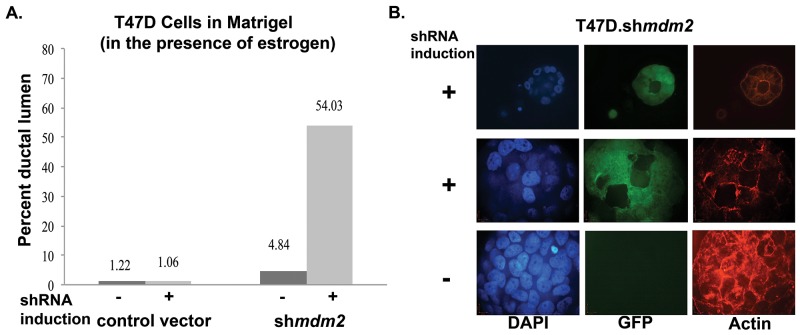
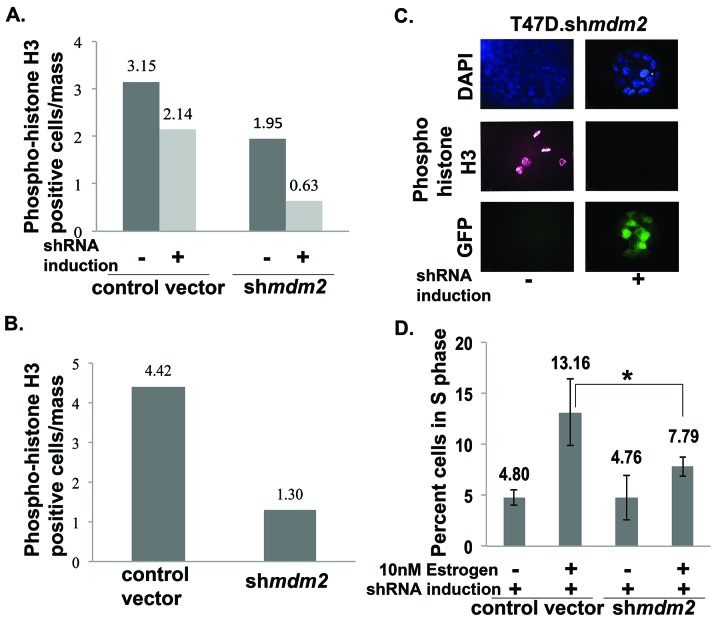
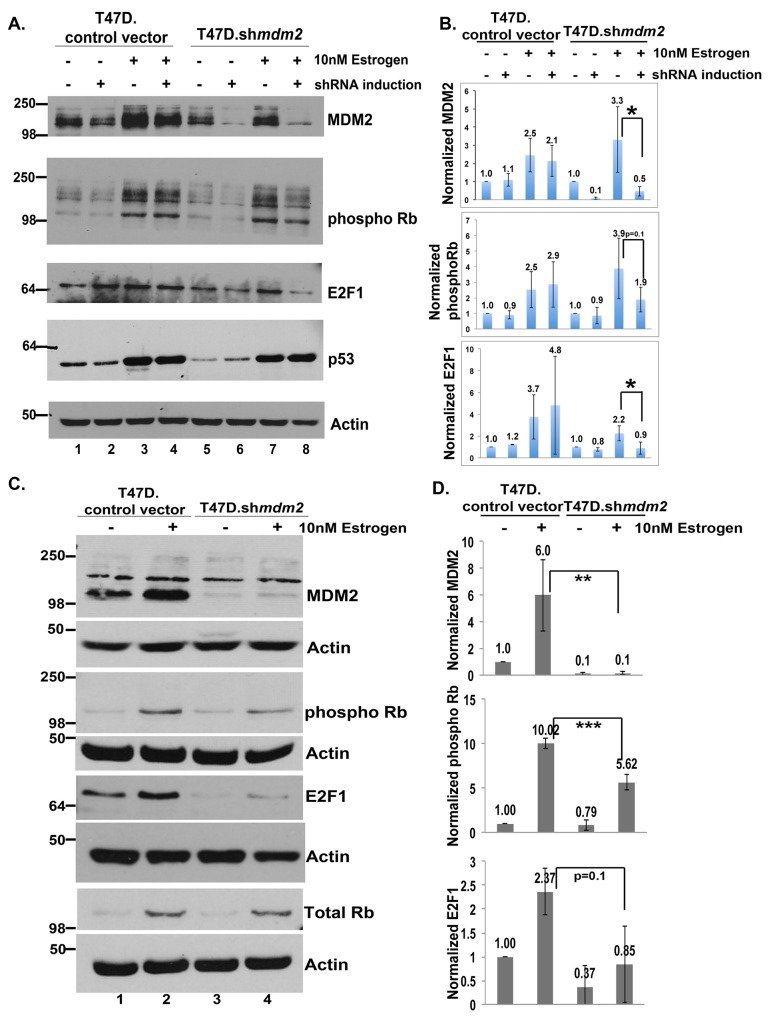
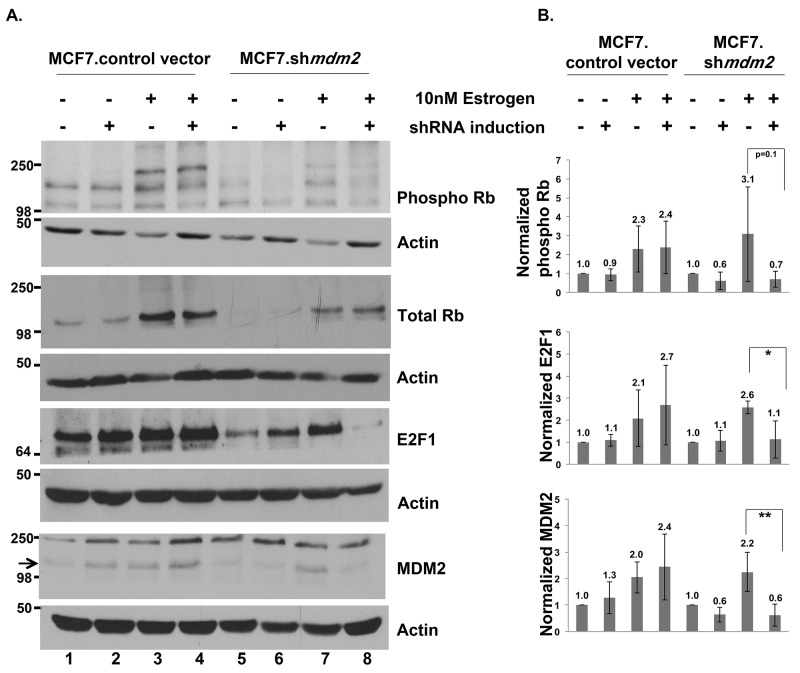
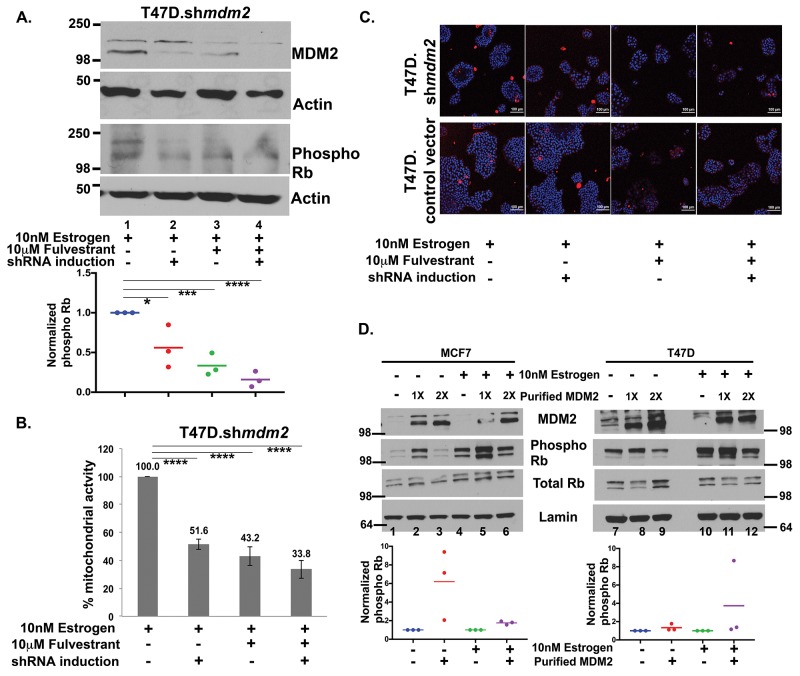
The Cancer Genome Atlas (TCGA) data indicate that high MDM2 expression correlates with all subtypes of breast cancer. Overexpression of MDM2 drives breast oncogenesis in the presence of wild-type or mutant p53 (mtp53). Importantly, estrogen-receptor positive (ER+) breast cancers overexpress MDM2 and estrogen mediates this expression. We previously demonstrated that this estrogen-MDM2 axis activates the proliferation of breast cancer cell lines T47D (mtp53 L194F) and MCF7 (wild-type p53) in a manner independent of increased degradation of wild-type p53 (ie, p53-independently). Herein we present data supporting the role of the estrogen-MDM2 axis in regulating cell proliferation and mammary tissue architecture of MCF7 and T47D cells in a p53-independent manner. Inducible shRNA mediated MDM2 knockdown inhibited colony formation in soft agar, decreased mass size and induced lumen formation in matrigel and also significantly reduced mitosis as seen by decreased phospho-histone H3 positive cells. The knockdown of MDM2 in both cell lines decreased Rb phosphorylation and the level of E2F1 protein. This signaling was through the estrogen receptor because fulvestrant (a selective estrogen receptor degrader) decreased MDM2 protein levels and decreased phosphorylation of Rb. Taken together these data indicate that in some ER+ breast cancers the estrogen-MDM2-Rb-E2F1 axis is a central hub for estrogen-mediated p53-independent signal transduction. This is the first indication that estrogen signaling utilizes the estrogen-MDM2 axis to provoke phosphorylation of Rb and increase E2F1 while promoting abnormal mammary architecture.
癌症基因组图谱(TCGA)数据表明,MDM2高表达与乳腺癌的所有亚型相关。在野生型或突变型p53(mtp53)存在的情况下,MDM2的过表达驱动乳腺癌发生。重要的是,雌激素受体阳性(ER+)乳腺癌过表达MDM2,且雌激素介导这种表达。我们之前证明,这种雌激素-MDM2轴以一种独立于野生型p53降解增加的方式(即不依赖p53)激活乳腺癌细胞系T47D(mtp53 L194F)和MCF7(野生型p53)的增殖。在此,我们提供数据支持雌激素-MDM2轴以不依赖p53的方式调节MCF7和T47D细胞的细胞增殖和乳腺组织结构。可诱导的短发夹RNA(shRNA)介导的MDM2敲低抑制软琼脂中的集落形成,减小基质胶中的肿块大小并诱导管腔形成,并且如通过磷酸化组蛋白H3阳性细胞减少所见,显著减少有丝分裂。两种细胞系中MDM2的敲低均降低Rb磷酸化和E2F1蛋白水平。这种信号传导是通过雌激素受体,因为氟维司群(一种选择性雌激素受体降解剂)降低MDM2蛋白水平并降低Rb磷酸化。这些数据综合起来表明,在一些ER+乳腺癌中,雌激素-MDM2-Rb-E2F1轴是雌激素介导的不依赖p53信号转导的中心枢纽。这是雌激素信号利用雌激素-MDM2轴引发Rb磷酸化并增加E2F1同时促进异常乳腺结构的首个迹象。