Dr. Park, Dr. Huybrechts, Dr. Bateman, Dr. Desai, Dr. Patorno, and Ms. Mogun are with the Department of Medicine, Division of Pharmacoepidemiology and Pharmacoeconomics, Brigham and Women's Hospital and Harvard Medical School, Boston. Dr. Park is also with the Department of Epidemiology, Harvard T. H. Chan School of Public Health, Boston, where Dr. Jacqueline Cohen and Dr. Hernandez-Diaz are affiliated. Dr. Bateman is also with the Department of Anesthesiology, Perioperative, and Pain Medicine, Brigham and Women's Hospital and Harvard Medical School, Boston. Dr. Lee Cohen is with the Center for Women's Mental Health, Department of Psychiatry, Massachusetts General Hospital, Boston.
Psychiatr Serv. 2017 Nov 1;68(11):1112-1119. doi: 10.1176/appi.ps.201600408. Epub 2017 Jun 15.
Given the increasing use and broadening of indications for use of antipsychotic medications in the general population, as well as the paucity of information on the safety of this drug class during pregnancy, the study documented patterns of antipsychotic medication use among pregnant women.
Medicaid Analytic eXtract data (2001-2010) from pregnant women who delivered live-born infants were used. Antipsychotic use at both the class and the individual drug level was defined based on dispensed outpatient prescriptions. Users' characteristics, including mental disorder diagnoses, were described. Temporal trends in use, as well as discontinuation patterns and psychotropic polytherapy, during pregnancy were evaluated.
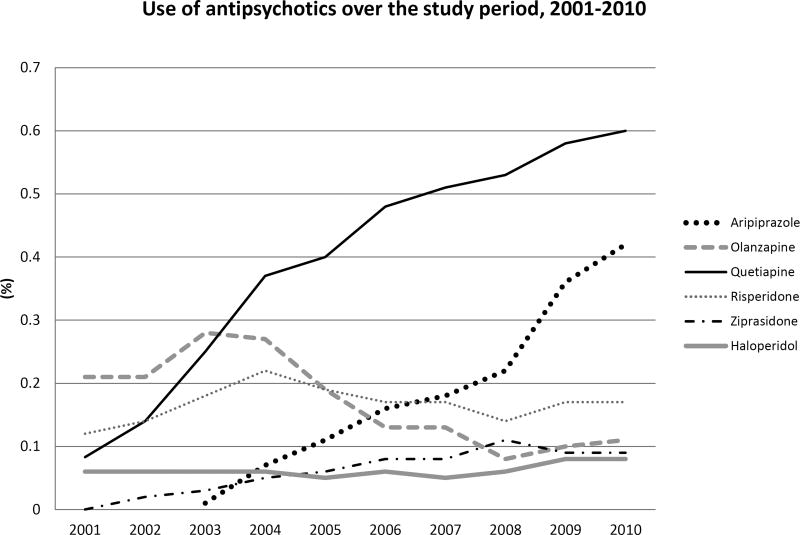
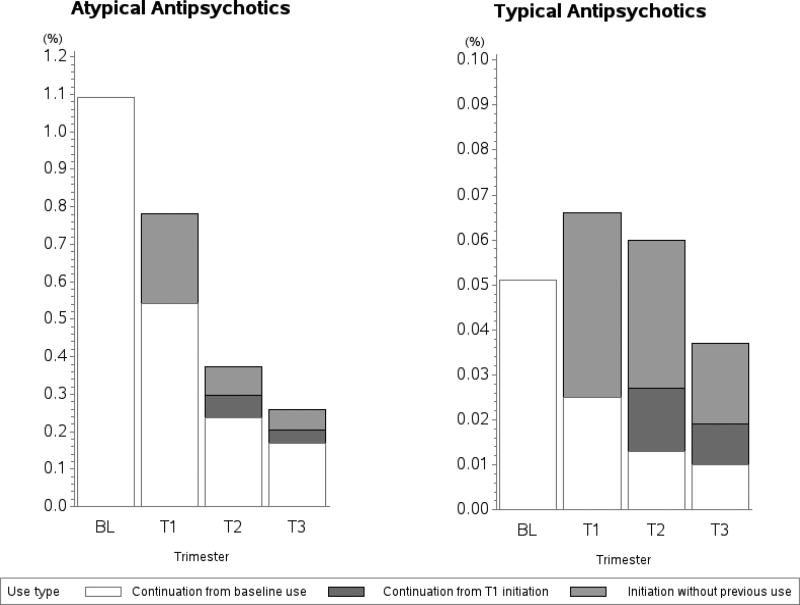
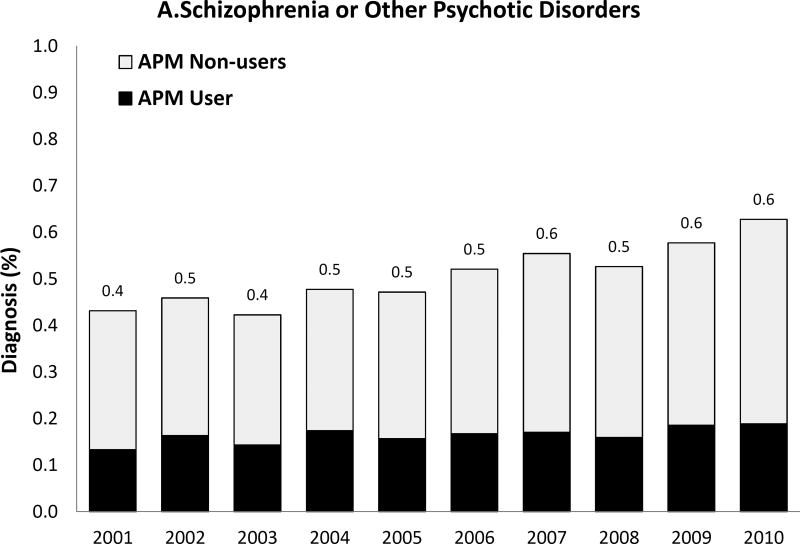
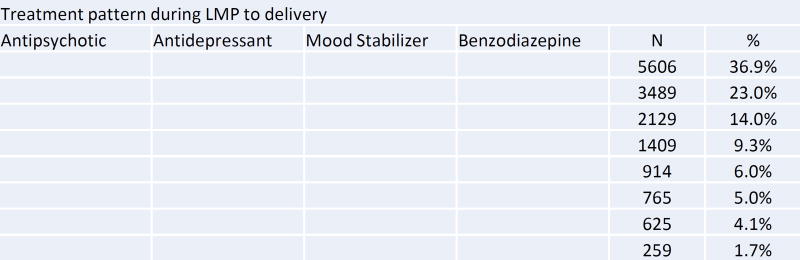
Among 1,522,247 pregnancies, the prevalence of use of second-generation antipsychotics at any time during pregnancy increased threefold, from .4% to 1.3%, over the ten-year period, while the use of first-generation antipsychotics remained stable at around .1%. The increased use of second-generation antipsychotics was largely driven by more frequent use among patients with bipolar disorder. Quetiapine and aripiprazole were the most frequently dispensed drugs, and polytherapy with antipsychotics and antidepressants (65.2%), benzodiazepines (24.9%), and other mood stabilizers (22.0%) was common. More than 50% of women receiving an antipsychotic in the three months prior to pregnancy discontinued the drug during pregnancy.
A growing number of pregnant women in Medicaid are exposed to second-generation antipsychotics, frequently in combination with other psychotropic medications. This study highlights the importance of documenting the use and safety of these drugs during pregnancy to inform therapeutic decision making for pregnant women with psychiatric disorders.
鉴于抗精神病药物在普通人群中的使用不断增加且适应证不断拓宽,以及关于该类药物在妊娠期间安全性的信息有限,本研究记录了孕妇使用抗精神病药物的模式。
利用 Medicaid Analytic eXtract 数据(2001-2010 年),对分娩活产婴儿的孕妇进行分析。根据配药的门诊处方来定义抗精神病药物在药物类别和个体药物层面的使用情况。描述使用者的特征,包括精神障碍诊断。评估了妊娠期间使用的时间趋势、停药模式和精神药物联合治疗。
在 1522247 例妊娠中,第二代抗精神病药物在整个孕期的使用比例从 0.4%增至 1.3%,在十年间增加了三倍,而第一代抗精神病药物的使用比例保持在 0.1%左右。第二代抗精神病药物使用增加主要是由于双相障碍患者更频繁地使用。喹硫平和阿立哌唑是最常开的药物,抗精神病药物和抗抑郁药(65.2%)、苯二氮䓬类药物(24.9%)和其他情绪稳定剂(22.0%)联合治疗很常见。超过 50%在妊娠前三个月接受抗精神病药物治疗的女性在妊娠期间停止使用该药。
越来越多的 Medicaid 孕妇接触到第二代抗精神病药物,通常与其他精神药物联合使用。本研究强调了记录这些药物在妊娠期间的使用和安全性的重要性,以告知患有精神障碍的孕妇的治疗决策。