Kye Hwanam, Koh Young Gook, Kim Youkyung, Han Sung Gu, Lee Hyunjung, Lee Wonmok
Department of Chemistry, Sejong University, 209 Neungdong-ro, Gwngjin-gu, Seoul 05006, Korea.
Engain Co. Ltd. Korea Bio Park BLD C-201, Seongnam 13488, korea.
Sensors (Basel). 2017 Jun 15;17(6):1398. doi: 10.3390/s17061398.
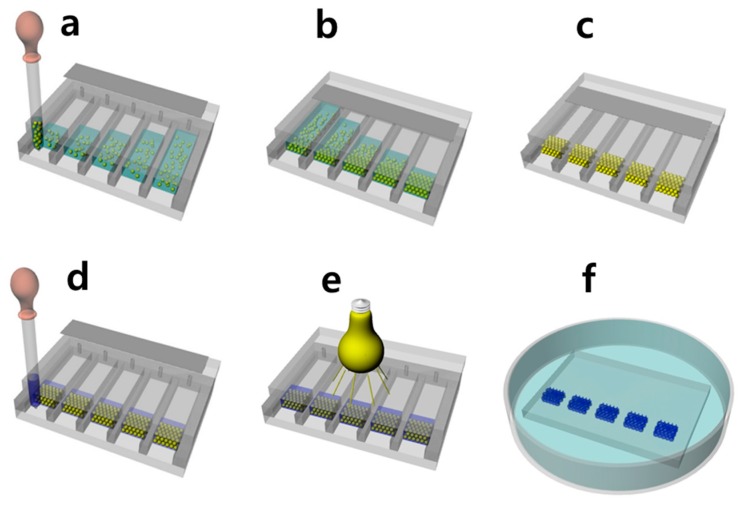
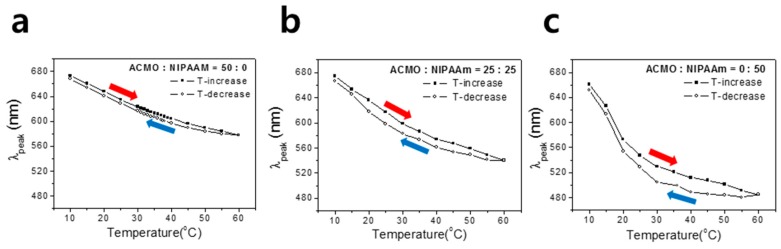
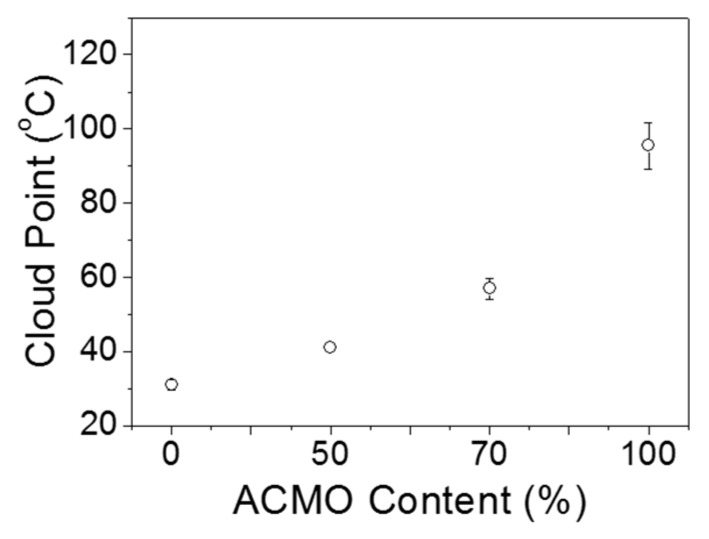
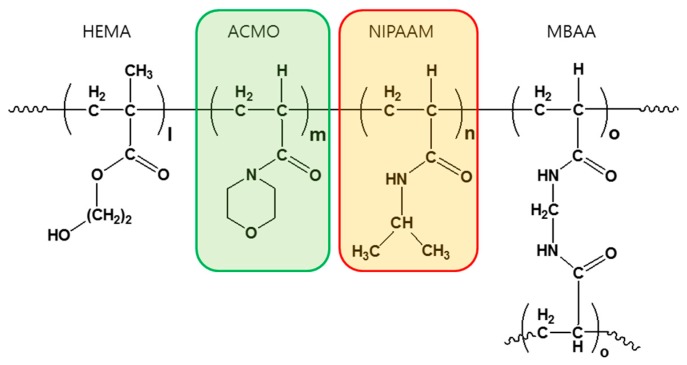
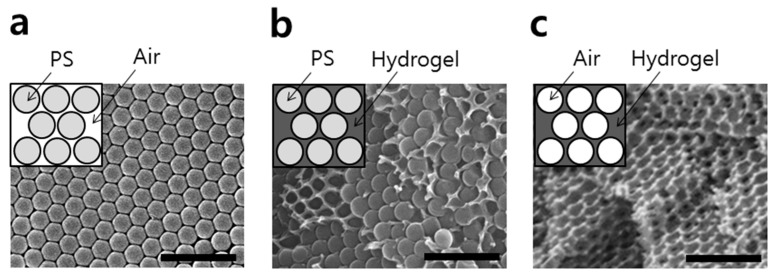
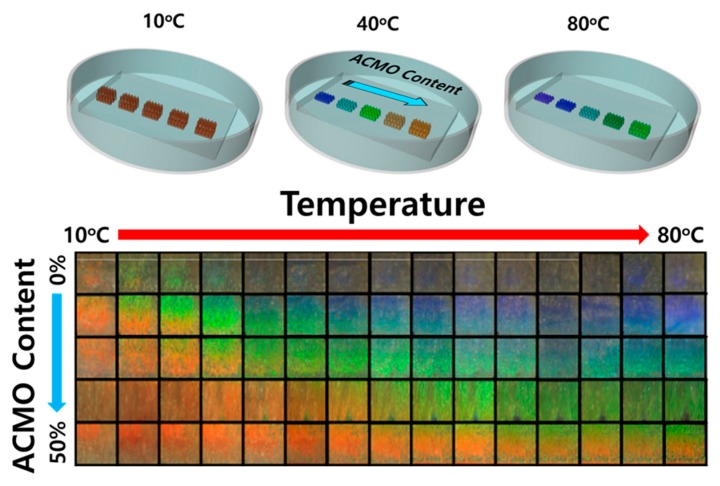
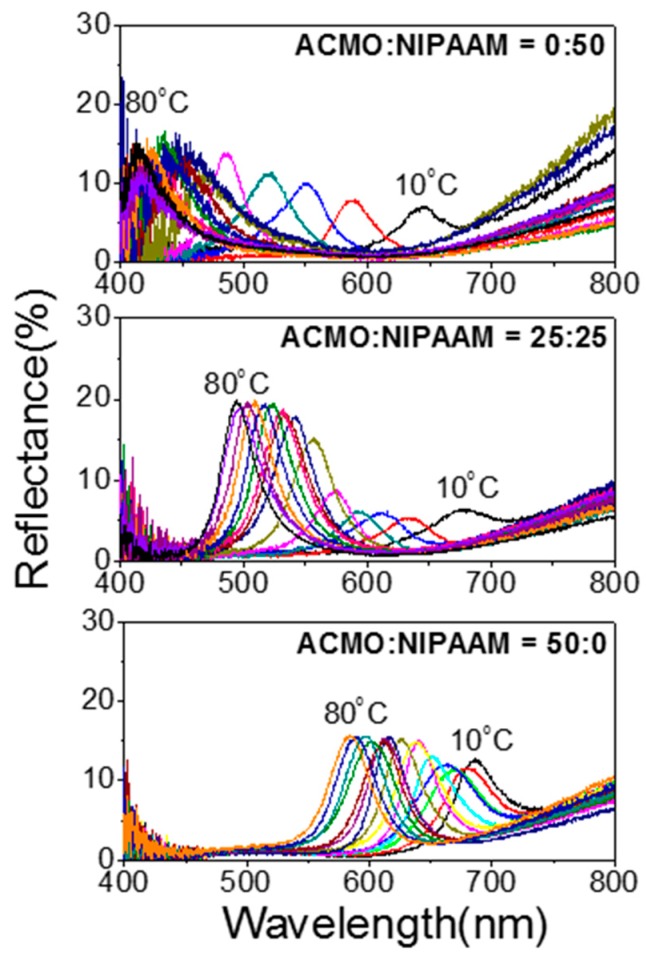
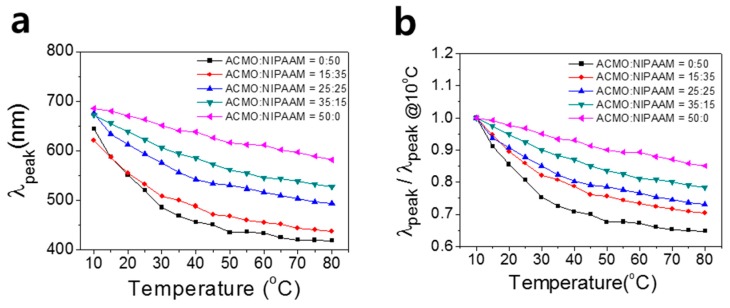
In this study, thermochromic photonic gels were fabricated using 2-hydroxyethyl methacrylate (HEMA) as a hydrogel building block, and 4-Acryloyl morpholine (ACMO) and -isopropylacrylamide (NIPAAM) as thermoresponsive monomers with different critical solution temperature behaviors. Rapid photopolymerization of opal-templated monomer mixtures of varying ACMO contents formed five individual thermochromic inverse opal photonic gels integrated on a single substrate. With temperature variation from 10 °C to 80 °C, the changes in reflective colors and reflectance spectra of the respective thermochromic gels were noted, and λ changes were plotted. Because NIPAAM exhibits a lower critical solution temperature (LCST) at 33 °C, the NIPAAM-only gel showed a steep slope for dλ/dT below 40 °C, whereas the slope became flatter at high temperatures. As the ACMO content increased in the thermochromic gel, the curve of dλ/dT turned out to be gradual within the investigated temperature range, exhibiting the entire visible range of colors. The incorporation of ACMO in NIPAAM-based thermochromic gels therefore enabled a better control of color changes at a relatively high-temperature regime compared to a NIPAAM-only gel. In addition, ACMO-containing thermochromic gels exhibited a smaller hysteresis of λ for the heating and cooling cycle.
在本研究中,以甲基丙烯酸2-羟乙酯(HEMA)作为水凝胶构建单元,以4-丙烯酰基吗啉(ACMO)和N-异丙基丙烯酰胺(NIPAAM)作为具有不同临界溶解温度行为的热响应性单体,制备了热致变色光子凝胶。对不同ACMO含量的蛋白石模板单体混合物进行快速光聚合,在单个基底上形成了五种单独的热致变色反蛋白石光子凝胶。随着温度从10℃变化到80℃,记录了各热致变色凝胶的反射颜色和反射光谱的变化,并绘制了λ变化曲线。由于NIPAAM在33℃时表现出较低临界溶解温度(LCST),仅含NIPAAM的凝胶在40℃以下dλ/dT呈现陡峭斜率,而在高温下斜率变平缓。随着热致变色凝胶中ACMO含量增加,在研究温度范围内dλ/dT曲线变得平缓,呈现出整个可见光谱范围的颜色。因此,与仅含NIPAAM的凝胶相比,在基于NIPAAM的热致变色凝胶中引入ACMO能够在相对较高温度范围内更好地控制颜色变化。此外,含ACMO的热致变色凝胶在加热和冷却循环中λ的滞后现象较小。