Wen Su-Ying, Tamilselvi Shanmugam, Shen Chia-Yao, Day Cecilia Hsuan, Chun Li-Chin, Cheng Li-Yi, Ou Hsiu-Chung, Chen Ray-Jade, Viswanadha Vijaya Padma, Kuo Wei-Wen, Huang Chih-Yang
Department of Dermatology, Taipei City Hospital, Renai Branch, Taipei, Taiwan.
Center for General Education, Mackay Junior College of Medicine, Nursing, and Management, Taipei, Taiwan.
PLoS One. 2017 Jun 15;12(6):e0179492. doi: 10.1371/journal.pone.0179492. eCollection 2017.
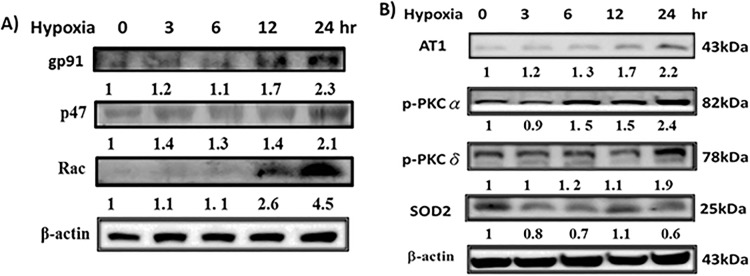
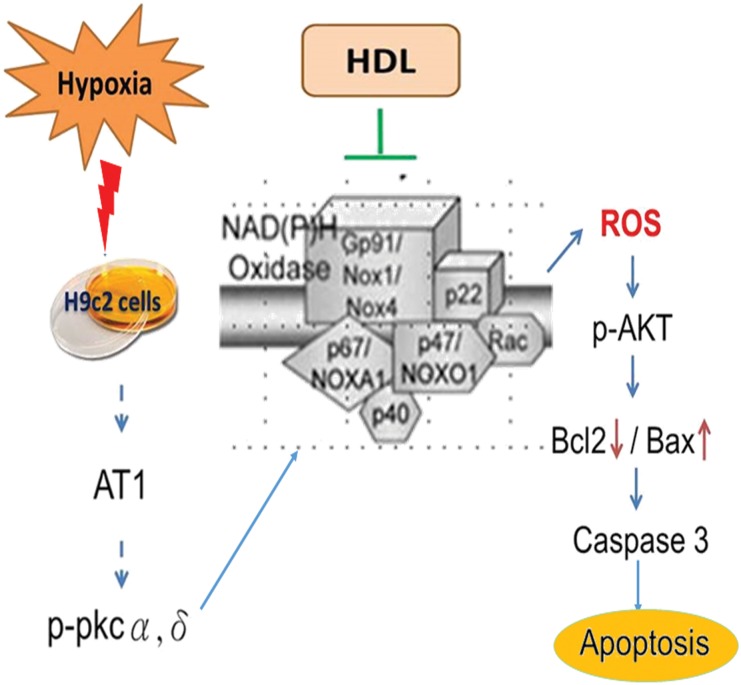
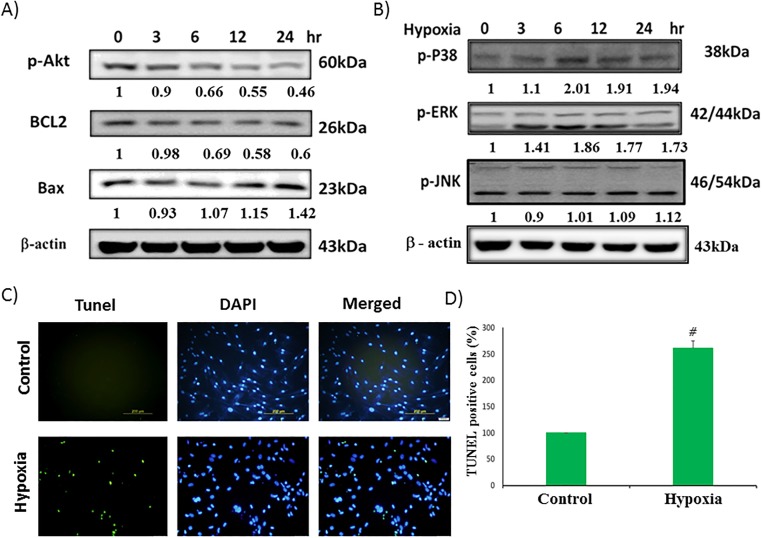
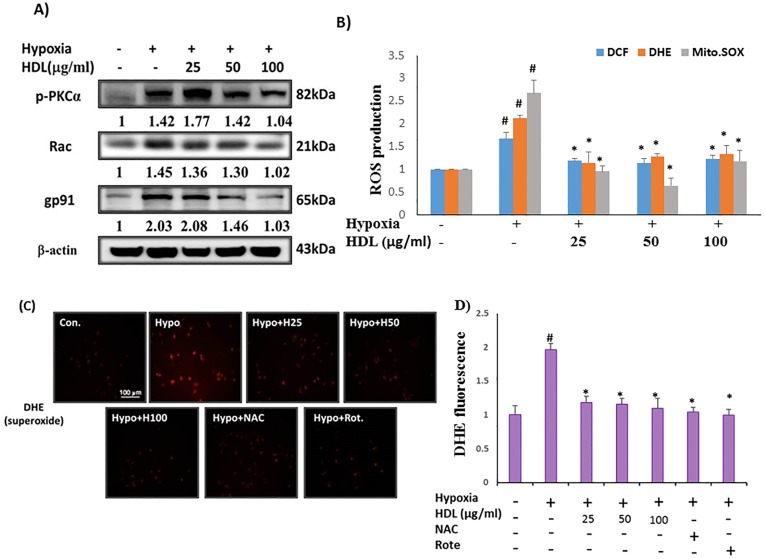
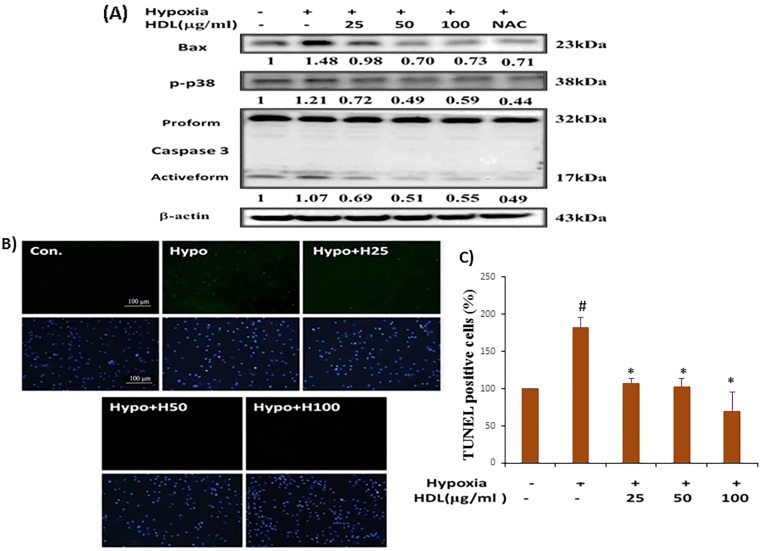
Cardiovascular diseases are the leading cause of death of death in Taiwan. Atherosclerosis can lead to serious problems, including heart attack, stroke, or even death. Coronary heart disease (CHD) occurs when plaque builds up in the coronary arteries to cause the ischemic heart disease which will enhance myocardial remodeling and also induce myocardial hypoxia. High density lipoprotein (HDL) has been proposed to have cardio-protective effects. Under hypoxic conditions (1%O2 for 24hr), in H9c2 cells, reactive oxygen species (ROS) is induced which leads to cardiomyocyte apoptosis and cardiac dysfunction. Therefore, the present study described the protective effect of HDL on hypoxia-induced cardiomyocyte damage. We investigated the NADPH oxidase-produced ROS-related signaling pathways and apoptosis in cardiomyocytes under hypoxia conditions. Results showed that the ROS mediated cardiac damage might occur via AT1 and PKC activation. Furthermore, hypoxia downregulated the survival protein (p-AKTser473) and anti-apoptotic protein (BCL2), whereas pro-apoptotic protein, Bax and caspase 3 were upregulated. These detrimental effects by ROS and apoptosis were prevented by HDL pretreatment. Our findings revealed the underlying molecular mechanism by which HDL suppresses the hypoxia-induced cardiomyocyte dysfunction. Further, we elucidated the role of HDL on preventing hypoxia induced cardiomyocyte apoptosis is mediated through the inhibition of NADPH oxidase-derived ROS.
心血管疾病是台湾地区的主要死因。动脉粥样硬化可导致严重问题,包括心脏病发作、中风甚至死亡。当冠状动脉中形成斑块导致缺血性心脏病时,就会发生冠心病(CHD),这会加剧心肌重塑并引发心肌缺氧。高密度脂蛋白(HDL)被认为具有心脏保护作用。在缺氧条件下(1%氧气,持续24小时),H9c2细胞中会诱导产生活性氧(ROS),导致心肌细胞凋亡和心脏功能障碍。因此,本研究描述了HDL对缺氧诱导的心肌细胞损伤的保护作用。我们研究了缺氧条件下心肌细胞中NADPH氧化酶产生的ROS相关信号通路和凋亡情况。结果表明,ROS介导的心脏损伤可能通过AT1和PKC激活发生。此外,缺氧下调了存活蛋白(p-AKTser473)和抗凋亡蛋白(BCL2),而促凋亡蛋白Bax和caspase 3则上调。HDL预处理可防止ROS和凋亡的这些有害影响。我们的研究结果揭示了HDL抑制缺氧诱导的心肌细胞功能障碍的潜在分子机制。此外,我们阐明了HDL通过抑制NADPH氧化酶衍生的ROS来预防缺氧诱导的心肌细胞凋亡的作用。