Bazalova Olga, Dolezel David
Biology Center, Czech Academy of Sciences, 37005 České Budějovice, Czech Republic.
Department of Molecular Biology, Faculty of Sciences, University of South Bohemia, 37005 České Budějovice, Czech Republic.
G3 (Bethesda). 2017 Aug 7;7(8):2637-2649. doi: 10.1534/g3.117.042374.
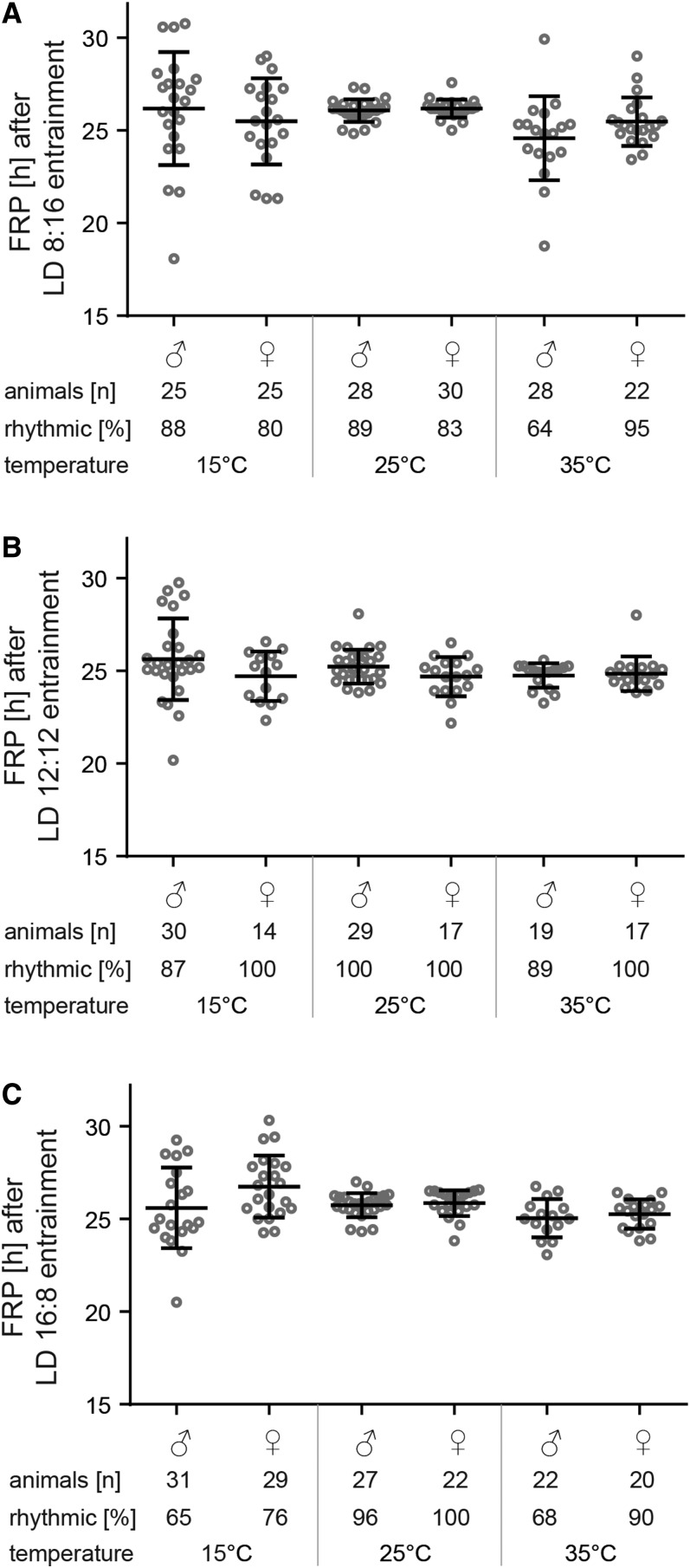
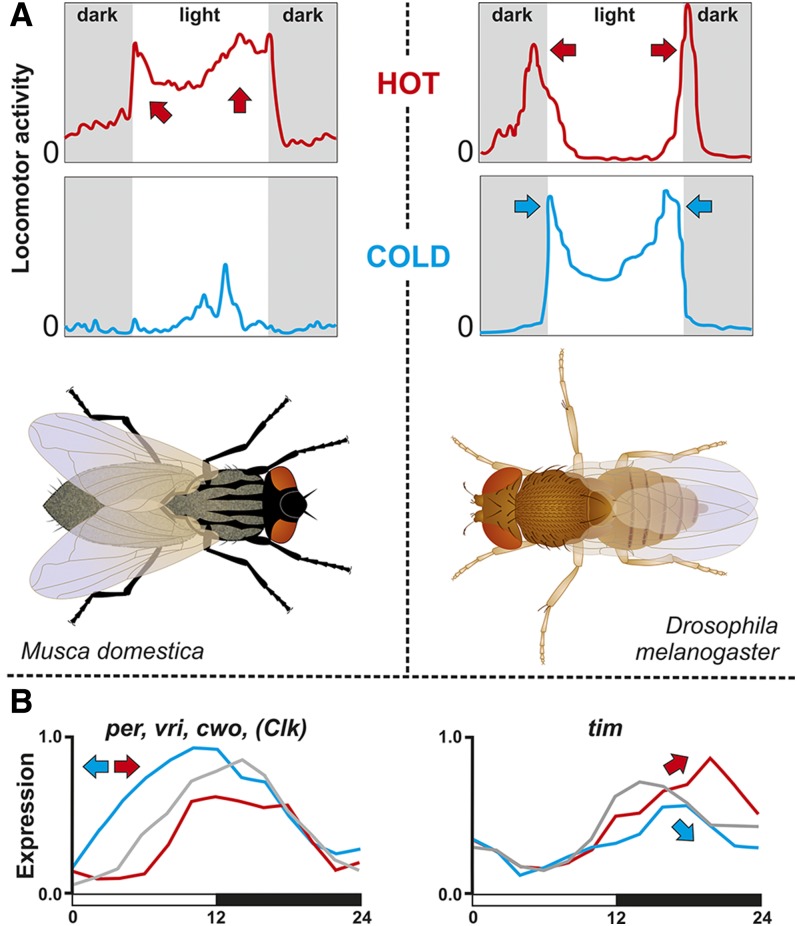
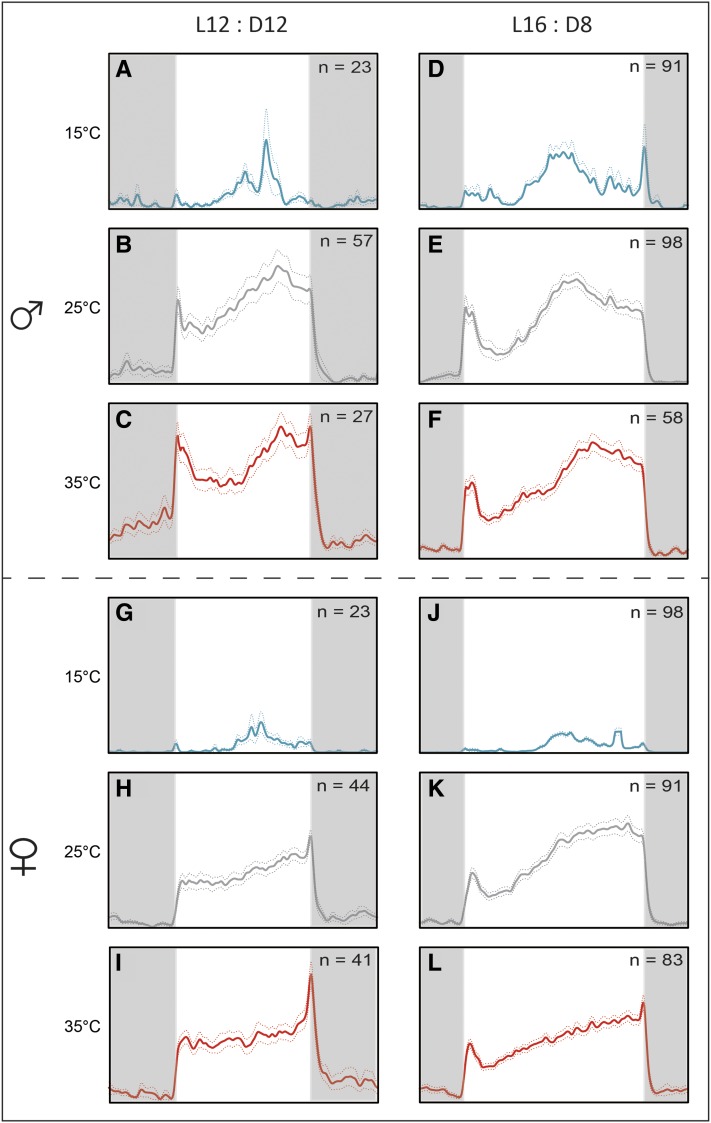
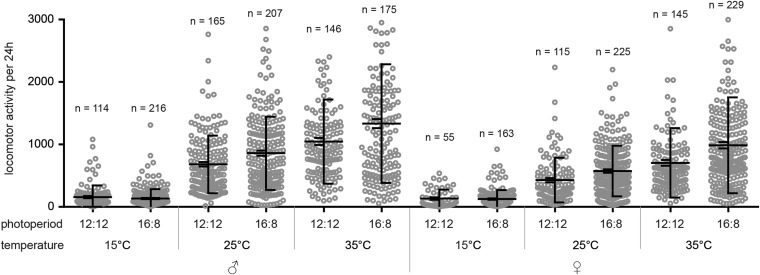
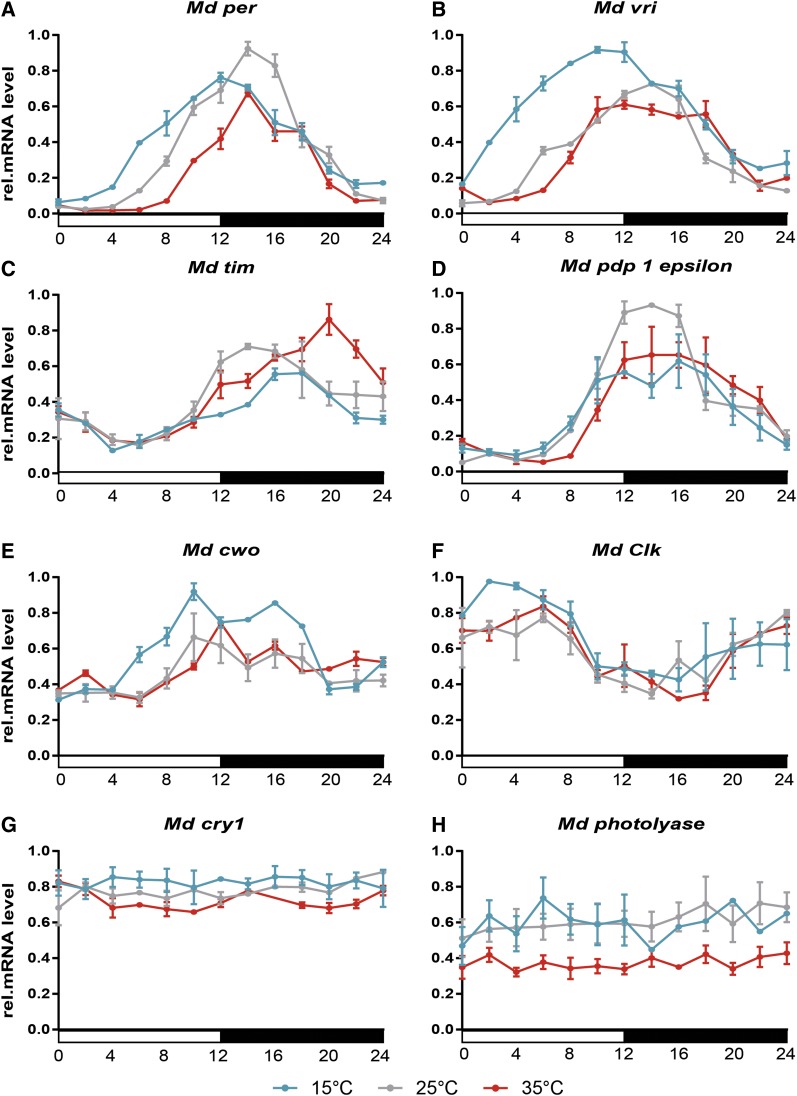
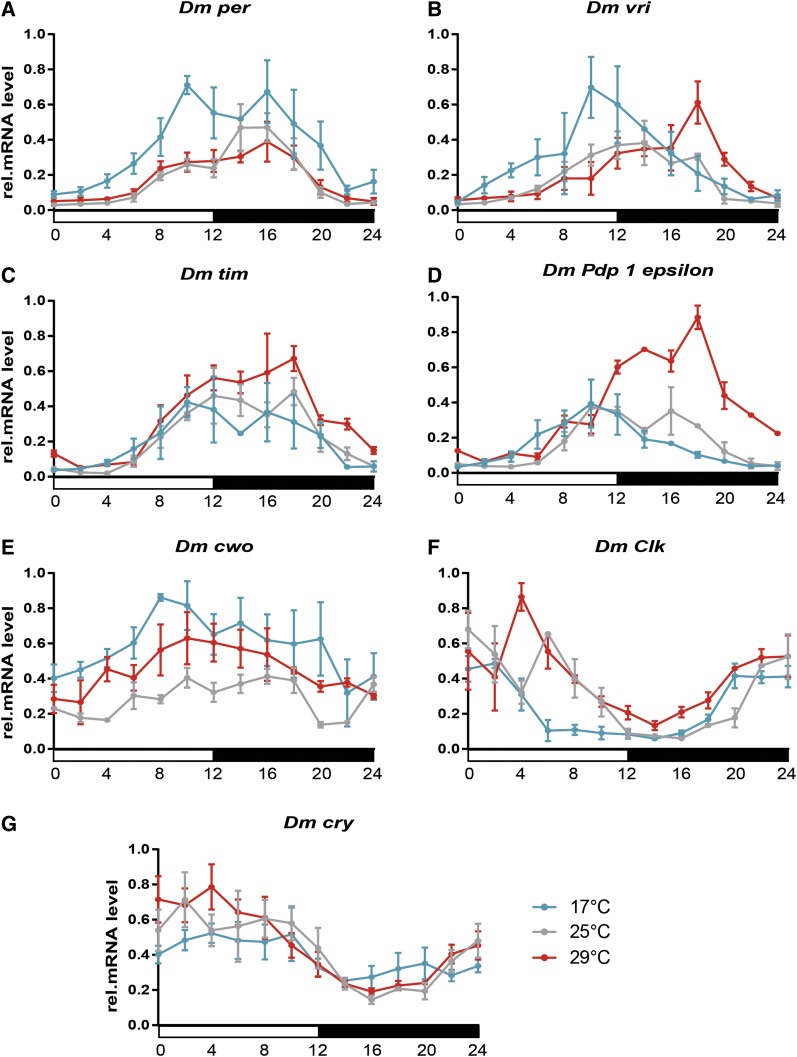
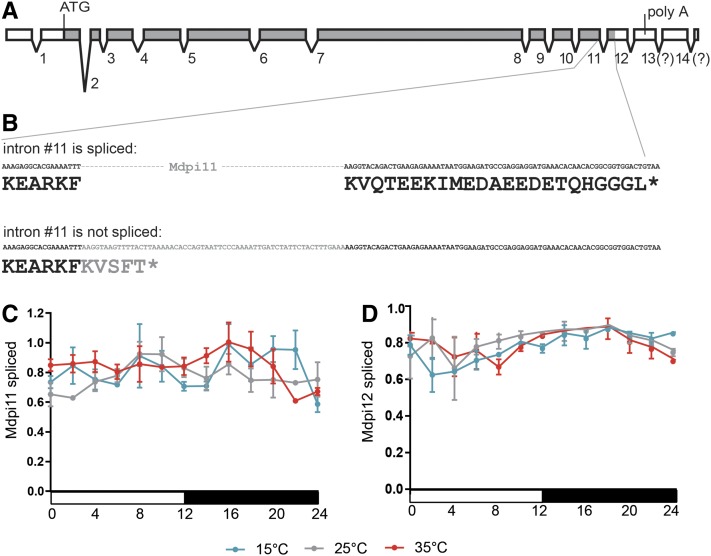
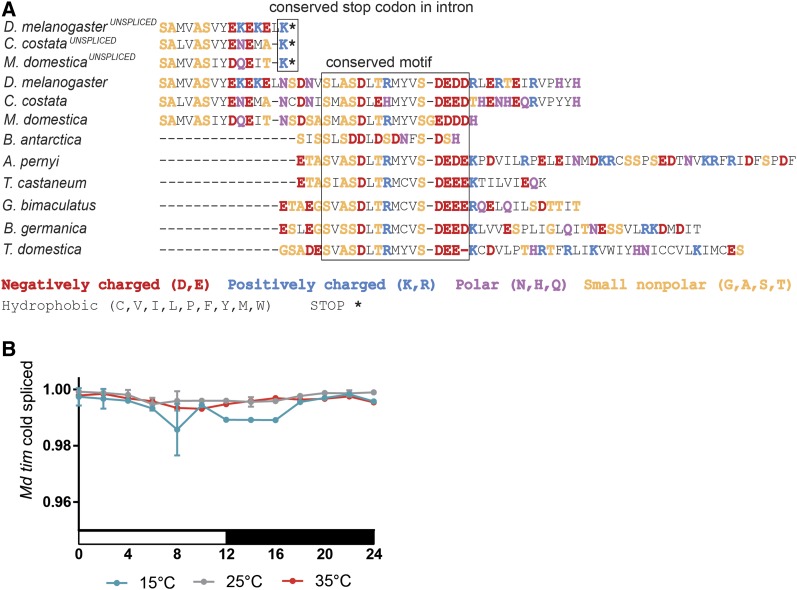
Circadian clocks orchestrate daily activity patterns and free running periods of locomotor activity under constant conditions. While the first often depends on temperature, the latter is temperature-compensated over a physiologically relevant range. Here, we explored the locomotor activity of the temperate housefly Under low temperatures, activity was centered round a major and broad afternoon peak, while high temperatures resulted in activity throughout the photophase with a mild midday depression, which was especially pronounced in males exposed to long photoperiods. While () mRNA peaked earlier under low temperatures, no temperature-dependent splicing of the last 3' end intron was identified. The expression of , , and was also influenced by temperature, each in a different manner. Our data indicated that comparable behavioral trends in daily activity distribution have evolved in and , yet the behaviors of these two species are orchestrated by different molecular mechanisms.
昼夜节律时钟在恒定条件下协调日常活动模式和自发运动活动的自由运行周期。虽然前者通常取决于温度,但后者在生理相关范围内是温度补偿的。在这里,我们探究了温带家蝇的自发运动活动。在低温下,活动集中在一个主要且宽泛的下午高峰,而高温导致在整个光照期都有活动,中午有轻微的活动低谷,这在暴露于长光周期的雄性中尤为明显。虽然()mRNA在低温下峰值出现得更早,但未发现最后3'端内含子存在温度依赖性剪接。、和的表达也受温度影响,且方式各不相同。我们的数据表明,在和中,日常活动分布中出现了类似的行为趋势,但这两个物种的行为是由不同的分子机制协调的。