Castano-Prat Patricia, Perez-Zabalza Maria, Perez-Mendez Lorena, Escorihuela Rosa M, Sanchez-Vives Maria V
Systems Neuroscience, Institut d'Investigacions Biomèdiques August Pi i Sunyer (IDIBAPS)Barcelona, Spain.
Departament de Psiquiatria i Medicina Legal, Institut de Neurociències, Universitat Autònoma de BarcelonaBarcelona, Spain.
Front Aging Neurosci. 2017 May 31;9:141. doi: 10.3389/fnagi.2017.00141. eCollection 2017.
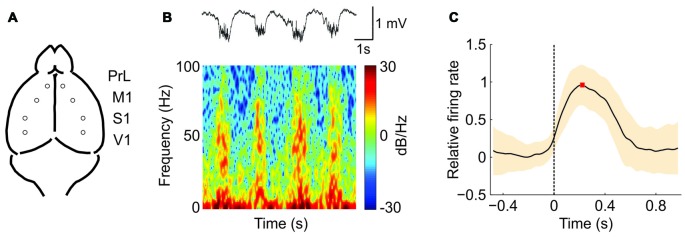
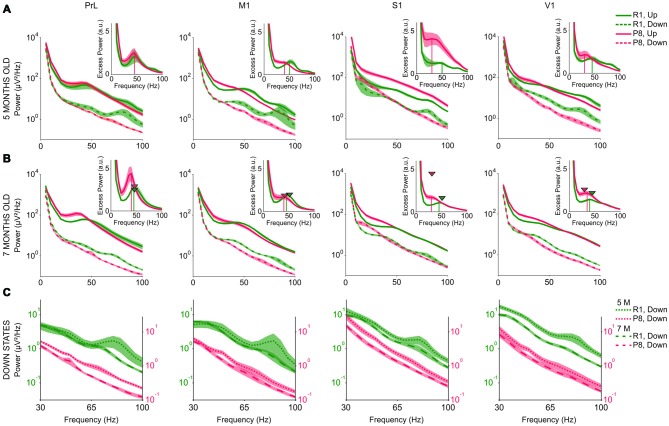
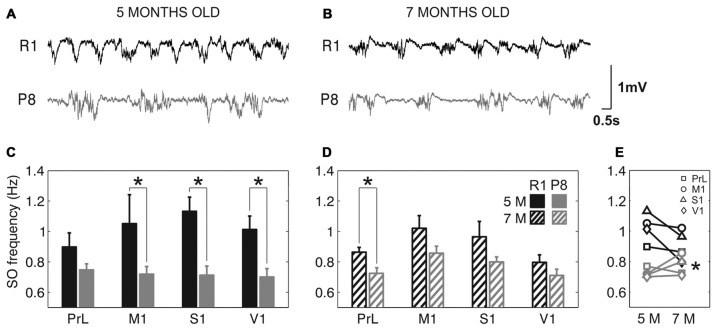
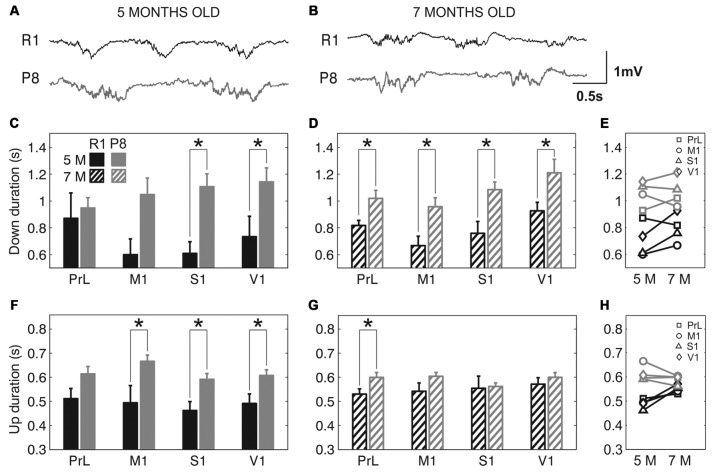
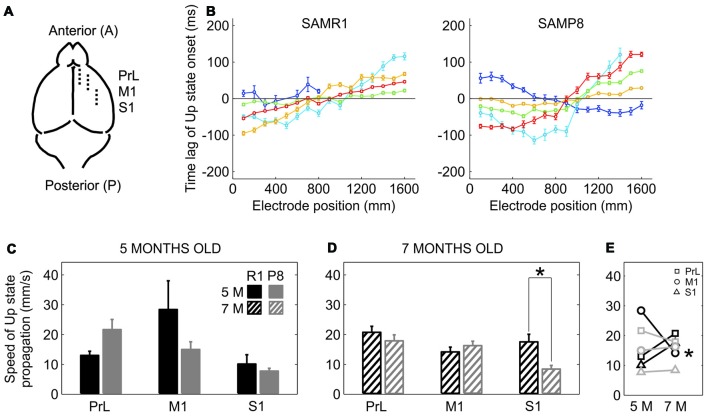
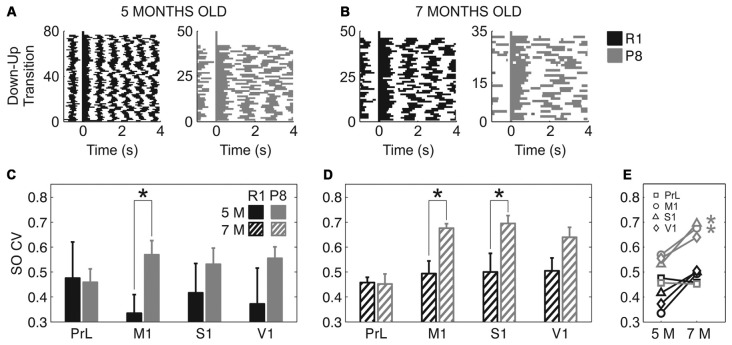
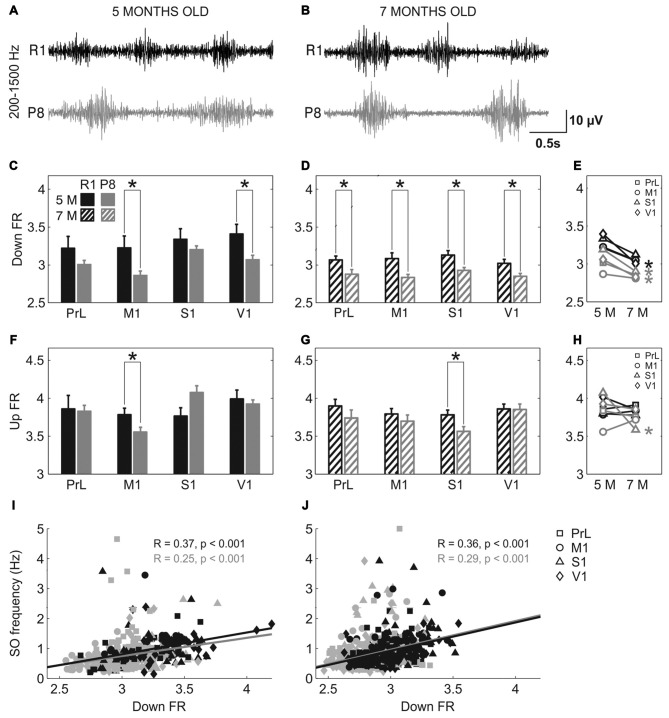
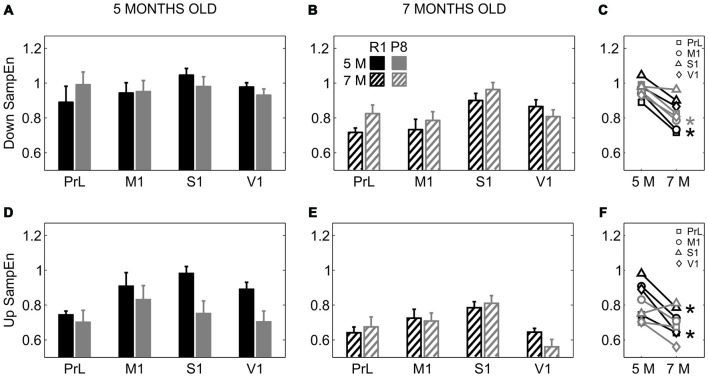
The senescence-accelerated mouse prone 8 (SAMP8) model is characterized by accelerated, progressive cognitive decline as well as Alzheimer's disease (AD)-like neurodegenerative changes, and resembles the etiology of multicausal, sporadic late-onset/age-related AD in humans. Our aim was to find whether these AD-like pathological features, together with the cognitive deficits present in the SAMP8 strain, are accompanied by disturbances in cortical network activity with respect to control mice (SAM resistance 1, SAMR1) and, if so, how the alterations in cortical activity progress with age. For this purpose, we characterized the extracellular spontaneous oscillatory activity in different regions of the cerebral cortex of SAMP8 and SAMR1 mice under ketamine anesthesia at 5 and 7 months of age. Under these conditions, slow oscillations and fast rhythms generated in the cortical network were recorded and different parameters of these oscillations were quantified and compared between SAMP8 and their control, SAMR1 mice. The average frequency of slow oscillations in SAMP8 mice was decreased with respect to the control mice at both studied ages. An elongation of the silent periods or Down states was behind the decreased slow oscillatory frequency while the duration of active or Up states remained stable. SAMP8 mice also presented increased cycle variability and reduced high frequency components during Down states. During Up states, the power peak in the gamma range was displaced towards lower frequencies in all the cortical areas of SAMP8 with respect to control mice suggesting that the spectral profile of SAMP8 animals is shifted towards lower frequencies. This shift is reminiscent to one of the principal hallmarks of electroencephalography (EEG) abnormalities in patients with Alzheimer's disease, and adds evidence in support of the suitability of the SAMP8 mouse as a model of this disease. Although some of the differences between SAMP8 and control mice were emphasized with age, the evolution of the studied parameters as SAMR1 mice got older indicates that the SAMR1 phenotype tends to converge with that of SAMP8 animals. To our knowledge, this is the first systematic characterization of the cortical slow and fast rhythms in the SAMP8 strain and it provides useful insights about the cellular and synaptic mechanisms underlying the reported alterations.
衰老加速小鼠8型(SAMP8)模型的特征是认知能力加速、进行性下降以及出现类似阿尔茨海默病(AD)的神经退行性变化,与人类多因素、散发性晚发型/年龄相关性AD的病因相似。我们的目的是探究这些类似AD的病理特征以及SAMP8品系中存在的认知缺陷,是否伴随着相对于对照小鼠(抗衰老小鼠1型,SAMR1)的皮质网络活动紊乱,如果是这样,皮质活动的改变如何随年龄进展。为此,我们对5月龄和7月龄的SAMP8和SAMR1小鼠在氯胺酮麻醉下大脑皮质不同区域的细胞外自发振荡活动进行了表征。在这些条件下,记录皮质网络中产生的慢振荡和快节律,并对这些振荡的不同参数进行量化,然后在SAMP8及其对照SAMR1小鼠之间进行比较。在两个研究年龄中,SAMP8小鼠慢振荡的平均频率相对于对照小鼠均降低。慢振荡频率降低的原因是静息期或下行状态延长,而活跃期或上行状态的持续时间保持稳定。SAMP8小鼠在下行状态期间还表现出周期变异性增加和高频成分减少。在上行状态期间,相对于对照小鼠,SAMP8所有皮质区域中γ频段的功率峰值向较低频率偏移,这表明SAMP8动物的频谱特征向较低频率偏移。这种偏移让人联想到阿尔茨海默病患者脑电图(EEG)异常的主要特征之一,并进一步证明了SAMP8小鼠作为该疾病模型的适用性。尽管SAMP8和对照小鼠之间的一些差异随着年龄的增长而更加明显,但随着SAMR1小鼠年龄的增长,所研究参数的变化表明SAMR1表型倾向于与SAMP8动物的表型趋同。据我们所知,这是对SAMP8品系皮质慢节律和快节律的首次系统表征,它为所报道的改变背后的细胞和突触机制提供了有用的见解。