Institut d'Investigacions Biomèdiques August Pi i Sunyer (IDIBAPS), Barcelona, Spain.
Departament de Ciències Experimentals i de la Salut, Universitat Pompeu Fabra, Barcelona, Spain.
Mol Neurobiol. 2020 Feb;57(2):765-777. doi: 10.1007/s12035-019-01732-4. Epub 2019 Aug 30.
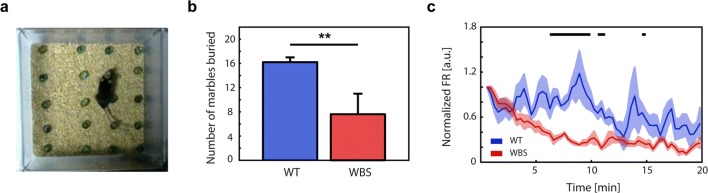
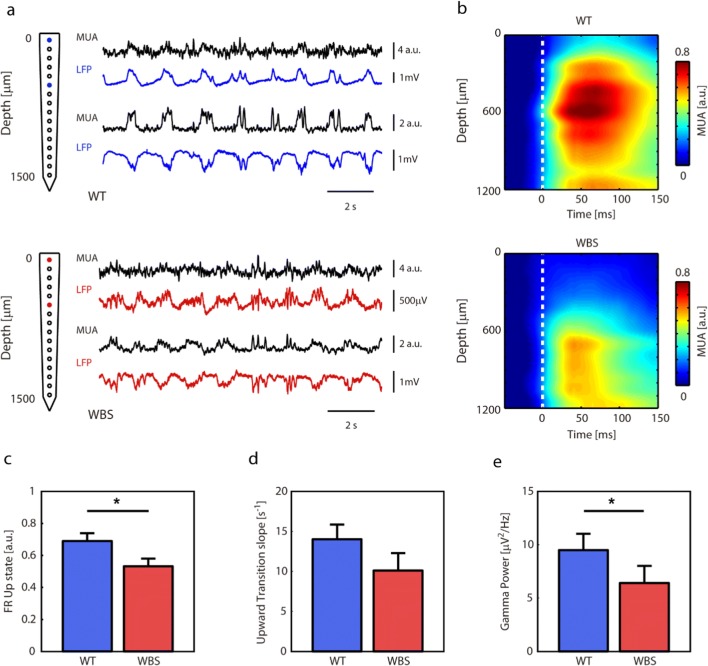
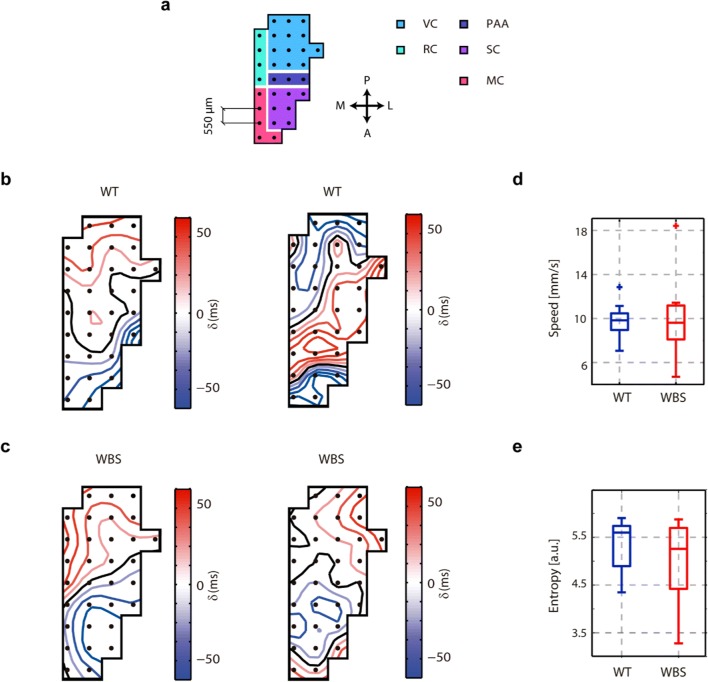
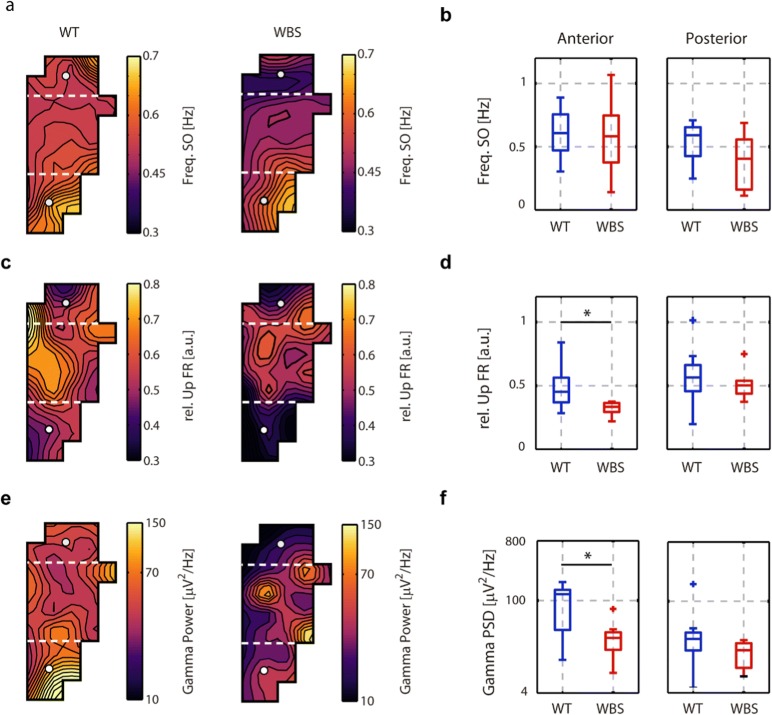
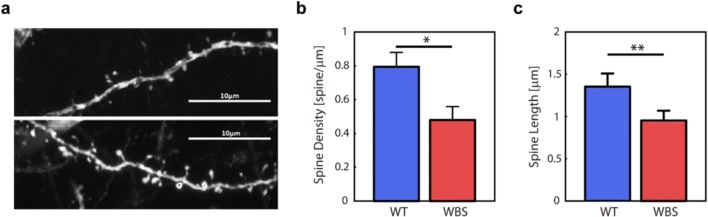
Williams-Beuren syndrome (WBS) is a rare neurodevelopmental disorder characterized by moderate intellectual disability and learning difficulties alongside behavioral abnormalities such as hypersociability. Several structural and functional brain alterations are characteristic of this syndrome, as well as disturbed sleep and sleeping patterns. However, the detailed physiological mechanisms underlying WBS are mostly unknown. Here, we characterized the cortical dynamics in a mouse model of WBS previously reported to replicate most of the behavioral alterations described in humans. We recorded the laminar local field potential generated in the frontal cortex during deep anesthesia and characterized the properties of the emergent slow oscillation activity. Moreover, we performed micro-electrocorticogram recordings using multielectrode arrays covering the cortical surface of one hemisphere. We found significant differences between the cortical emergent activity and functional connectivity between wild-type mice and WBS model mice. Slow oscillations displayed Up states with diminished firing rate and lower high-frequency content in the gamma range. Lower firing rates were also recorded in the awake WBS animals while performing a marble burying task and could be associated with the decreased spine density and thus synaptic connectivity in this cortical area. We also found an overall increase in functional connectivity between brain areas, reflected in lower clustering and abnormally high integration, especially in the gamma range. These results expand previous findings in humans, suggesting that the cognitive deficits characterizing WBS might be associated with reduced excitability, plus an imbalance in the capacity to functionally integrate and segregate information.
威廉姆斯-比伦综合征(WBS)是一种罕见的神经发育障碍,其特征为中度智力残疾和学习困难,以及行为异常,如过度社交。该综合征具有多种结构和功能的大脑改变,以及睡眠和睡眠模式紊乱。然而,WBS 的详细生理机制在很大程度上尚不清楚。在这里,我们描述了先前报道的复制人类大部分行为改变的 WBS 小鼠模型的皮质动力学。我们记录了在深度麻醉期间额叶皮层产生的分层局部场电位,并描述了涌现的慢波活动的特性。此外,我们使用覆盖大脑一侧皮层表面的多电极阵列进行微电皮质电图记录。我们发现野生型小鼠和 WBS 模型小鼠之间皮质涌现活动和功能连接存在显著差异。慢波显示出放电率降低和伽马范围内高频内容降低的上状态。在执行大理石埋藏任务时,清醒的 WBS 动物的放电率也较低,这可能与该皮质区域的棘突密度降低以及因此的突触连接减少有关。我们还发现大脑区域之间的功能连接总体增加,反映在聚类降低和异常高的整合,尤其是在伽马范围内。这些结果扩展了以前在人类中的发现,表明 WBS 特征性的认知缺陷可能与兴奋性降低以及功能整合和信息分离能力失衡有关。