Rode Anna K O, Kongsbak Martin, Hansen Marie M, Lopez Daniel Villalba, Levring Trine B, Woetmann Anders, Ødum Niels, Bonefeld Charlotte M, Geisler Carsten
Faculty of Health and Medical Sciences, Department of Immunology and Microbiology, University of Copenhagen, Copenhagen, Denmark.
Front Immunol. 2017 May 31;8:656. doi: 10.3389/fimmu.2017.00656. eCollection 2017.
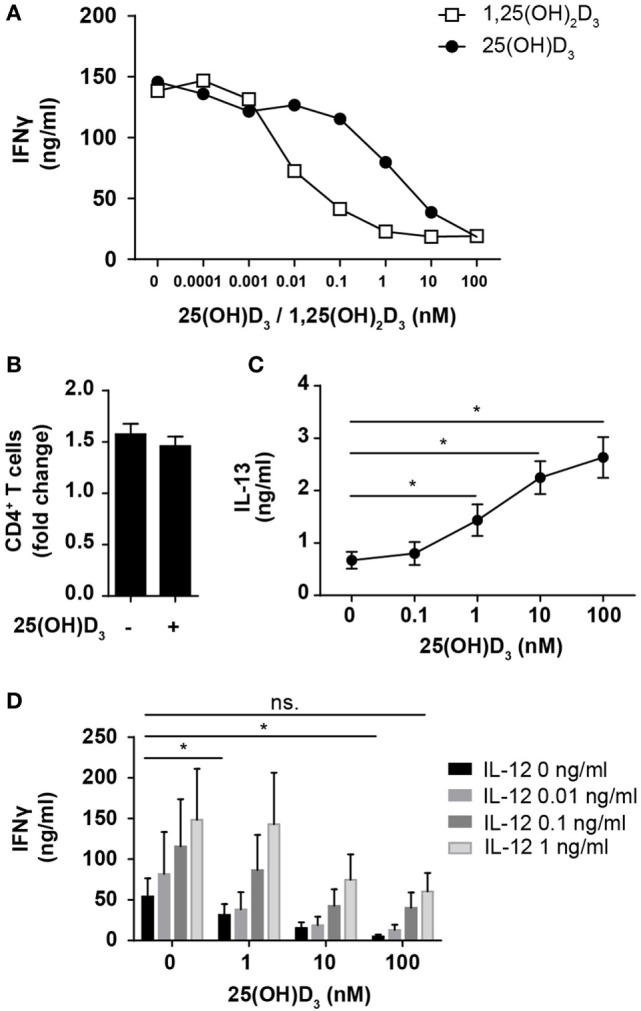
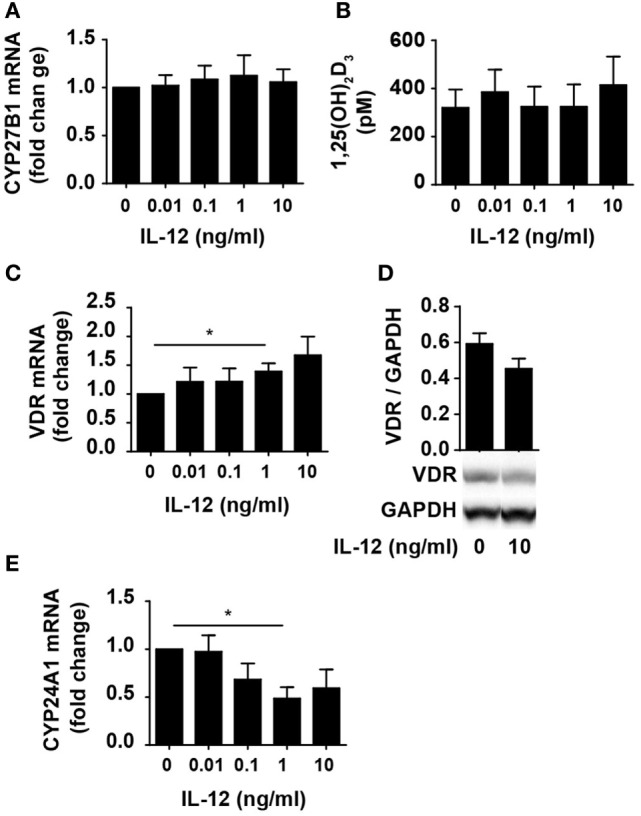
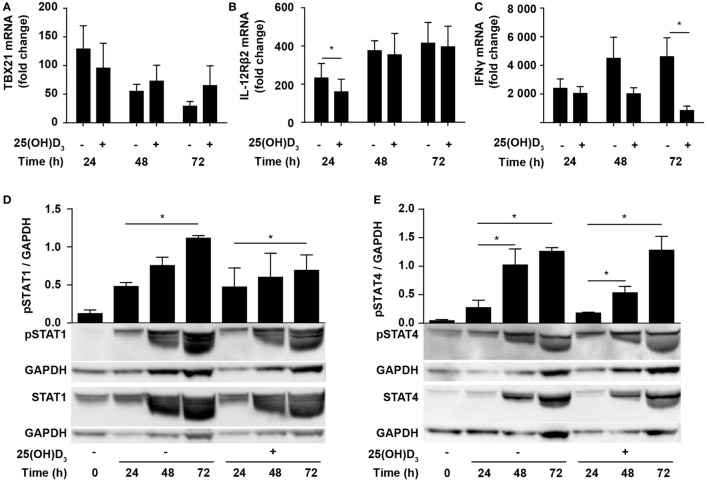
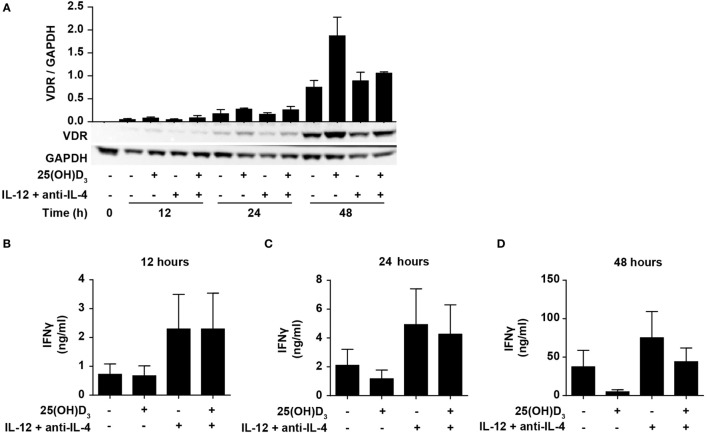
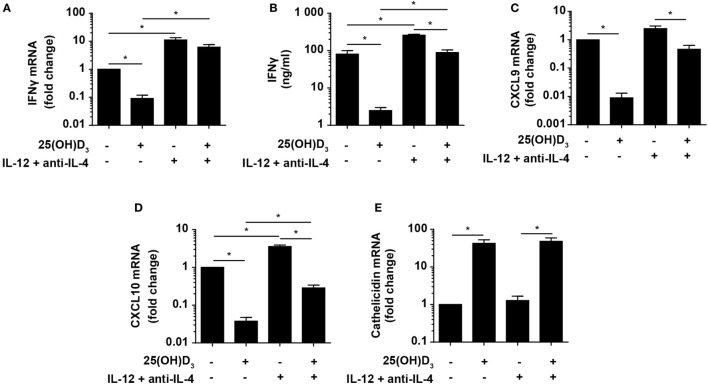
Tuberculosis (TB) presents a serious health problem with approximately one-third of the world's population infected with in a latent state. Experience from the pre-antibiotic era and more recent clinical studies have established a beneficial role of sunlight and vitamin D in patients with TB. At the same time, experimental data have shown that Th1 cells through production of IFNγ are crucial for cathelicidin release by macrophages, bacterial killing, and containment of in granulomas. Paradoxically, vitamin D has repeatedly been ascribed an immune-suppressive function inhibiting Th1 differentiation and production of IFNγ in T cells. The aim of this study was to investigate this apparent paradox. We studied naïve human CD4 T cells activated either with CD3 and CD28 antibodies or with allogeneic dendritic cells (DC) stimulated with heat-killed (HKMT) or purified toll-like receptor (TLR) ligands. We show that vitamin D does not block differentiation of human CD4 T cells to Th1 cells and that interleukin (IL)-12 partially counteracts vitamin D-mediated inhibition of IFNγ production promoting production of equal amounts of IFNγ in Th1 cells in the presence of vitamin D as in T cells activated in the absence of vitamin D and IL-12. Furthermore, we show that HKMT and TLR2 ligands strongly downregulate cathelicidin expression in DC and that vitamin D counteracts this by upregulating cathelicidin expression. In conclusion, we demonstrate that vitamin D counteracts -induced cathelicidin downregulation and allows Th1 differentiation and IFNγ secretion.
结核病(TB)是一个严重的健康问题,全球约三分之一的人口处于潜伏感染状态。抗生素时代之前的经验以及最近的临床研究已证实阳光和维生素D对结核病患者有益。同时,实验数据表明,Th1细胞通过产生IFNγ对于巨噬细胞释放cathelicidin、杀灭细菌以及在肉芽肿中抑制结核杆菌至关重要。矛盾的是,维生素D一再被认为具有免疫抑制功能,可抑制T细胞中Th1分化和IFNγ的产生。本研究的目的是探究这一明显的矛盾。我们研究了用CD3和CD28抗体激活的初始人CD4 T细胞,或用热灭活结核杆菌(HKMT)或纯化的Toll样受体(TLR)配体刺激的同种异体树突状细胞(DC)激活的初始人CD4 T细胞。我们发现维生素D不会阻止人CD4 T细胞向Th1细胞的分化,并且白细胞介素(IL)-12可部分抵消维生素D介导的对IFNγ产生的抑制作用,在有维生素D存在的情况下,Th1细胞中产生的IFNγ量与在无维生素D和IL-12激活的T细胞中产生的IFNγ量相等。此外,我们表明HKMT和TLR2配体可强烈下调DC中cathelicidin的表达,而维生素D通过上调cathelicidin的表达来抵消这种作用。总之,我们证明维生素D可抵消结核杆菌诱导的cathelicidin下调,并允许Th1分化和IFNγ分泌。