Xu Qingyang, Bai Fang, Chen Ning, Bai Gang
State Key Laboratory of Medicinal Chemical Biology and College of Pharmacy, Tianjin Key Laboratory of Molecular Drug Research, Nankai University, Tianjin, China.
College of Biotechnology, Tianjin University of Science and Technology, Tianjin, China.
PLoS One. 2017 Jun 16;12(6):e0179240. doi: 10.1371/journal.pone.0179240. eCollection 2017.
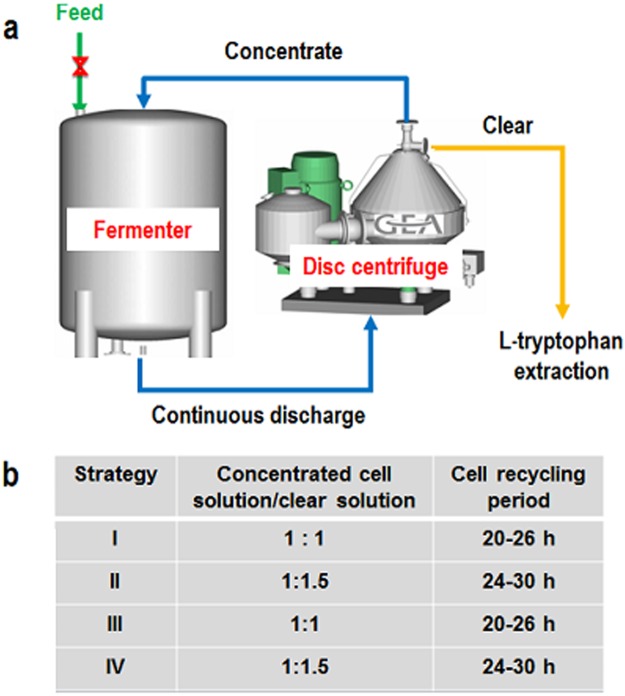
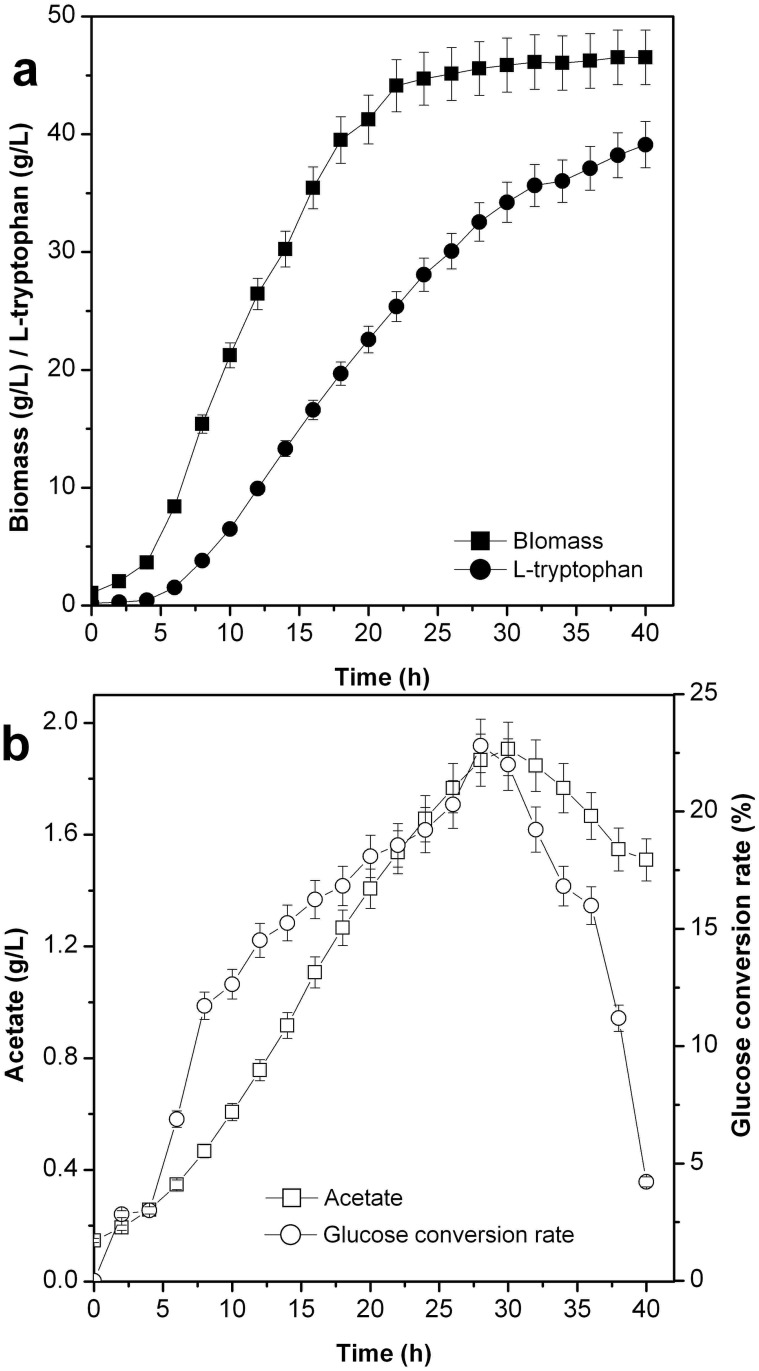
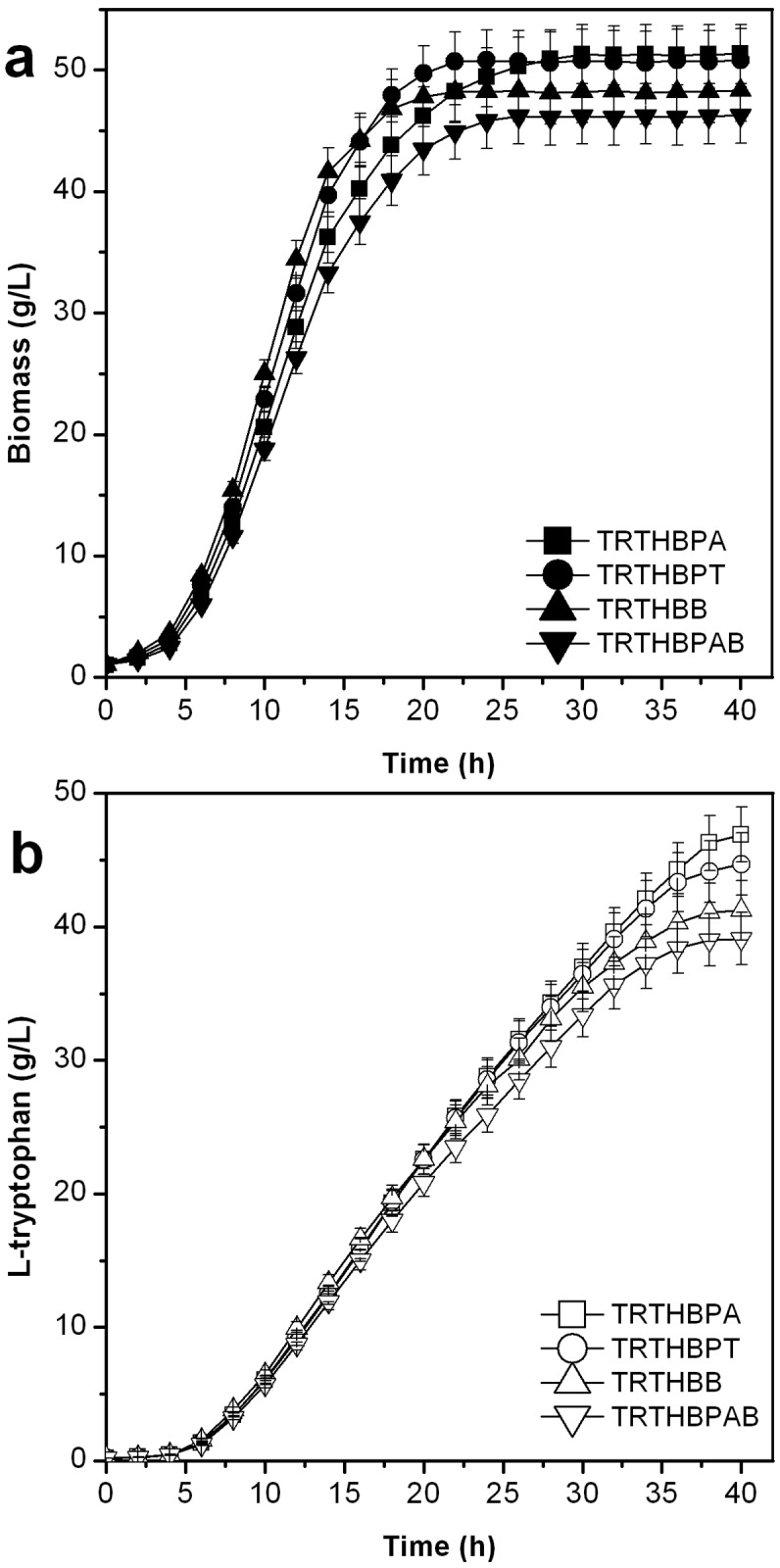
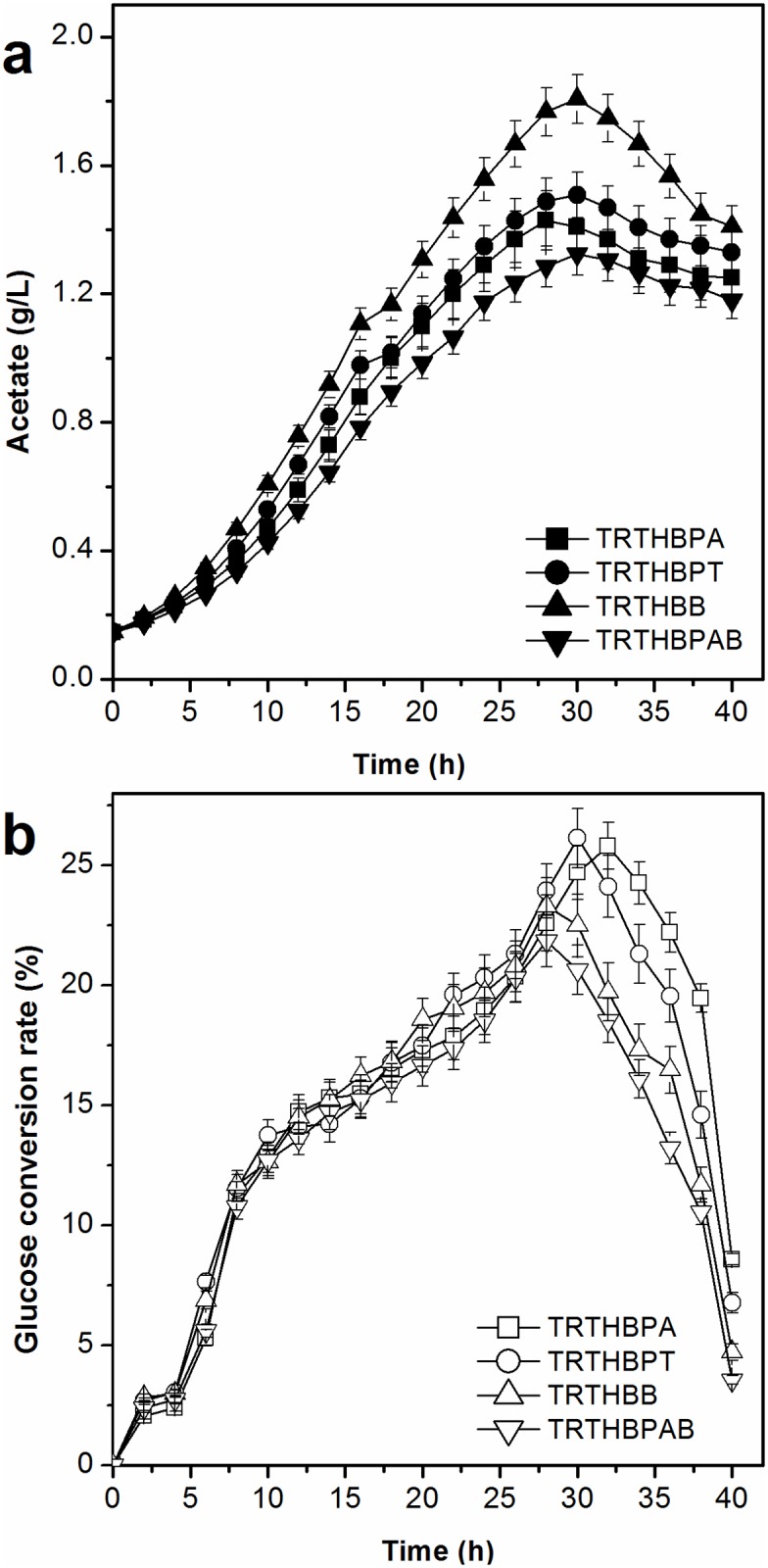
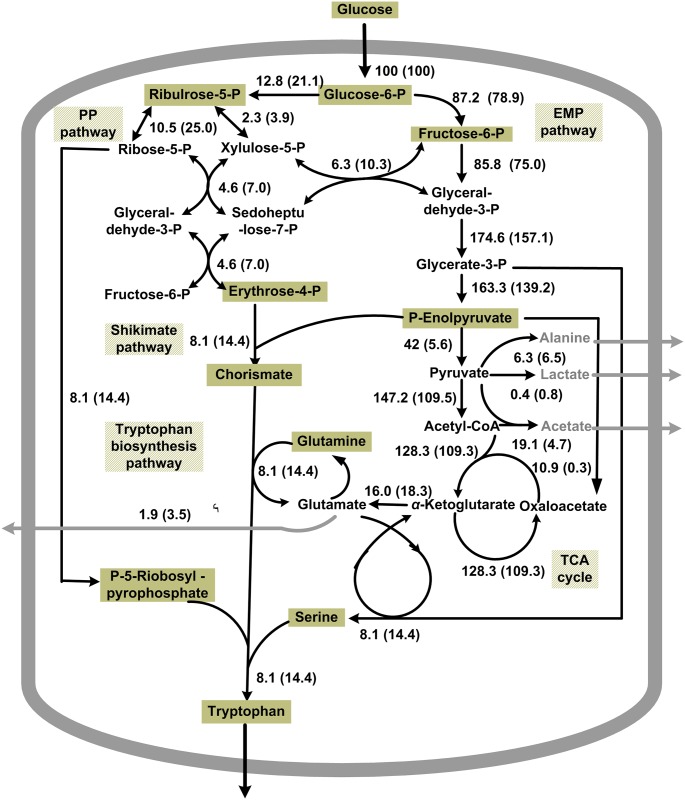
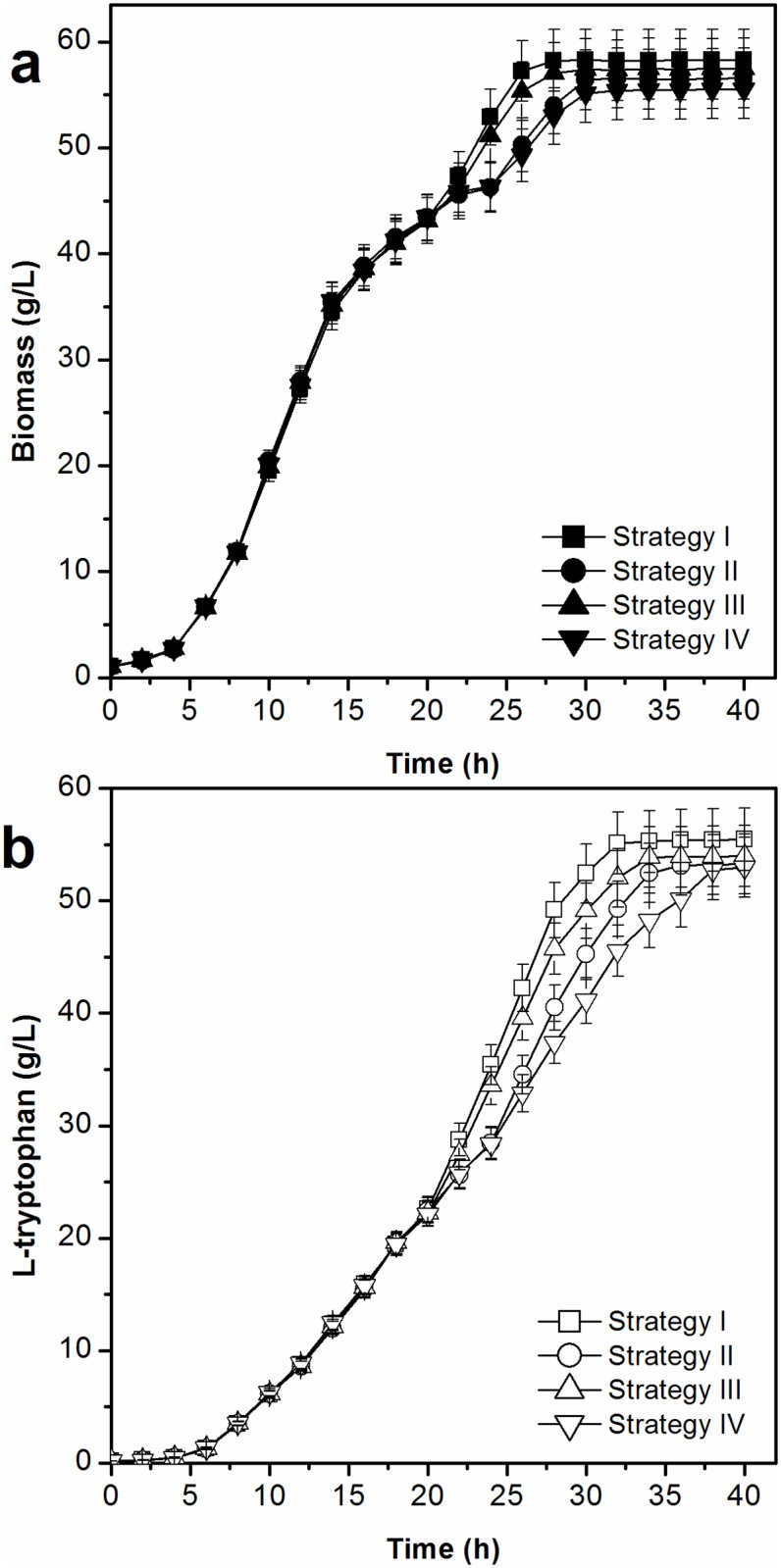
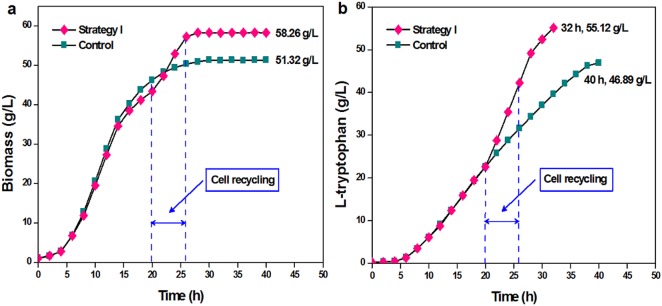
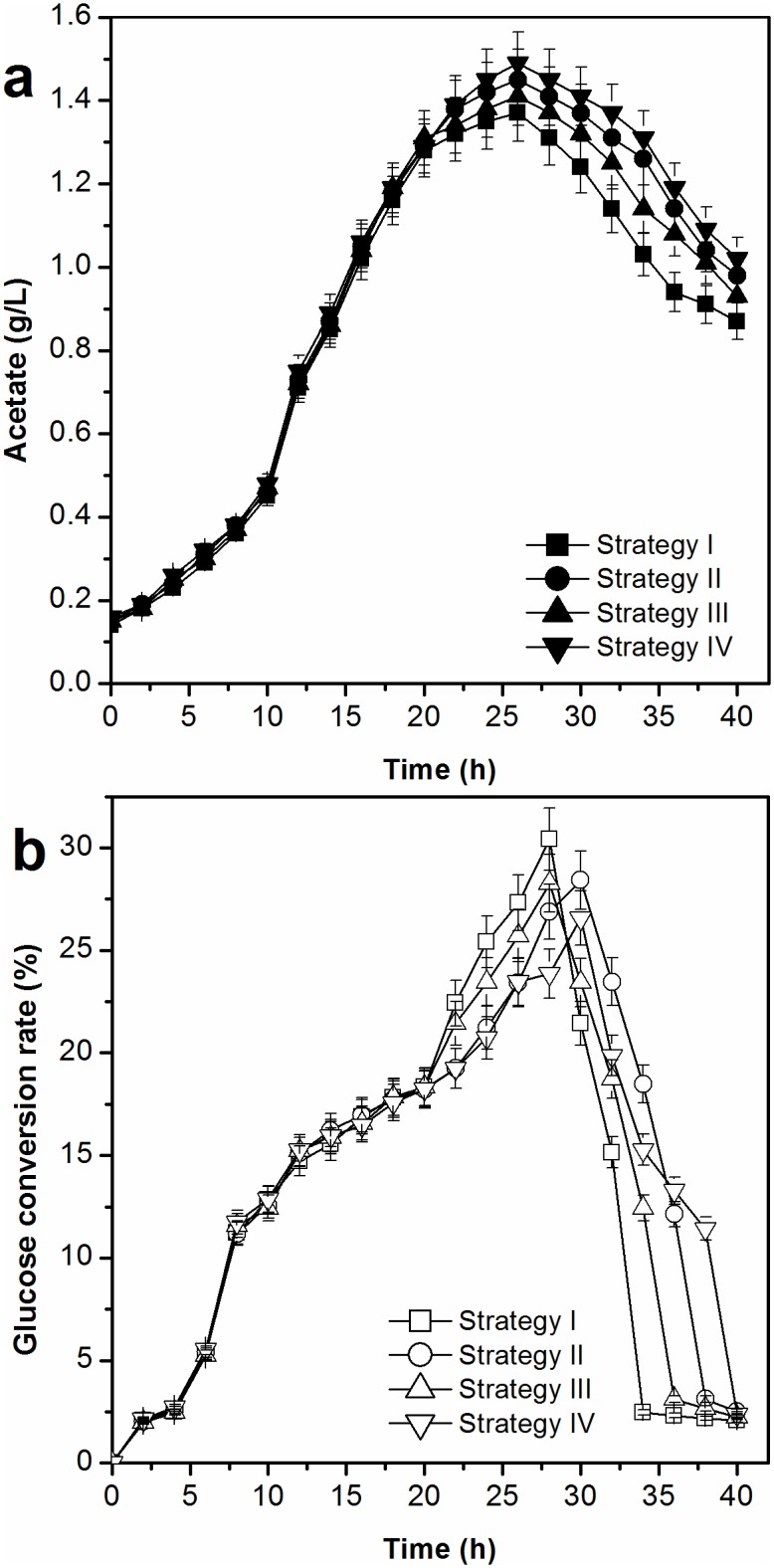
The implementation of a novel cell recycling technology based on a special disk centrifuge during microbial fermentation process can continuously separate the product and harmful intermediates, while maintaining the cell viability owing to the installed cooling system. Acetate accumulation is an often encountered problem in L-tryptophan fermentation by Escherichia coli. To extend our previous studies, the current study deleted the key genes underlying acetate biosynthesis to improve l-tryptophan production. The deletion of the phosphotransacetylase (pta)-acetate kinase (ackA) pathway in a gltB (encoding glutamate synthase) mutant of E. coli TRTHB, led to the highest production of l-tryptophan (47.18 g/L) and glucose conversion rate (17.83%), with a marked reduction in acetate accumulation (1.22 g/L). This strain, TRTHBPA, was then used to investigate the effects of the cell recycling process on L-tryptophan fermentation. Four different strategies were developed concerning two issues, the volume ratio of the concentrated cell solution and clear solution and the cell recycling period. With strategy I (concentrated cell solution: clear solution, 1: 1; cell recycling within 24-30 h), L-tryptophan production and the glucose conversion rate increased to 55.12 g/L and 19.75%, respectively, 17.55% and 10.77% higher than those without the cell recycling. In addition, the biomass increased by 13.52% and the fermentation period was shortened from 40 h to 32 h. These results indicated that the cell recycling technology significantly improved L-tryptophan production by E. coli.
在微生物发酵过程中,基于特殊碟式离心机的新型细胞循环利用技术的实施,可以持续分离产物和有害中间体,同时由于安装了冷却系统而保持细胞活力。乙酸积累是大肠杆菌发酵生产L-色氨酸过程中经常遇到的问题。为了扩展我们之前的研究,当前研究删除了乙酸生物合成的关键基因以提高L-色氨酸的产量。在大肠杆菌TRTHB的gltB(编码谷氨酸合酶)突变体中删除磷酸转乙酰酶(pta)-乙酸激酶(ackA)途径,导致L-色氨酸产量最高(47.18 g/L)和葡萄糖转化率最高(17.83%),同时乙酸积累显著减少(1.22 g/L)。然后使用该菌株TRTHBPA来研究细胞循环利用过程对L-色氨酸发酵的影响。针对两个问题制定了四种不同策略,即浓缩细胞溶液与澄清溶液的体积比以及细胞循环利用周期。采用策略I(浓缩细胞溶液:澄清溶液,1:1;在24 - 30小时内进行细胞循环利用)时,L-色氨酸产量和葡萄糖转化率分别提高到55.12 g/L和19.75%,比不进行细胞循环利用时分别提高了17.55%和10.77%。此外,生物量增加了13.52%,发酵周期从40小时缩短至32小时。这些结果表明,细胞循环利用技术显著提高了大肠杆菌生产L-色氨酸的产量。